


No products in the cart.
Return To Shop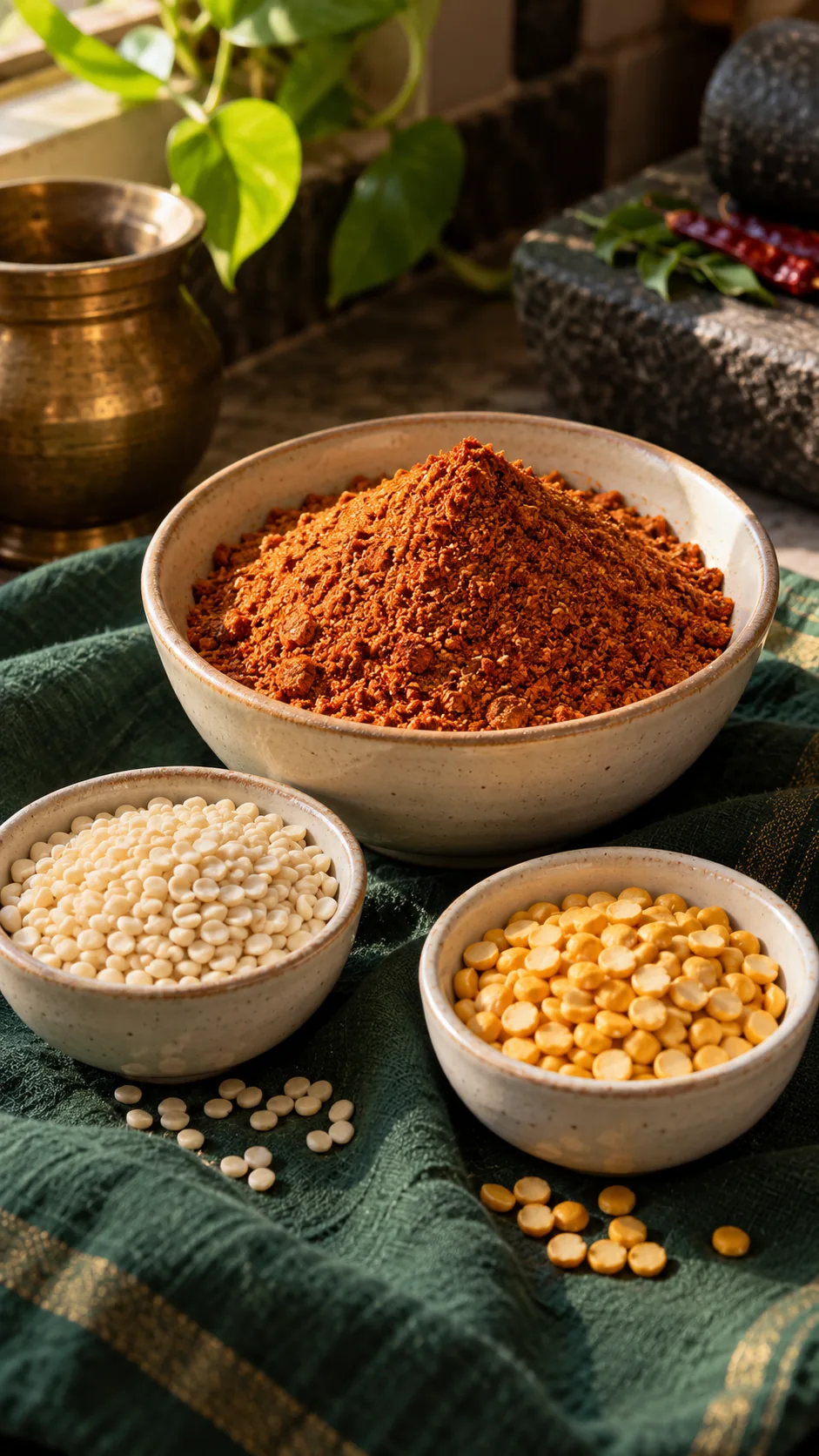
Look at a podi ingredient list and you’ll often find more than one dal. Urad dal and chana dal may look like a similar job done twice. In the finished blend, though, they don’t taste quite the same.
Both help give podi its roasted body. Their balance also changes how the powder feels on your tongue and how it carries the stronger ingredients. A chilli-heavy blend has plenty going on; the dal gives those flavours somewhere to land.
Which dals are we talking about?
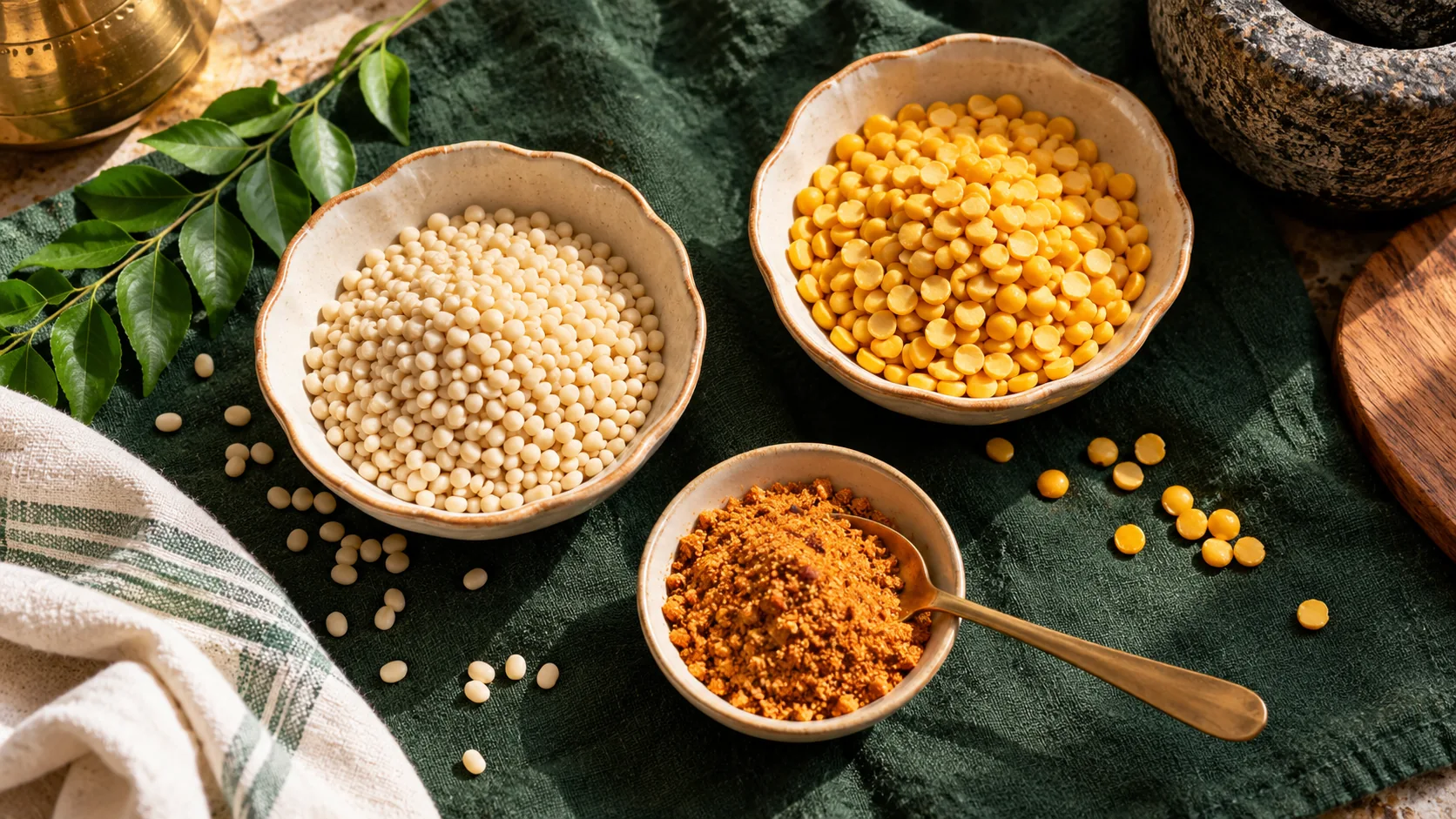
Urad dal comes from black gram. With its dark skin removed, it looks ivory white. A podi recipe may use whole hulled urad, often called urad gota, or a split form.
Chana dal is split Bengal gram. Its pieces are yellow, larger and firmer than split urad. Don’t confuse it with the ready-roasted gram sold for chutneys and snacks. The form of the ingredient affects how it behaves during roasting.
Rapidli Karnataka Podi lists urad gota and chana among its ingredients. This article explains their general flavour roles, rather than giving away a production recipe or an exact ratio.
What urad brings to the blend
Roasted urad has a distinct savoury, nutty character. It helps create the familiar aroma many people associate with South Indian podi.
In a ground blend, it adds body behind the chilli and other seasonings. You may notice it most clearly when the podi is mixed with a little warm ghee or oil, which helps spread the aroma through a mouthful.
That doesn’t mean urad always tastes the same. Its form, roast level and freshness all matter. A deeply roasted batch can be more forceful than a lightly roasted one, even if the amount hasn’t changed.
What chana brings to the blend
Roasted chana dal tends to have a fuller, gently sweet nutty taste. That sweetness is part of its flavour; it doesn’t mean sugar has been added.
It can make the roasted base feel rounder and more substantial. In a coarse grind, its firmer pieces may also give the powder more bite. With a finer grind, that distinction is less obvious.
Neither dal works alone in a finished podi. Sesame, coconut and the other ingredients can change the richness and texture enough that you can’t reliably guess a ratio from one spoonful.
Why use them together?
A blend can draw on the savoury character of urad and the fuller nuttiness of chana. Using both gives the maker more room to shape the base beneath the spices.
Change the balance and you may notice a different roasted aroma or a different feel against soft food. But there isn’t one correct ratio for every regional podi. Recipes vary between homes and makers.
It’s tempting to call any dal-heavy powder a filler-heavy blend. That misses the role of the roasted base. Dal supplies much of podi’s roasted flavour.
The roast and grind matter too
Two podis with similar ingredient lists can still taste different. One may have a lighter roast and finer grind, while another feels coarser and more strongly toasted.
Our guide to why dal is roasted before making podi covers the roasting question. For the feel of the finished powder, see coarse and fine podi texture.
Those details matter when you’re judging a blend. A crunchier spoonful doesn’t automatically tell you there’s more chana, and a darker colour doesn’t reveal the dal ratio either.
How to notice the roasted base
On plain idli or rice, the dal notes are easier to pick out than in a heavily seasoned curry. Notice the warm aroma after the first chilli hit, then the texture as you chew.
If you’re comparing blends, keep the food and serving amount similar. Otherwise, extra ghee or a bigger spoonful can dominate the difference you’re trying to notice.
Don’t worry about naming every ingredient. The useful question is whether the roasted base feels balanced with the heat for the meal you’re eating.
What the label can tell you
An ingredient list helps you see which dals a product contains. It doesn’t describe every roasting choice or tell you exactly how the finished flavour will land.
For Karnataka Podi, the dals sit alongside ingredients such as sesame, dry coconut, chillies and garlic. Read them as part of a complete blend. Our guide to reading spice ingredient lists can help you make sense of the pack.
Both dals earn their place through taste and texture. The best reason to enjoy them in podi is simple: they make the roasted flavour more interesting.
Related posts
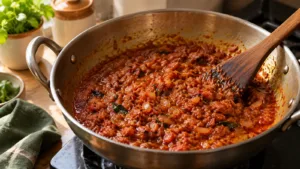
Understand why oil appears around cooked masala, what other signs to check and why a low-oil curry may never show a clear pool.
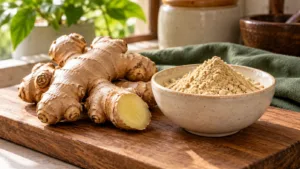
Fresh ginger and dry ginger powder bring different flavour and texture. Learn where each fits and how to approach a substitution without overdoing it.
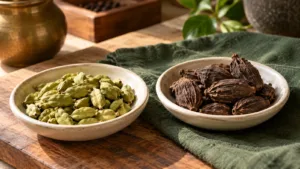
Learn how green and black cardamom differ in aroma, common uses and handling, and why swapping the pods can change your dish.
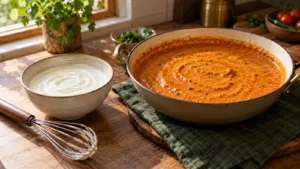
Learn why curd turns grainy in gravy, how to add it gently and what you can realistically rescue once the sauce has split.
Learn why dal forms foam, when skimming helps and how to manage a rising pot. Cooking foam alone can’t tell you whether soaked dal is...more