


No products in the cart.
Return To Shop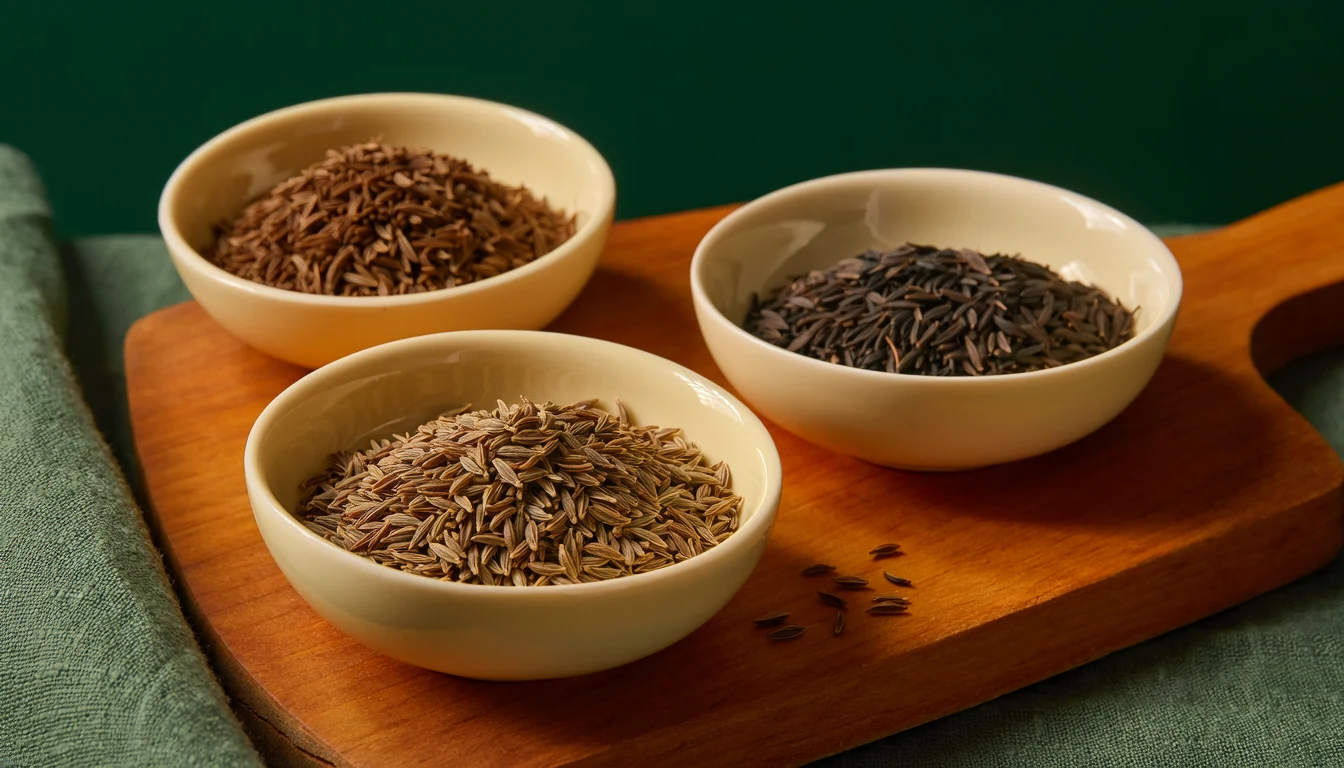
A recipe asks for shahi jeera. The shop offers caraway. At home, you already have regular jeera. Are they all the same thing?
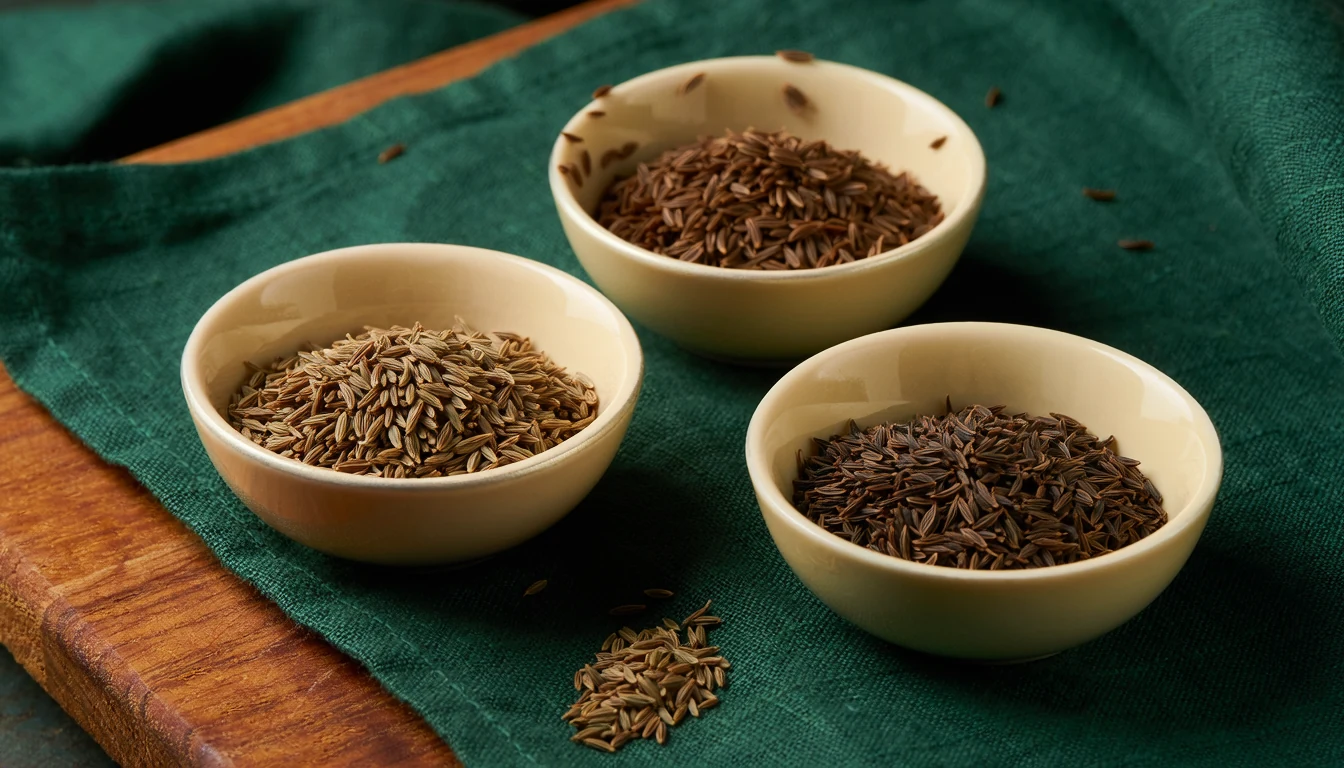
They’re not a single spice with a few fancy names. Common names vary between sellers and regions, which is why the botanical name on a packet is useful. For a careful comparison, separate ordinary cumin, true caraway and the spice often sold in India as shahi jeera.
Start with the name that identifies the plant
| Spice | Botanical name | Typical appearance | Flavour direction | Familiar cooking uses |
|---|---|---|---|---|
| Ordinary cumin or jeera | Cuminum cyminum | Tan to brown, elongated and ridged | Warm, earthy and strongly savoury | Jeera rice, dal tadka, sabzi and roasted cumin seasoning |
| True caraway | Carum carvi | Brown, ridged and often noticeably curved | Warm, with an anise-like note | Rye bread, cabbage dishes and some European cheeses |
| Shahi jeera, often called kala jeera in spice trade | Often Elwendia persica, also known by the synonym Bunium persicum | Usually darker and more slender than ordinary cumin | Aromatic, with a different balance from ordinary jeera | Biryani, pulao and regional rice or meat dishes |
These are typical cues, not a lab test. Colour and shape vary. A packet labelled only “black cumin” or “shahi jeera” still needs a closer look because those names aren’t used consistently.
Why “black cumin” causes extra confusion
The name can also be used for nigella, Nigella sativa. Its small angular black seeds look quite different from the slender seeds above. Nigella is often called kalonji in Indian kitchens.
So a search for black cumin can lead you to a different plant altogether. Check the ingredient name and, where supplied, the botanical name. Don’t buy solely because an online listing says the spice is a perfect substitute for jeera.
What changes in the dish?
Regular cumin gives jeera rice its familiar earthy aroma. True caraway takes the flavour towards the anise-like note associated with caraway breads and cabbage dishes. You may enjoy that change, but it will be a different result.
For biryani or pulao, use the spice the recipe writer actually intends. If the recipe names shahi jeera without explaining it, look for a botanical name or a clear ingredient description before buying a large bag.
It’s also worth smelling spices separately before adding them. Crush a few seeds between your fingers and compare the aroma. This helps you learn the difference; it doesn’t prove the identity of an unknown or poorly labelled product.
Can you substitute cumin for caraway?
Sometimes a dish can take a change, but there’s no universal one-for-one rule. A small amount in a mixed seasoning is a different situation from a bread where caraway is the main flavour.
For everyday home cooking, start with less of the substitute and judge the cooked result. If the recipe relies on a particular regional aroma, it may be better to wait for the named spice. A substitute should be a choice, not a surprise.
Don’t confuse these with fennel either
Fennel, usually called saunf, is another separate spice. Its seeds are often larger and greener, with a sweet anise-like aroma. Similar scent notes don’t make fennel and caraway the same plant.
You don’t need to memorise every botanical name. Save the names relevant to the dish you’re making and label your jars clearly. Keep the original packet until the jar is empty so you still have the ingredient and batch details.
How this helps when buying a blend
An ingredient list should help you understand what you’re eating. If a spice name is unclear, ask the maker rather than guessing from the blend’s colour. Our guide to reading spice-blend ingredient lists covers other useful checks.
For another comparison where names and regional varieties matter, see the Indian and global chilli guide. A clear name makes choosing the right flavour much easier.
Sources and naming note
Checked 16 October 2026. Botanical identity follows Kew’s Elwendia persica record, its cumin record and its nigella information. Culinary descriptions also draw on the Spices Board pages for caraway and cumin, plus the McCormick Science Institute cumin guide. Common trade names can vary; this guide uses “true caraway” for Carum carvi and distinguishes it from Elwendia persica. The images are illustrative kitchen photographs, not a botanical identification key.


Related posts
Understand why oil appears around cooked masala, what other signs to check and why a low-oil curry may never show a clear pool.
Fresh ginger and dry ginger powder bring different flavour and texture. Learn where each fits and how to approach a substitution without overdoing it.
Learn how green and black cardamom differ in aroma, common uses and handling, and why swapping the pods can change your dish.
Learn why curd turns grainy in gravy, how to add it gently and what you can realistically rescue once the sauce has split.
Learn why dal forms foam, when skimming helps and how to manage a rising pot. Cooking foam alone can’t tell you whether soaked dal is...more