


No products in the cart.
Return To Shop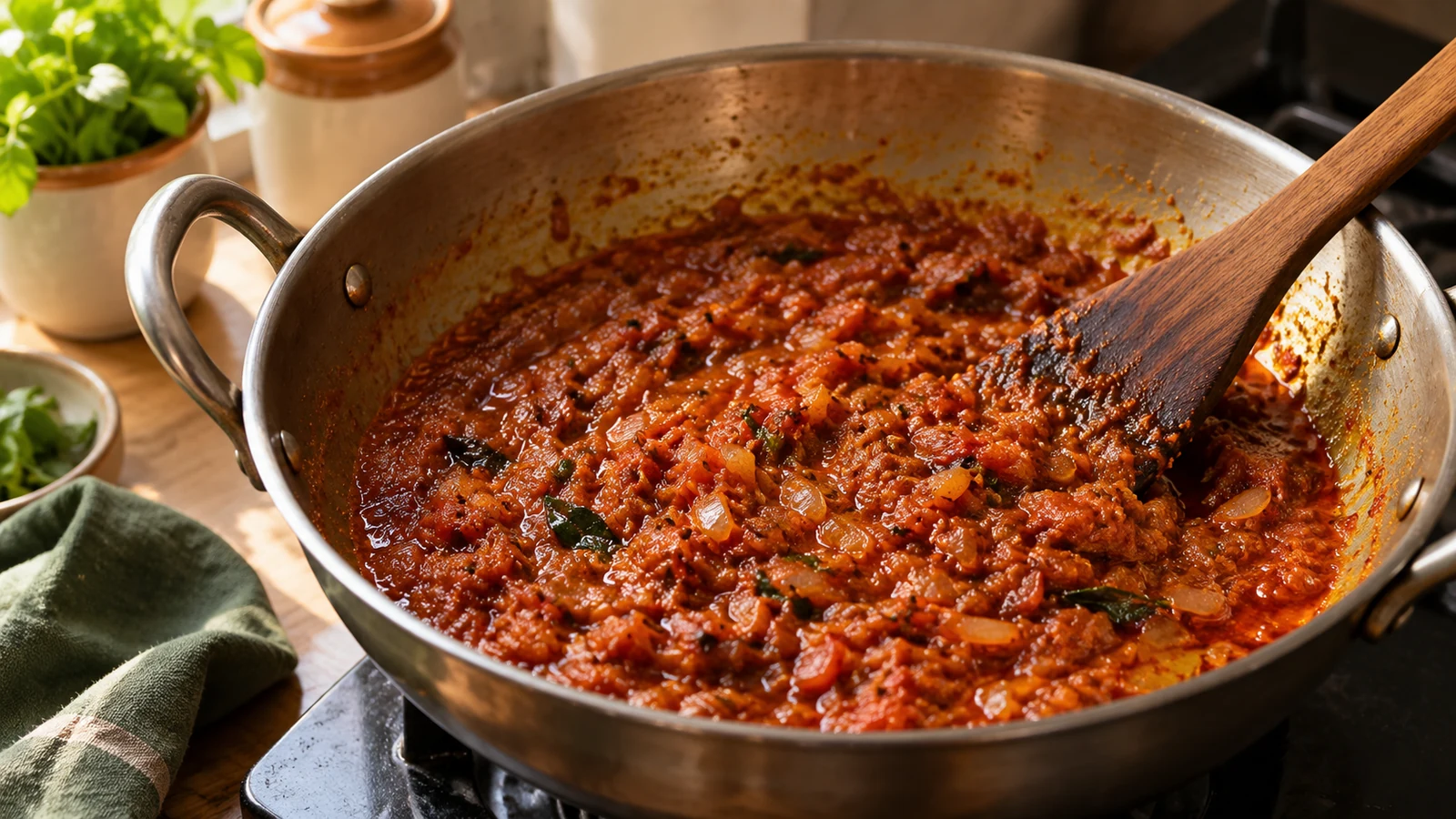
“Cook until the oil separates” appears in plenty of Indian recipes. It sounds obvious until you’re standing over the pan, wondering whether the shiny patch at the edge counts.
When masala releases oil, some of the fat that was mixed through the ingredients becomes easier to see. Often, that happens as water evaporates and the onion-tomato mixture thickens.
Watch how the mixture changes
At the start, chopped or blended ingredients release water. The pan may bubble noisily and look loose. As that water cooks off, the masala becomes thicker and the sound changes.
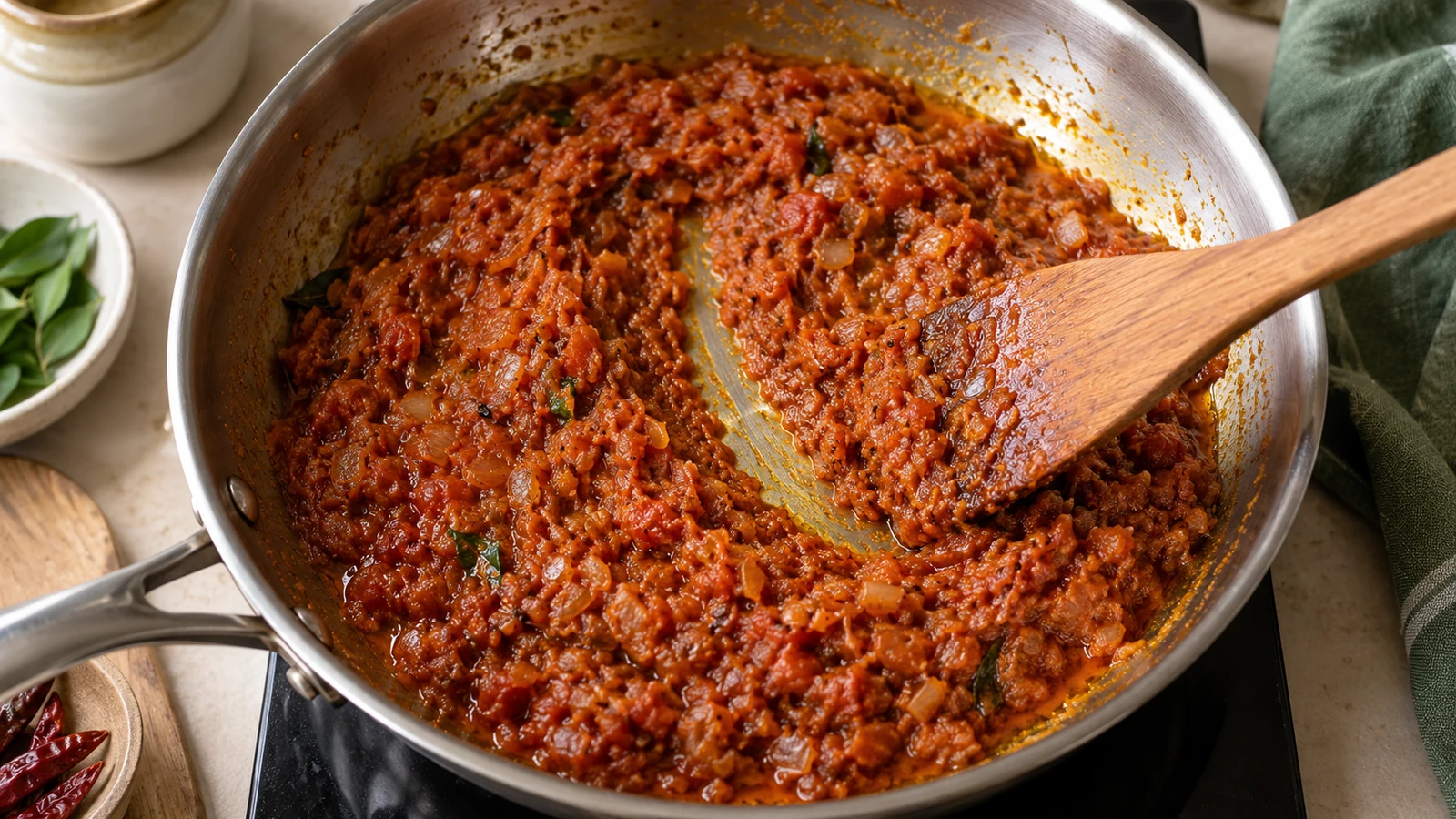
Fat may then gather in tiny beads, a glossy edge or small pockets around the mixture. You don’t always get a dramatic red ring. The amount of oil and the ingredients both affect what you see.
A coarse onion-tomato base behaves differently from a smooth paste. Nuts, dairy and other ingredients can change the way fat stays mixed in too.
Oil is one clue among several
Check whether the onions have softened and the tomatoes have lost their raw texture. The smell should move away from harsh raw ingredients toward the cooked character you’re aiming for.
Stir the masala and see whether it holds together more firmly. A spatula drawn through a thick base may leave a brief path across the pan. Taste a small cooled amount when the ingredients are suitable for tasting.
None of these signs proves every masala needs the same cooking time. A fresh tomato sauce and a deeply cooked curry base have different goals. Use the recipe’s method and the food in front of you together.
A low-oil pan may show very little
If you started with a teaspoon of oil, don’t expect the same visible separation as a restaurant-style base made with several tablespoons. Waiting for a large pool can mean overcooking the food.
You don’t need to keep pouring in oil to force the appearance. Judge the softened ingredients, cooked aroma and intended consistency as well.
Cookware matters too. A wide pan loses water faster than a deep narrow one. A thin pan can scorch a small patch while the rest of the mixture is still wet. Stir into the edges and adjust the heat.
What if it starts catching?
Lower the heat. If the base is simply drying before the ingredients soften, add a small splash of water and scrape up the unburnt mixture. Let it cook gently again.
Blackened bits and an acrid smell call for a different response. Adding water won’t remove a burnt flavour. Don’t scrape a burnt layer into the rest of the sauce just to save every spoonful.
Podi doesn’t need the same long frying stage
A roasted dry blend has already gone through a different preparation from raw onion, tomato and freshly ground ingredients. Don’t assume podi needs to sit in the pan until it releases oil of its own.
Add it at the stage that suits your recipe, and give fine particles enough moisture and gentle heat to avoid scorching. Our guide to when to add podi explains that timing.
Once the masala is ready, move to the next step. A glossy edge is useful information. Your nose, spoon and the texture of the ingredients finish the judgement.
Related posts
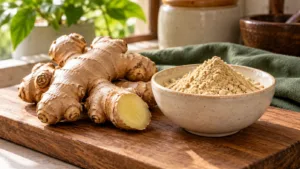
Fresh ginger and dry ginger powder bring different flavour and texture. Learn where each fits and how to approach a substitution without overdoing it.
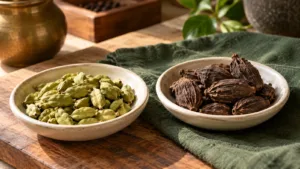
Learn how green and black cardamom differ in aroma, common uses and handling, and why swapping the pods can change your dish.
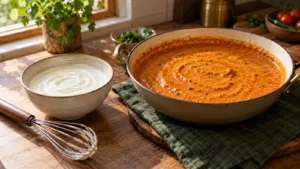
Learn why curd turns grainy in gravy, how to add it gently and what you can realistically rescue once the sauce has split.
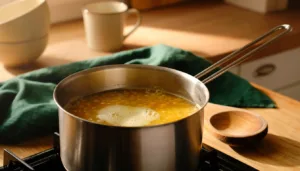
Learn why dal forms foam, when skimming helps and how to manage a rising pot. Cooking foam alone can’t tell you whether soaked dal is...more
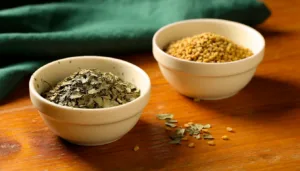
Dried fenugreek leaves and methi seeds have different jobs in the kitchen. Learn where each fits, when to add it and how to approach substitutions.