


No products in the cart.
Return To Shop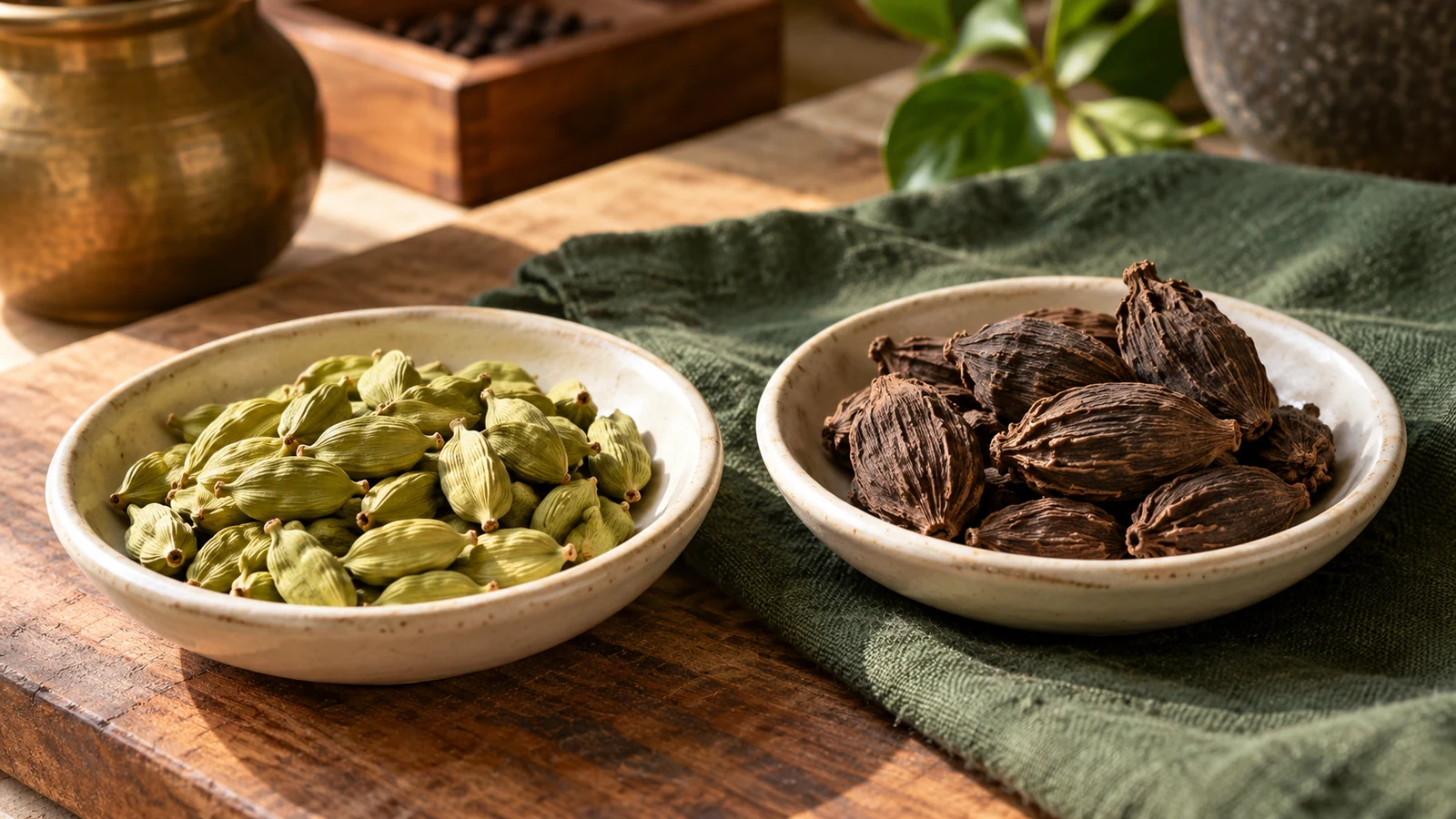
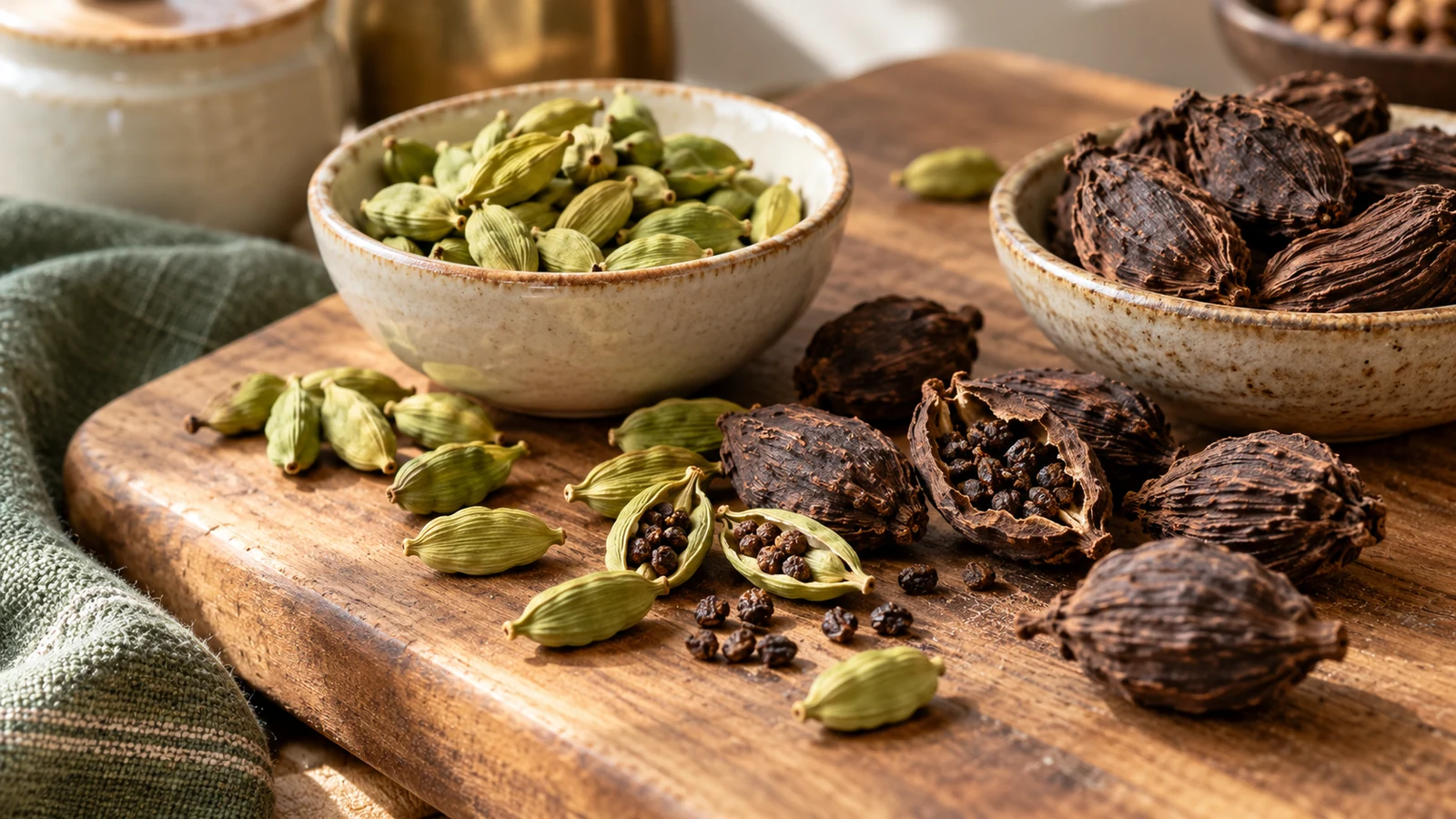
Open a green cardamom pod and the smell is bright, sweet and floral. Open a black one and you’re in deeper territory, with a resinous aroma and often a clear smoky note.
Both belong in an Indian spice cupboard. They do different work, so it’s worth checking which one the recipe means before dropping a handful into the pot.
Two spices, with different identities
Green cardamom, usually called small cardamom or chhoti elaichi, is Elettaria cardamomum. The familiar Indian black cardamom, or badi elaichi, is generally Amomum subulatum. It’s a different species, not a green pod left to grow bigger.
Spices Board India describes small cardamom and its culinary uses. ICAR’s large-cardamom guide identifies the separate spice grown in the north-eastern Himalayan region.
Where green cardamom fits
Think of kheer, chai and many Indian sweets. Green cardamom’s fragrant seeds work well in milk and sugar, but its uses go much further. Pulao, biryani and savoury gravies can use it too.
For a gently scented pot, lightly crack the pod and leave it whole. Crushing the seeds gives a more direct flavour. Grind small amounts when you need them, because the powder loses its lively aroma as it sits.
A whole pod in a pot perfumes the liquid gradually. Fine powder blends through the dish quickly. Those forms aren’t always interchangeable spoon for spoon.
Where black cardamom fits
Black cardamom suits dishes with enough body to carry its strong aroma, including some meat curries, dals and rice dishes. Drying methods influence how smoky a batch tastes, so smell the pods you actually have.
One large pod can make itself known. Start with your recipe’s amount, particularly if you’re cooking a small pan. A strong black-cardamom note can take over a delicate sauce.
Leave the pod whole or lightly crack it as the method directs. Fish it out before serving when practical. Biting into a fibrous pod isn’t the pleasant part of dinner.
Can you swap one for the other?
There isn’t a reliable one-pod-for-one-pod swap. The pods differ in size, seed quantity and flavour. Replacing green cardamom with black in a milk dessert would make a very noticeable change.
In a robust savoury curry, you might choose to make an adaptation using a little of the other spice. Taste with that change in mind. If cardamom plays only a small supporting role, leaving it out may suit the dish better than forcing a substitute.
Don’t assume every packet labelled “cardamom” means the same thing. Check the product name and look at the pods. Imported products can use the name for other related spices as well.
Buy for aroma and store with care
Look for sound pods with a clear, fresh smell when opened. Colour alone can’t tell you everything about quality. Keep them in a tightly closed container away from the hob and direct sunlight.
If you’re exploring how whole spices behave in a finished dish, read our cumin and caraway guide too. Getting the ingredient right is a useful first step toward getting the flavour you wanted.


Related posts
Understand why oil appears around cooked masala, what other signs to check and why a low-oil curry may never show a clear pool.
Fresh ginger and dry ginger powder bring different flavour and texture. Learn where each fits and how to approach a substitution without overdoing it.
Learn why curd turns grainy in gravy, how to add it gently and what you can realistically rescue once the sauce has split.
Learn why dal forms foam, when skimming helps and how to manage a rising pot. Cooking foam alone can’t tell you whether soaked dal is...more
Dried fenugreek leaves and methi seeds have different jobs in the kitchen. Learn where each fits, when to add it and how to approach substitutions.