


No products in the cart.
Return To Shop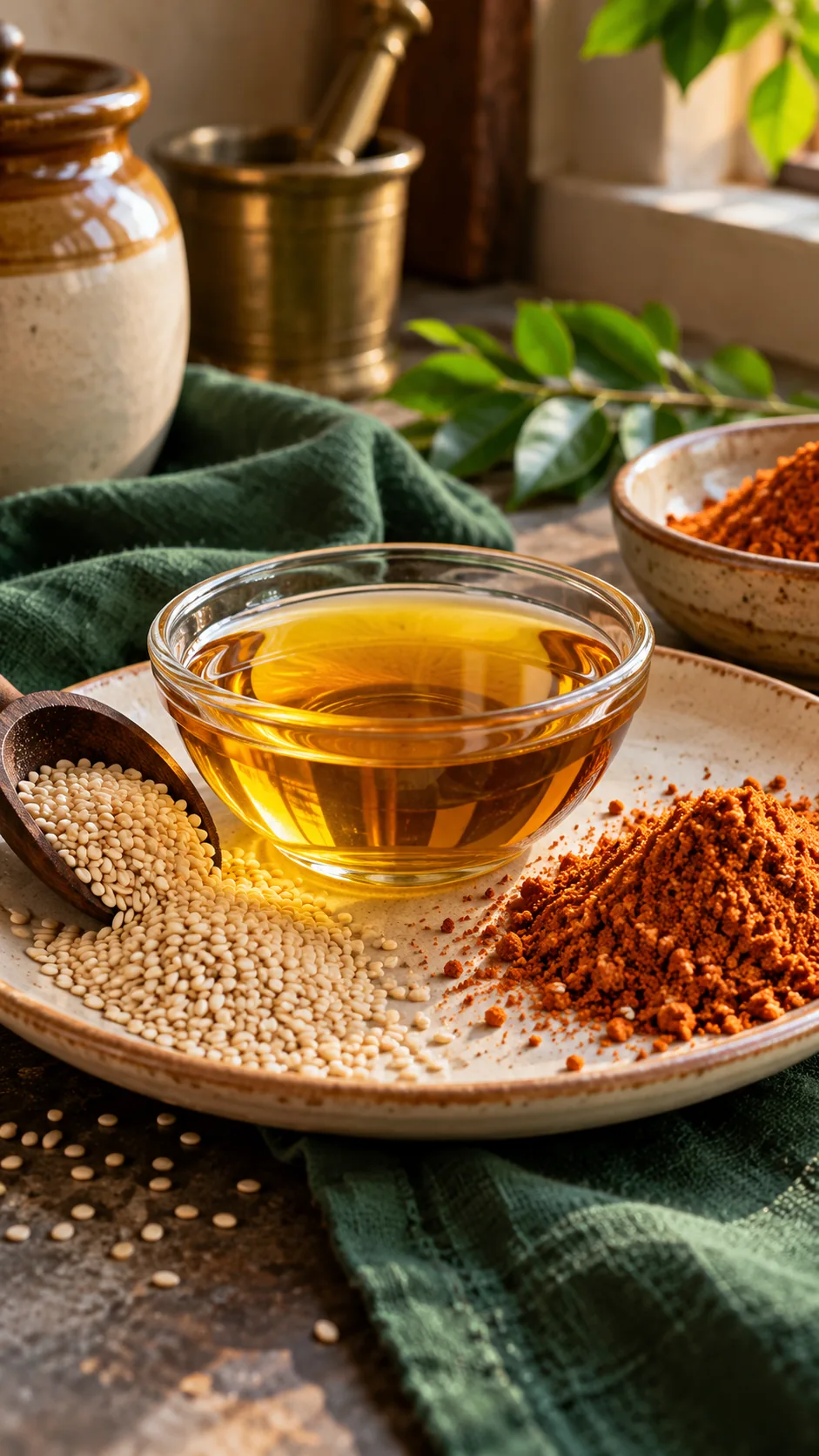
A dry chutney powder with oil on the label can raise a fair question. Is the podi still dry? Do you need to add more oil when serving it? And is sesame oil the same thing as the sesame seeds in the blend?
Rapidli Karnataka Podi lists both whole sesame and sesame oil. They’re separate ingredients, and each belongs on the label. The finished product is still a dry seasoning that you can sprinkle, mix or use in a marinade.
What the ingredient list confirms
The clear fact is that sesame oil is part of Karnataka Podi’s recipe. You don’t have to add it yourself for it to be present in the blend.
The label alone doesn’t tell you exactly how much oil is used, which ingredients it touches or the stage at which it’s added. Those details belong to the production recipe. It would be easy to guess, but a good ingredient story should stick to what is known.
It also doesn’t identify an oil as toasted, cold-pressed or refined unless that detail is stated. Those forms can differ in aroma. We shouldn’t assume one from the words “sesame oil” alone.
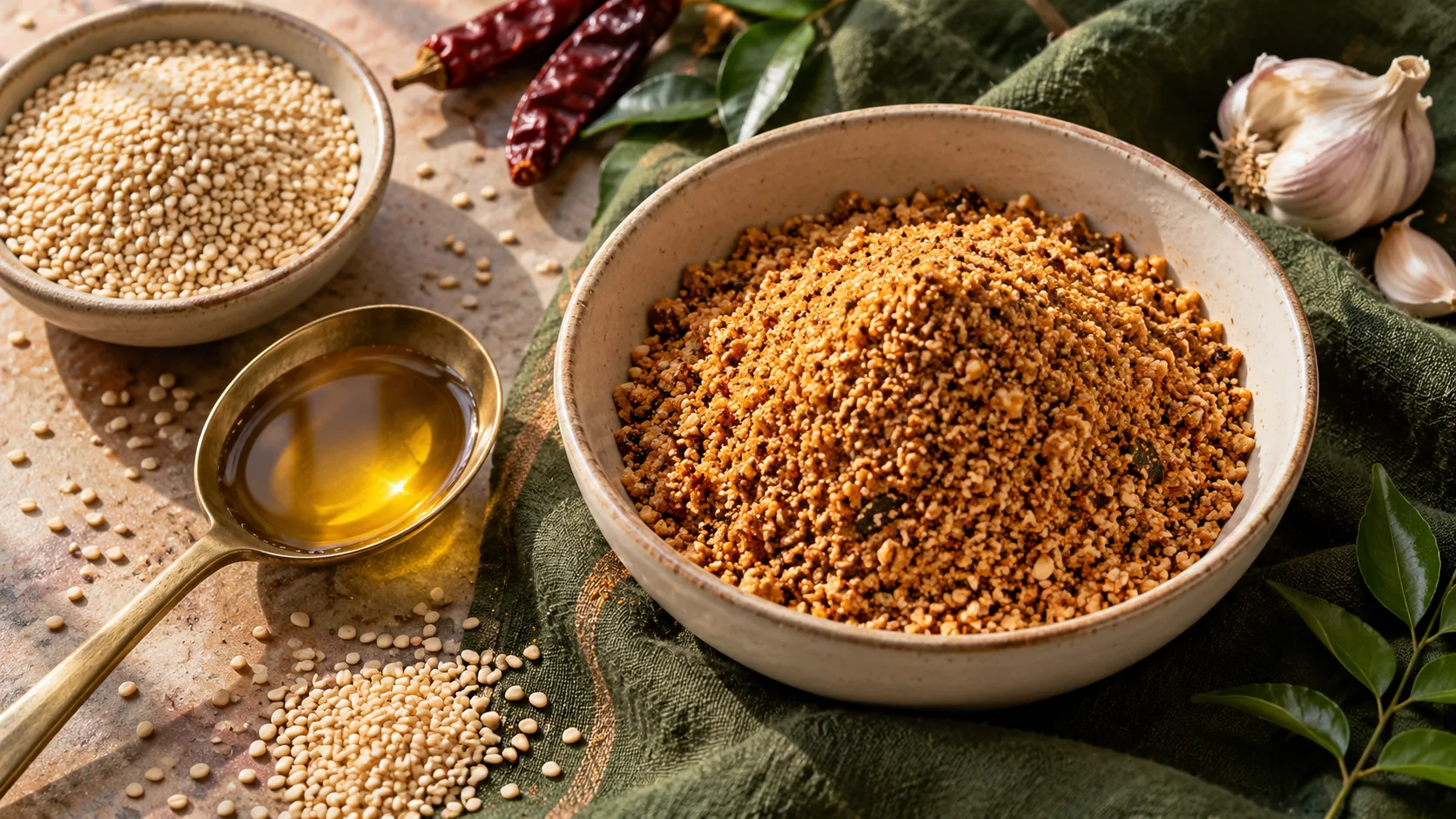
Oil can be part of a dry blend
“Dry” describes how the finished podi behaves. It doesn’t mean every ingredient must be free of fat. Sesame seeds and dry coconut already contain their own oils.
A powder can include some added oil and still be suitable for sprinkling. The amount and the rest of the recipe affect its final texture. An oil ingredient on the pack doesn’t mean you’re buying a ready-made wet chutney.
When you use Karnataka Podi on eggs or vegetables, the same roasted blend is doing the seasoning. Its ingredient list helps explain what you’re adding to the meal.
Seeds and oil do different jobs in a mouthful
Whole sesame contributes solid material to the grind. Its pieces can affect the texture, and the seeds bring their own flavour. Sesame oil is the liquid fat obtained from sesame.
Oil doesn’t add the same seed fragments to a blend. Depending on its type, it can have a subtle or more noticeable aroma. How much you taste in a finished podi also depends on the other ingredients around it.
Garlic, coconut and chillies are all part of Karnataka Podi too. You can’t look at one ingredient and use it to explain every spoonful. For more on the seeds themselves, read what sesame seeds bring to podi.
Do you still need oil when serving?
That depends on the food and the texture you want. A dry sprinkle can work on a warm omelette or a cooked vegetable dish that already has some moisture or fat.
Alongside idli, adding a little ghee or sesame oil makes a softer dip. That’s a serving choice, separate from the oil already listed in the recipe. Start with a small amount and adjust until it feels right for your meal.
Our guide to ghee and sesame oil with podi covers that choice in more detail. You don’t need to treat the label as an instruction to add another large spoonful.
Read the sesame information carefully
Karnataka Podi contains sesame seeds as well as sesame oil. That matters for anyone who needs to avoid sesame. Read the pack’s allergen information before choosing it.
Don’t assume an oil’s processing makes this particular blend suitable for a sesame allergy. The whole seeds are present too. The ingredient list is there to help you make an informed choice.
Keep the pack properly closed
Follow the storage directions on your pouch. Use a clean, dry spoon and close the pack after serving. That protects the blend from kitchen moisture and keeps its aroma in better shape.
Adding oil to your serving bowl is different from adding it to the whole pouch. Mix only what you plan to eat, and keep the stored powder dry. Our podi storage guide covers everyday handling.
The useful takeaway from the label is straightforward: sesame oil is a declared part of Karnataka Podi, alongside whole sesame. It helps you understand the ingredients in the blend while leaving you free to choose how you serve it.

Related posts
Understand why oil appears around cooked masala, what other signs to check and why a low-oil curry may never show a clear pool.
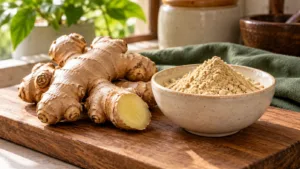
Fresh ginger and dry ginger powder bring different flavour and texture. Learn where each fits and how to approach a substitution without overdoing it.
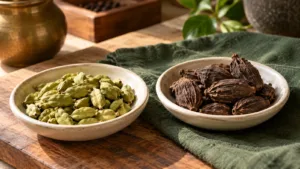
Learn how green and black cardamom differ in aroma, common uses and handling, and why swapping the pods can change your dish.
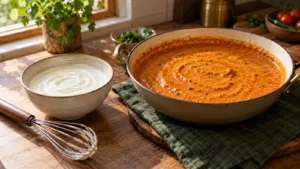
Learn why curd turns grainy in gravy, how to add it gently and what you can realistically rescue once the sauce has split.

Learn why dal forms foam, when skimming helps and how to manage a rising pot. Cooking foam alone can’t tell you whether soaked dal is...more