


No products in the cart.
Return To Shop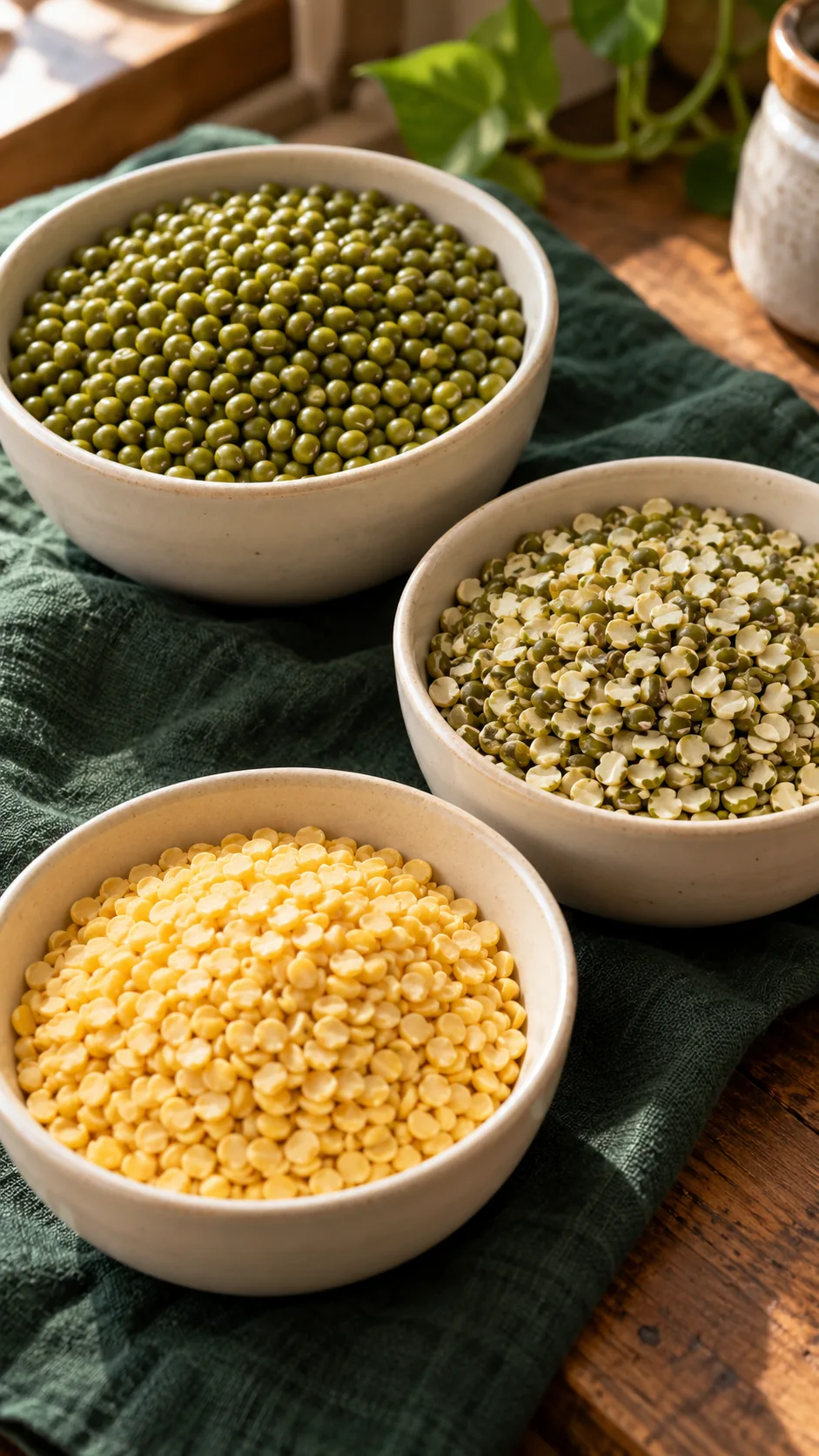
Moong doesn’t look the same in every packet. One bag holds small green beans. Another has split pieces with green skin. A third is full of yellow dal.
These forms start with the same pulse, but their shape and skin change how they behave in the pan. Choosing the right one makes dinner easier, especially when a recipe expects a soft dal and you’ve bought whole beans.
What’s in each packet?
Whole green moong is the intact mung bean with its green outer skin. It keeps a more distinct bean shape when cooked gently.
Split moong with skin, often sold as chilka moong dal, has been split while keeping the green skin. Its inside is yellow, so the packet has a mixture of green and yellow surfaces.
Yellow split moong, often called dhuli moong dal, has been split and had the skin removed. It’s the familiar yellow dal used in many soft, comforting dishes.
Check the actual grains as well as the name. Regional labels and English translations vary, and “moong dal” alone may leave the form unclear.
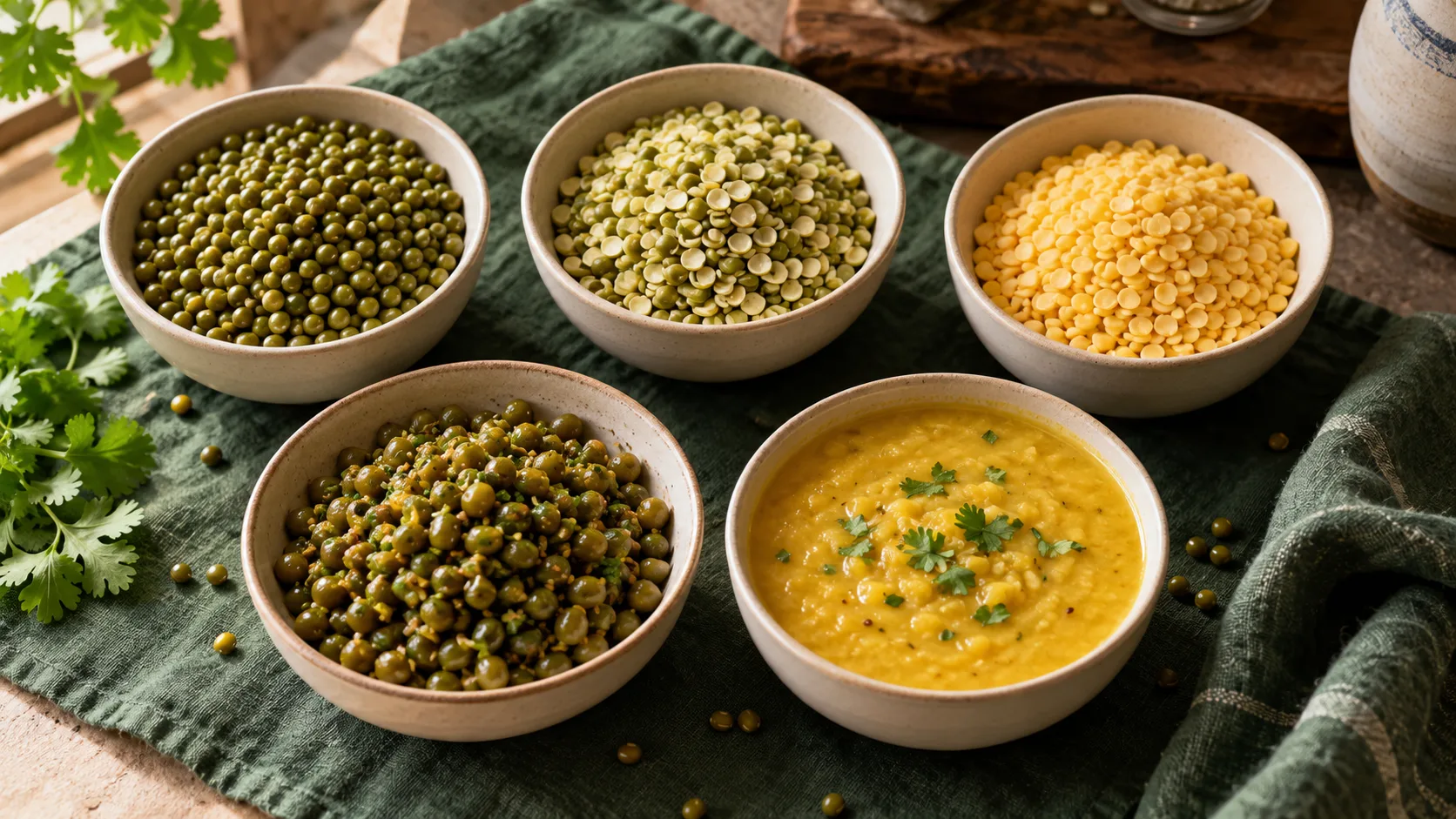
Choose whole moong for a distinct bite
Whole moong suits dishes where you want recognisable beans. Think whole-moong curry, a well-drained cooked bean salad or a filling alongside rice.
It usually needs more cooking time than split dal. Soaking can help with planning, but bean age and the cooking method affect the result. Follow your packet or a recipe written for whole moong.
For a salad, check tenderness without cooking until every bean collapses. For a thick curry, a softer result may be exactly what you want.
Choose chilka moong for a little more texture
Split moong with skin is useful for a dal or khichdi with more visible texture. The split pieces soften while the green skin gives the finished pot a different look and feel.
It sits comfortably in everyday rice-and-dal meals. If you like a dal that has some structure after stirring, this is a good form to try.
Don’t expect it to look like yellow moong once cooked. The skin is part of the dish, and the colour will be more muted.
Choose yellow moong for a softer bowl
Yellow split moong breaks down readily into a soft dal. It also suits khichdi when you want the rice and pulse to come together.
For chilla, use a recipe that calls for soaking and grinding the dal. A packet of split moong isn’t an instant batter on its own.
Our podi moong dal recipe uses yellow split moong. Using that form keeps the cooking instructions relevant to the ingredients in your pan.
Can you swap them?
You can adapt a dish, but adjust the cooking plan too. Whole moong won’t become soft in the same time as a quick yellow-dal recipe. Split dal may turn creamy in a dish intended to keep whole beans separate.
Start with the texture you want, then choose the form. If changing a recipe, check water and tenderness as you cook instead of relying on its original timer.
A pressure cooker can shorten the process, but the cooker type, quantity and pulse age still matter. Counting whistles isn’t a dependable cooking time across every kitchen.
Look for a good packet
Choose clean grains with no visible insects, damp clumps or musty smell. Check the packing details and keep the pulse in a dry, closed container at home.
Rinse and inspect before cooking. Soaking, where the recipe calls for it, is part of preparation; the beans still need cooking until tender.
Sprouts are another preparation stage, rather than a fourth type of moong. Our sprouts chaat recipe uses thoroughly cooked sprouts and explains that choice.
Let the meal decide
For a bowl with distinct beans, whole moong is a useful starting point. For a textured dal, look at chilka. For a soft dal or khichdi, yellow moong is often the easiest match.
There’s no need to crown one form as the winner. A good packet and a cooking method that fits it are more useful than a blanket “healthiest dal” claim.


Related posts
Understand why oil appears around cooked masala, what other signs to check and why a low-oil curry may never show a clear pool.
Fresh ginger and dry ginger powder bring different flavour and texture. Learn where each fits and how to approach a substitution without overdoing it.
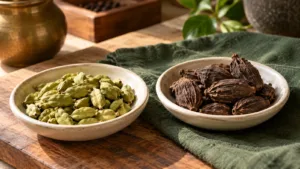
Learn how green and black cardamom differ in aroma, common uses and handling, and why swapping the pods can change your dish.
Learn why curd turns grainy in gravy, how to add it gently and what you can realistically rescue once the sauce has split.

Learn why dal forms foam, when skimming helps and how to manage a rising pot. Cooking foam alone can’t tell you whether soaked dal is...more