


No products in the cart.
Return To Shop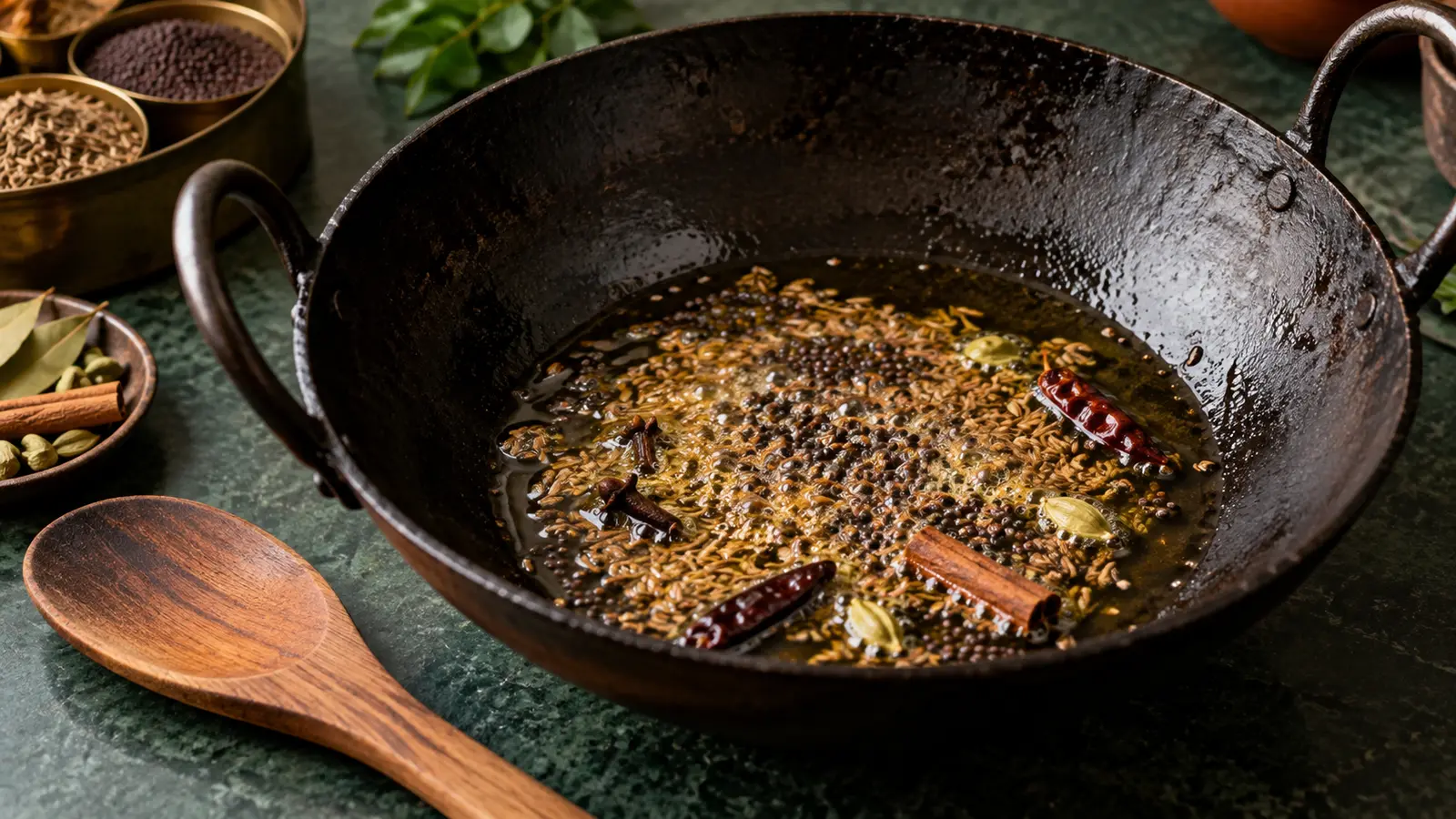
A few cumin seeds hit hot oil and the kitchen suddenly smells like dinner.
That small step is doing more than adding drama to the pan. Frying spices in oil helps release aroma and carry it through the dish.
It also goes wrong quickly. A fragrant tempering can become bitter in the time it takes to answer a phone notification.
Oil carries spice aroma
Many flavour compounds in spices dissolve better in fat than in water. Warm oil pulls those compounds from the spice and spreads them across the ingredients added next.
That’s why cumin fried briefly in oil can season an entire pot of dal. The seeds aren’t touching every spoonful, but their aroma has travelled.
Oil also coats the tongue, which can make spice flavour feel fuller and last longer.
Whole spices usually go in first
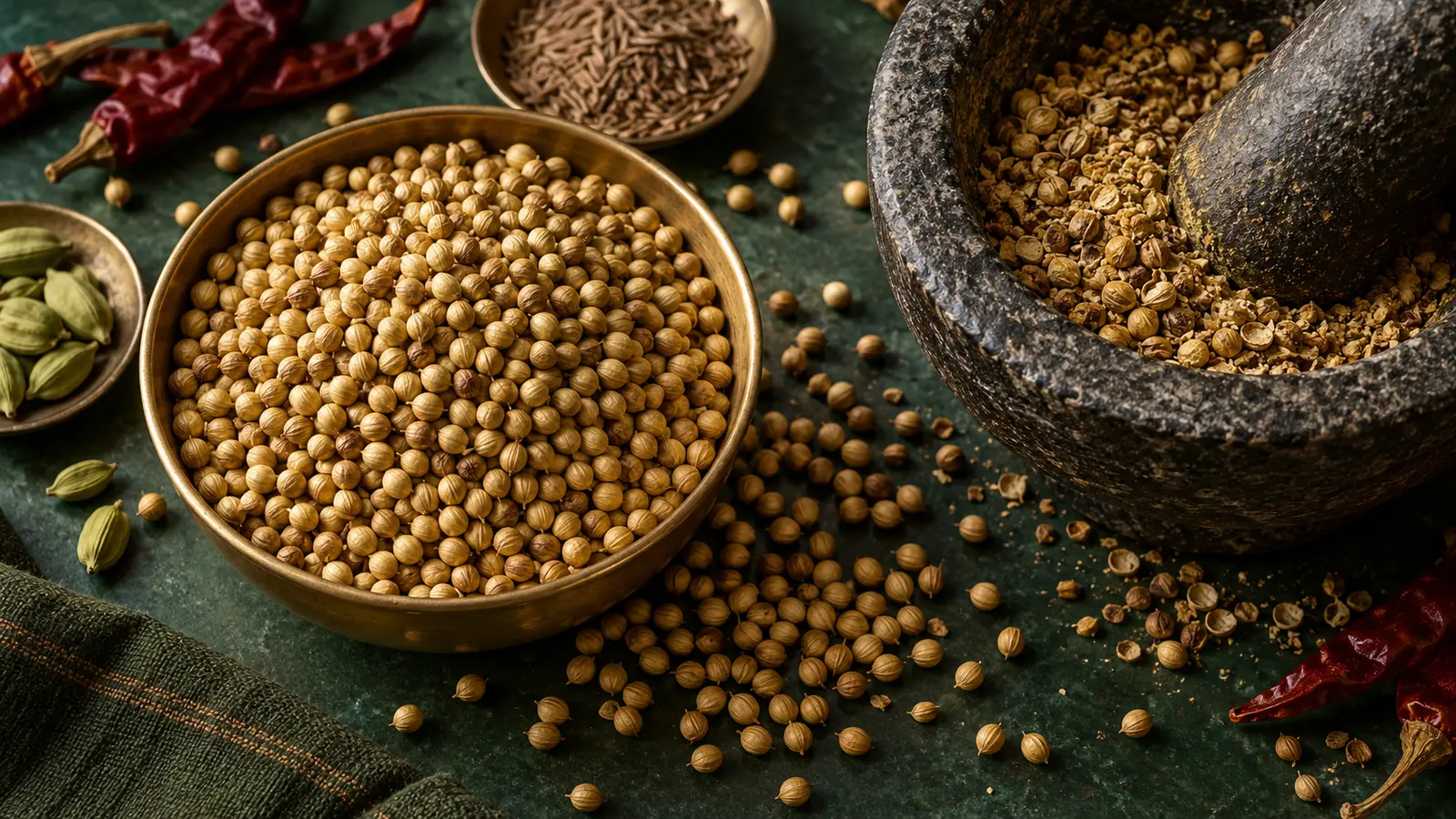
Mustard seeds, cumin, cloves, cardamom, cinnamon and dried chillies are often added early because they need time to release flavour.
The oil should be hot enough to make the spices react. Cumin should sizzle. Mustard seeds should begin to pop.
If the oil is barely warm, the spices may soak rather than bloom. If it’s smoking aggressively, delicate ingredients can burn before you add anything else.
Not every spice needs the same time
Large whole spices usually tolerate heat better than fine powders. Mustard and cumin may go in first, followed by curry leaves, hing or dried chilli.
Ground turmeric and chilli powder can scorch in seconds. They’re often added after onion, tomato or another moist ingredient has lowered the pan temperature.
There isn’t one universal order. A tempering for curd rice needs a different approach from the masala base for chicken curry.
What blooming does to flavour
Heat changes raw, dusty spice notes into something warmer and more rounded. It can also bring out nutty aromas in seeds.
This doesn’t mean darker is always better. Once a spice crosses from toasted to burnt, bitterness takes over and the brighter aromas disappear.
If this happens often, read our guide on why masala burns before chicken is cooked.
Whole spices and ground masala behave differently
Whole spices release flavour gradually. They give you a slightly wider safety window and can perfume the oil without thickening it.
Ground masala exposes much more surface area to heat. It releases flavour quickly but also sticks, dries out and burns faster.
When frying ground masala, keep the heat controlled and add a splash of water if the pan becomes dry. You want the powder to cook, not form a black crust.
Why spices are sometimes added at the end
A final tempering gives a dish fresh aroma that hasn’t been softened by a long simmer.
This is common with dal, curd rice, chutneys and some vegetable dishes. The hot oil and spices are poured over the finished food just before serving.
Late seasoning is also useful for black pepper, garam masala and other ingredients whose aroma fades with prolonged cooking.
Does the type of oil matter?
Yes. Neutral oils let the spices lead. Mustard oil, coconut oil, sesame oil and ghee bring flavours of their own.
The regional choice is rarely random. Coconut oil changes the character of a Kerala-style tempering, while ghee gives dal a different finish from a neutral refined oil.
Use enough fat to carry the spice, but don’t assume more oil automatically creates more flavour.
A practical way to avoid burning spices
Measure the spices before heating the pan. Keep the next ingredient ready. Once the seeds start sizzling, you may have only a few seconds.
Use your senses. Listen for the crackle, watch the colour and smell the aroma. If the spices turn black and smell acrid, starting again is usually better than trying to hide the bitterness.
The short answer
We fry spices in oil because warm fat extracts aroma and spreads it through the food.
The trick is timing. Whole spices need enough heat to bloom, while fine powders need moisture and a gentler hand.


Related posts
Rice in podi can shape its texture and toasted flavour. Learn why some recipes use it, with Rapidli Kerala Podi as a clear ingredient-list example.
Tamarind adds a sour note to Andhra Podi. Learn how it works with chilli and garlic, and why a dry blend behaves differently from a...more
Dry coconut gives podi a rounder flavour and fuller mouthfeel. Here’s how roasting, natural fat and moisture control change the final spoonful.
Grinding spices releases their aroma quickly, but it also exposes them to air. Here’s why ground spices smell stronger at first and fade sooner.
Fried onions do far more than add sweetness to biryani. They shape its aroma, colour, texture and the way the layers come together during dum.