


No products in the cart.
Return To Shop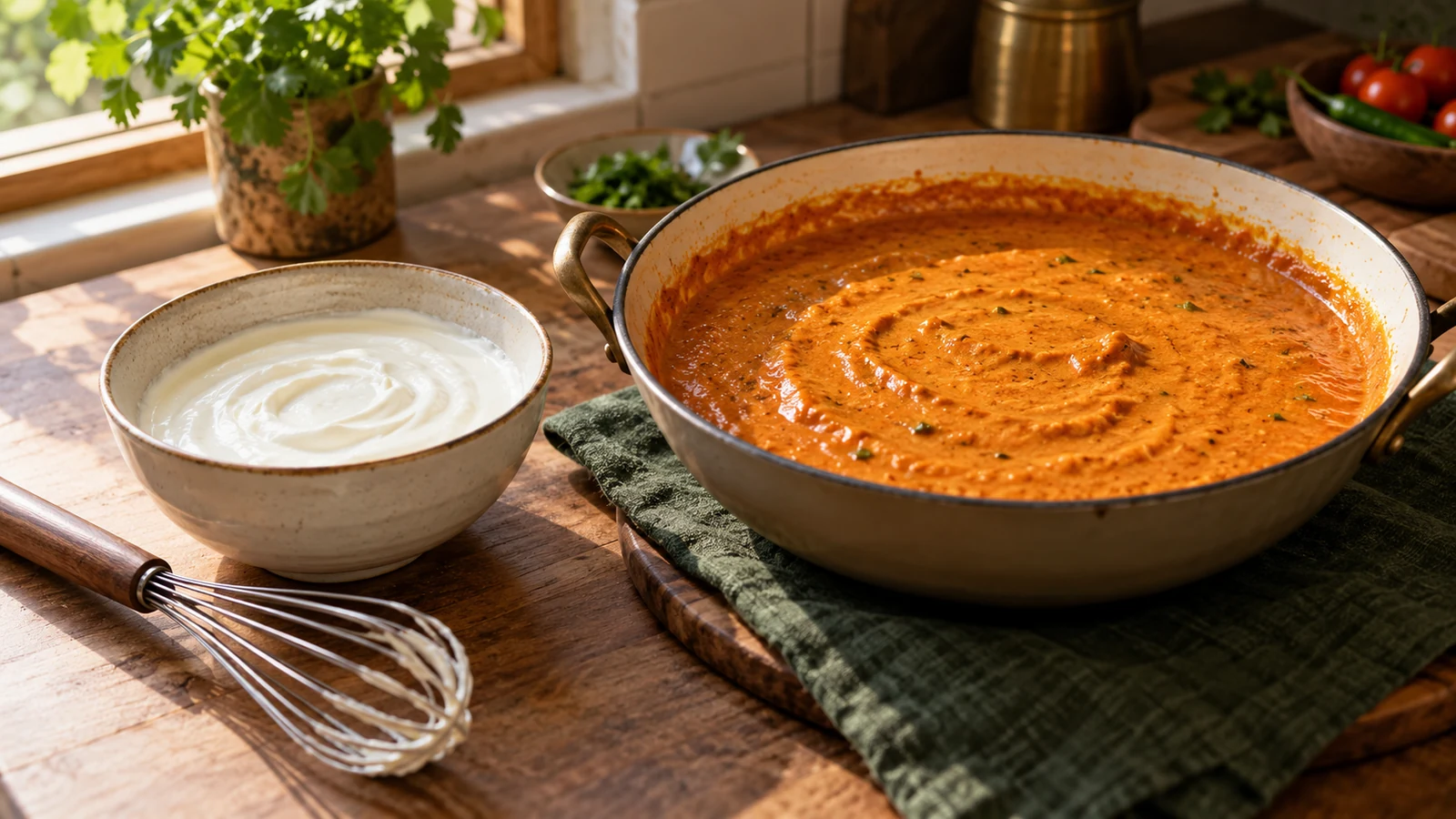
You’ve cooked the onions, stirred in the spices and added curd. Suddenly the gravy looks grainy, with little pale flecks floating in thin liquid. It’s frustrating, especially when everything looked fine a moment earlier.
Curd splitting in curry usually comes down to its proteins gathering into larger clumps as the sauce heats. Curd is already an acidic milk gel. Strong heat can tighten that structure and push out liquid.
A hot pan makes the change happen fast
A spoonful of cold curd dropped into sizzling masala meets a sudden temperature change. The small amount nearest the pan gets hot before you’ve had time to stir it through.
Acid in ingredients such as tomatoes can make a dairy sauce less forgiving too. That doesn’t mean curd and tomato can’t share a dish. Plenty of recipes use both. It means the temperature and the way you combine them deserve attention.
For an everyday curry, give yourself time to lower the heat before adding the curd. If the pan is still spitting hard, move it off the burner briefly.
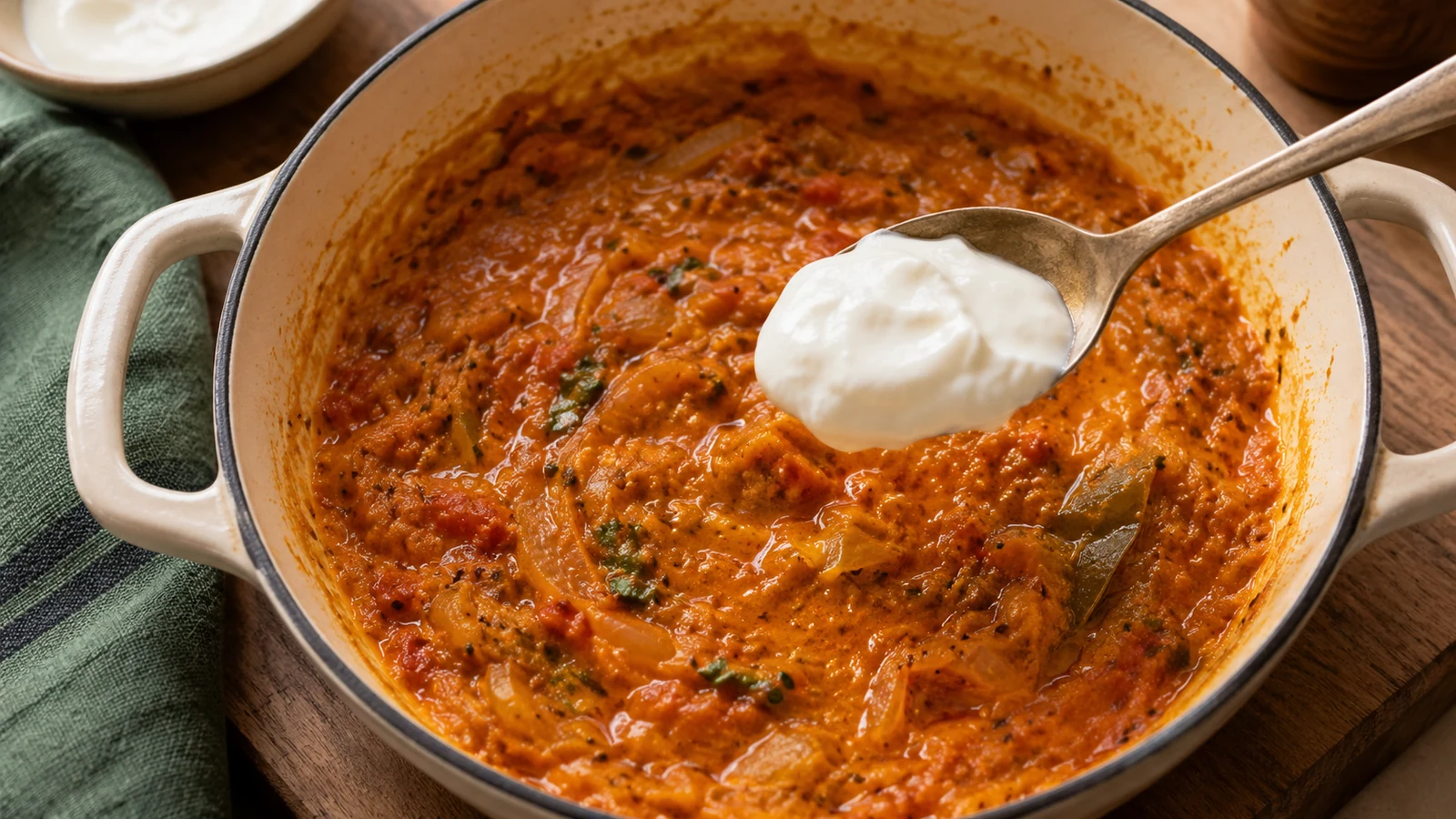
Make the curd easier to stir in
Whisk it smooth in a bowl first. Thick lumps are harder to distribute, and chasing them around a hot pan encourages you to cook the sauce harder than it needs.
Full-fat plain curd is often more forgiving than a very lean product. Fat helps the sauce feel smoother, but it doesn’t make it impossible to split. A hard boil can still cause trouble.
Letting a measured portion lose some of its fridge chill while you prepare the other ingredients can help with handling. Don’t leave the whole tub sitting out through a long cooking session.
Add gradually and keep the heat gentle
Stir a little warm gravy into the whisked curd, then repeat before adding that mixture back to the pan. This gradually warms and loosens it. Keep stirring as you combine them.
Once the curd is in, bring the sauce up gently. Avoid an aggressive rolling boil. If your recipe needs a long, vigorous reduction, do that stage before the dairy goes in where the method allows.
Some recipes use flour or another starch to help stabilise the sauce. Serious Eats demonstrates that approach in a cooked yogurt sauce. Follow the recipe’s method and quantity. A random spoon of dry flour can leave lumps and needs proper cooking.
Can you rescue a split gravy?
Take it off the heat first. If the change is slight, whisking may improve how it looks. A smooth sauce without solid pieces may also look better after careful blending, using equipment suitable for warm food.
These steps don’t reliably reverse the protein change. A badly split sauce may stay grainy. You can still decide whether its texture works for the meal, provided the ingredients were fresh and handled properly. Splitting by itself isn’t a test for spoilage.
Don’t keep boiling in the hope that the curd will pull itself back together. That often leaves less liquid and more visible grains.
Gravy and marinade ask different things of curd
A curd marinade is meant to cling to food before cooking. A gravy is expected to stay reasonably smooth while it heats. Our guide to curd marinades covers that separate job.
For a curry, the useful habit is simple: whisk before adding, warm it gradually and watch the pan. The heat control usually matters more than another spoonful of spice.

Related posts
Understand why oil appears around cooked masala, what other signs to check and why a low-oil curry may never show a clear pool.
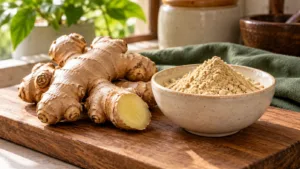
Fresh ginger and dry ginger powder bring different flavour and texture. Learn where each fits and how to approach a substitution without overdoing it.
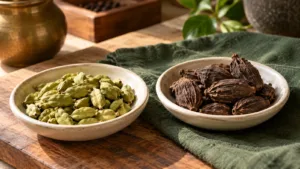
Learn how green and black cardamom differ in aroma, common uses and handling, and why swapping the pods can change your dish.
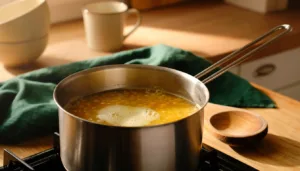
Learn why dal forms foam, when skimming helps and how to manage a rising pot. Cooking foam alone can’t tell you whether soaked dal is...more
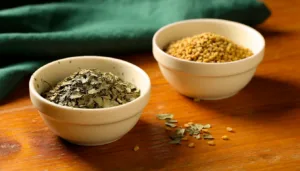
Dried fenugreek leaves and methi seeds have different jobs in the kitchen. Learn where each fits, when to add it and how to approach substitutions.