


No products in the cart.
Return To Shop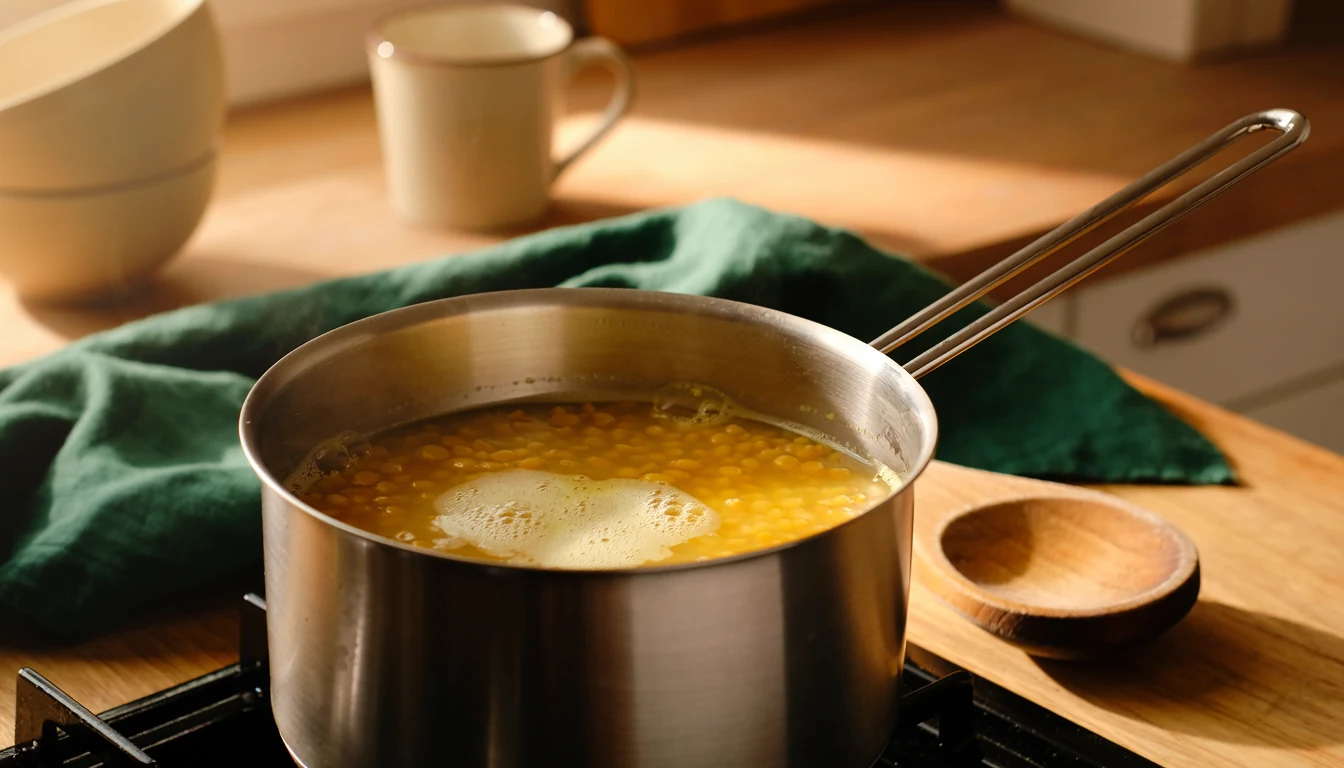
You put dal on the hob, turn away for a moment and a pale layer starts climbing the pot. It’s a common cooking problem, and turning up the heat usually makes it worse.
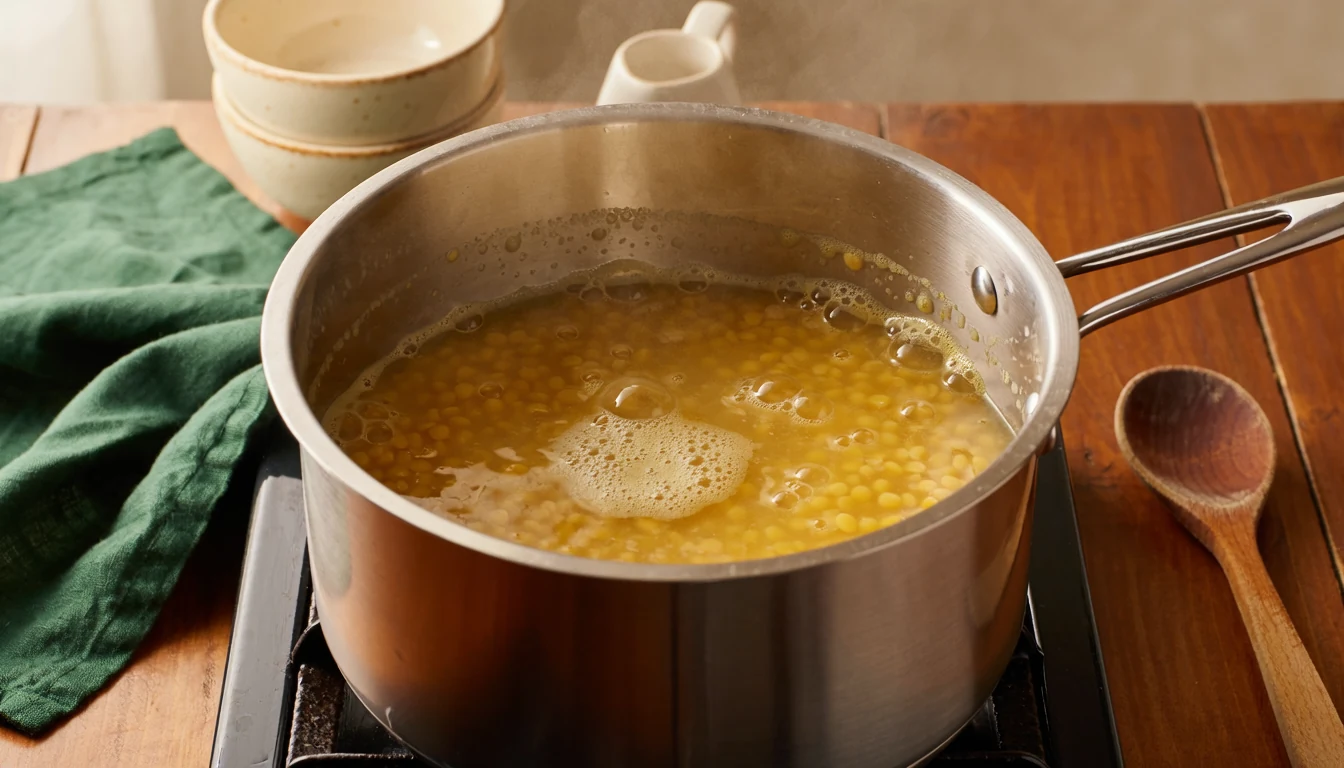
Foam forms when bubbles collect in the cooking liquid and last at the surface. Compounds released from pulses, including proteins and saponins, can help stabilise those bubbles. Starch and other material in the water can also affect how the pot behaves.
Why one batch foams more than another
Different pulses release different mixtures of material into the water. Processing, rinsing and how vigorously you boil them can change the result too. A rapidly boiling pan also produces bubbles faster.
That means a quiet pot of whole moong and a rolling pot of split dal may look quite different. Foam by itself isn’t a useful score for freshness, protein quality or how “pure” a packet is.
Do you have to skim it?
For dal cooked in an open saucepan, you can skim excess foam if it helps keep the pot manageable or gives the finish you prefer. Use a spoon and avoid splashing hot liquid.
Skimming is a cooking choice. Don’t treat the pale froth as proof that harmful material is leaving the dal, or assume that every bit must be removed for the meal to be safe.
If you’re happy with the texture and the pot isn’t threatening to boil over, there’s no need to chase each small bubble.
How to manage a pot that keeps rising
- Use enough headspace. A saucepan filled close to the rim leaves little room for expanding foam.
- Lower the heat after the first boil. Keep the liquid at the simmer the recipe needs, rather than a hard rolling boil throughout.
- Watch the lid. Leave it partly open when simmering in an ordinary saucepan, and stay nearby while the foam is active.
- Stir carefully. Give the base a gentle stir to reduce sticking. Take care when hot foam is near the rim.
Rinse dal before cooking as the pack or recipe directs. Rinsing can remove loose surface material, but it won’t guarantee a foam-free pot.
A pressure cooker needs its own rules
Don’t apply an open-pot skimming method to a sealed pressure cooker. Never open it under pressure or interfere with its safety valve to release foam.
Follow the cooker manual for pulses, liquid, maximum fill level and pressure release. Foaming foods often need a lower fill limit than other dishes. Keep the vent and other parts clean as the manufacturer directs, and don’t assume a setting from another cooker is suitable for yours.
Cooking foam and spoiled soaking water are different questions
Foam during boiling isn’t the same as deciding whether soaked dal has been stored safely. A sour or otherwise unusual smell, slime or visible mould is a reason to discard the batch. Don’t taste it to check.
The absence of those signs doesn’t prove safety. Time and temperature matter too. Soak in the fridge when a long soak or a hot kitchen makes room-temperature storage unsuitable, and follow product guidance. If you’re unsure how a batch was stored, start again rather than trying to make it safe by boiling.
Cook for tenderness, not a clear surface
The useful doneness check is whether the dal has cooked to the texture your dish needs. Clear water doesn’t prove that the centres are tender.
Our whole and split moong guide explains how the form of a pulse affects the meal. For a simple finished dish, try podi moong dal and add the seasoning after the dal has cooked.
Source note
Background sources, checked 18 October 2026: Stantiall and colleagues’ study of pulse cooking water and its foaming ability and research on pulse proteins and foaming. For an example of manufacturer guidance on foaming foods, see Presto’s pressure cooker instructions. Limits and release methods for your cooker must come from its own manual.

Related posts
Understand why oil appears around cooked masala, what other signs to check and why a low-oil curry may never show a clear pool.
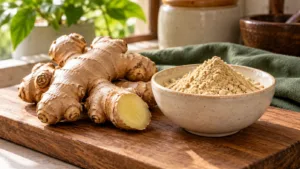
Fresh ginger and dry ginger powder bring different flavour and texture. Learn where each fits and how to approach a substitution without overdoing it.
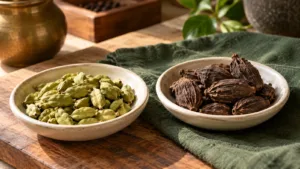
Learn how green and black cardamom differ in aroma, common uses and handling, and why swapping the pods can change your dish.
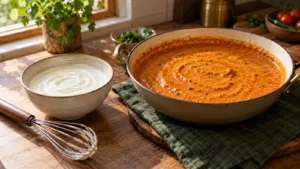
Learn why curd turns grainy in gravy, how to add it gently and what you can realistically rescue once the sauce has split.
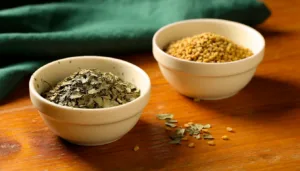
Dried fenugreek leaves and methi seeds have different jobs in the kitchen. Learn where each fits, when to add it and how to approach substitutions.