


No products in the cart.
Return To Shop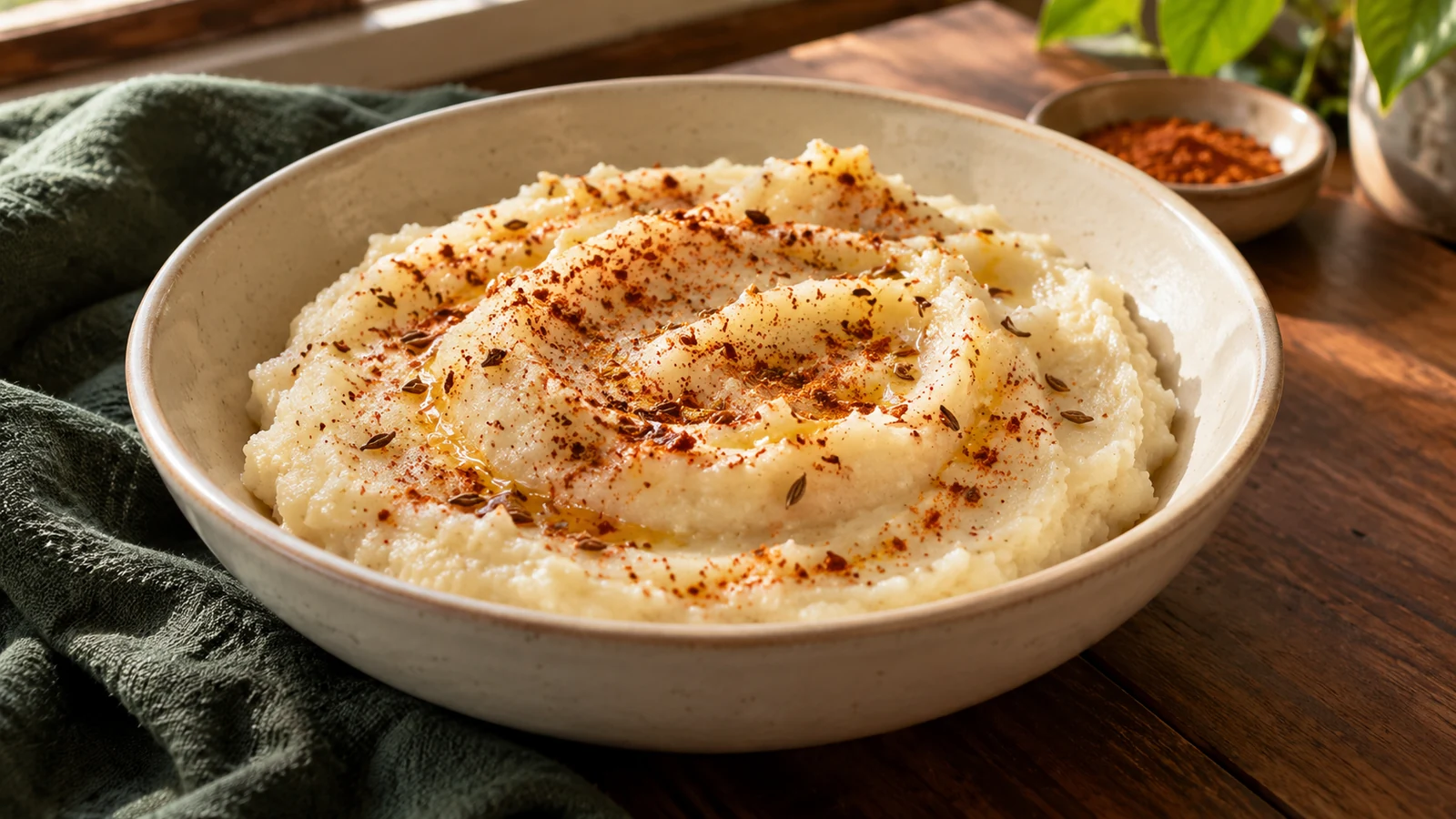
Khichu is a snack for anyone who likes their comfort food soft, warm and eaten with a spoon. Cook rice flour into seasoned water and it becomes a thick dough with a gentle chew. A little oil and podi give that plain base plenty to work with.
This is a podi variation on Gujarati khichu. Tamil Podi goes over the cooked dough at the end. That keeps its roasted flavour easy to taste and lets everyone adjust their own bowl.
What you’ll need
Serves 2 as a snack. Preparation: about 5 minutes. Cooking: about 15 minutes.
- 1 cup fine rice flour, about 150 g
- 2½ cups water, plus a little hot water if needed
- ½ teaspoon cumin seeds
- 1 small green chilli, finely chopped, optional
- 1 teaspoon oil for cooking
- 2 teaspoons oil for serving
- 2 teaspoons Rapidli Tamil Podi, then more to taste
- Salt only after checking the podi’s seasoning
Use ordinary fine rice flour. Coarse flour can leave a gritty centre. This version doesn’t need papad khar or baking soda.
Cook the rice flour properly
- Bring the measured water, cumin, optional chilli and 1 teaspoon oil to a boil in a heavy saucepan.
- Turn the heat low. Add the rice flour in a steady stream while stirring firmly with a wooden spoon. Scrape into the corners so flour doesn’t collect there.
- Once the mixture thickens, press and fold it against the sides of the pan. Break up pale flour pockets with the back of the spoon.
- Cover and cook over the lowest heat for about 7–10 minutes, folding a few times. If it becomes too stiff to work before the flour cooks, add hot water a tablespoon at a time.
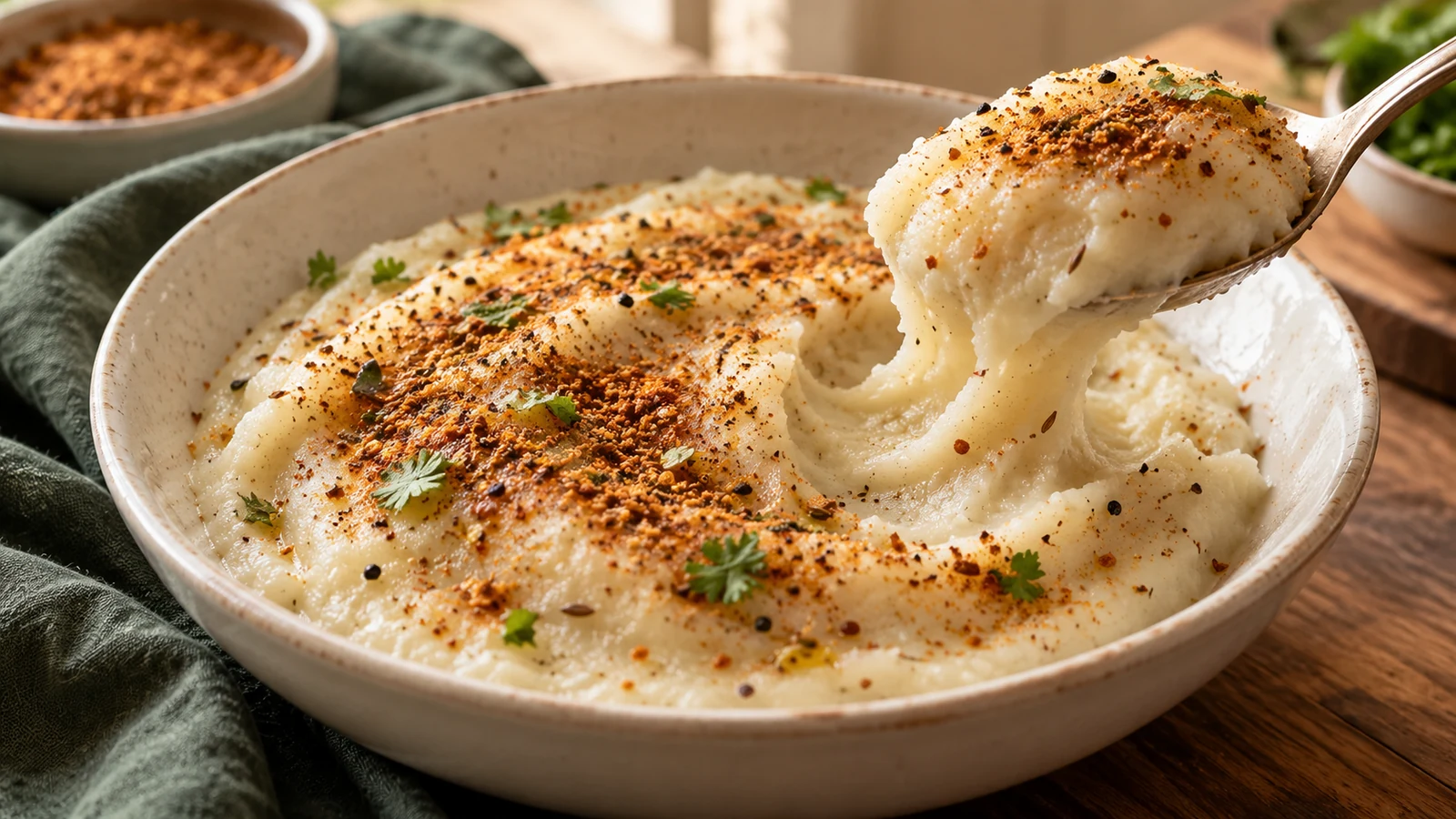
- The finished khichu should look evenly moist and come together as a soft dough. Check a cooled spoonful. It shouldn’t feel powdery or taste of raw flour. Continue cooking with a little hot water if it does.
- Spoon into bowls. Make small hollows, drizzle with the serving oil and sprinkle with Tamil Podi. Mix each spoonful as you eat.
Soft enough to scoop
Rice flour brands absorb water differently. Treat the extra hot water as a useful adjustment. Adding lots of dry flour near the end is harder to fix because that new flour also needs time to cook.
If the mixture seems wet at first, give it a few minutes over low heat before changing anything. It thickens as the flour cooks. Keep the lid on between folds so the surface doesn’t dry out.
Give the topping some space
Start with the measured podi and taste before adding salt. Rapidli blends already contain salt, and a generous topping changes the seasoning quickly.
For a stronger finish, add a little more podi to your own bowl. You can find more ways to use it in our podi serving guide. If you’re after a snack that holds its shape for slicing, try podi rava dhokla another day.
Serve khichu warm. It firms as it cools, which is a good reason to put the bowls on the table as soon as the flour is cooked.

Related posts
Mix podi into fresh methi thepla dough for a savoury flatbread. Follow the dough, rolling and pan tips to keep each thepla soft.
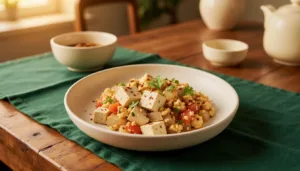
Make a tofu scramble with Karnataka Podi, onion and tomato. Drain firm tofu and reduce the tomato first so the crumbles keep their texture.
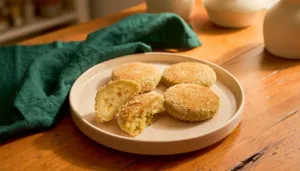
Make raw banana cutlets with Tamil Podi and a light breadcrumb crust. Cool the cooked banana before mashing and fry a tester before shaping the...more
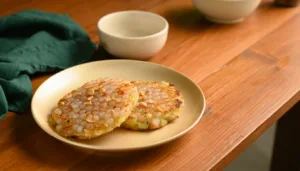
Make small sabudana thalipeeth with potato, peanuts and Tamil Podi. Drain the pearls well and shape gently for pancakes that hold together.
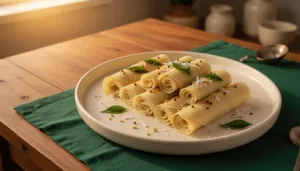
Make khandvi with a light Tamil Podi finish. Use a cooked-batter rolling test, spread thinly and add the coarse seasoning after shaping the rolls.