


No products in the cart.
Return To Shop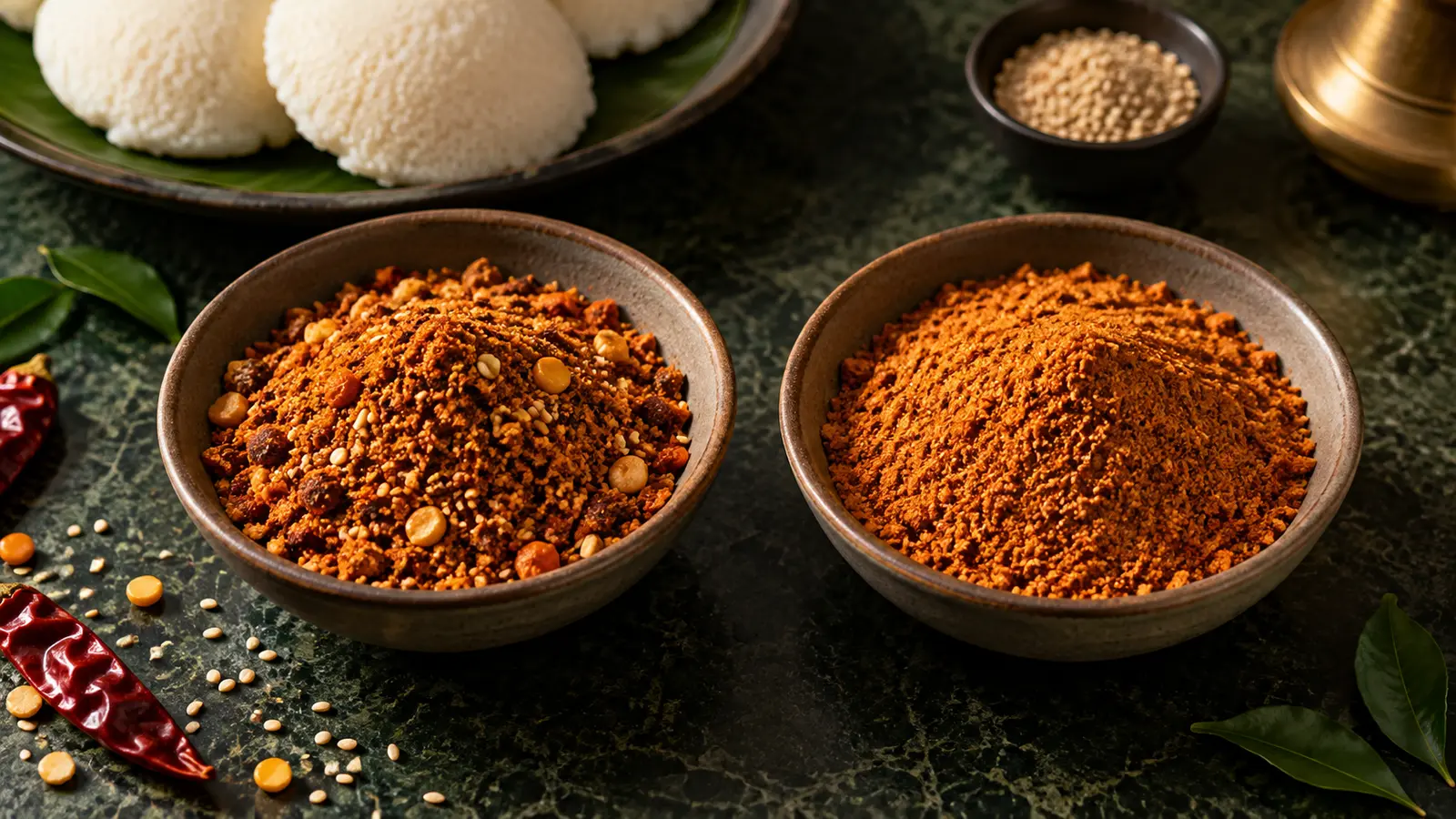
Two podis can use similar ingredients and still feel completely different on the plate. The reason may be sitting right in front of you: the grind.
A coarse podi gives you crunch and little bursts of flavour. A fine podi spreads more evenly and blends quickly with oil or ghee. Neither texture wins every time.
Does podi texture really change the taste?
Yes, or at least it changes how you experience the taste.
Your tongue doesn’t meet every ingredient at once in a coarse blend. You may bite into a toasted lentil crumb, then catch sesame, chilli or garlic a moment later. A finer powder feels more uniform because the ingredients reach your palate together.
Think of cracked pepper beside finely ground pepper. They come from the same spice, but they don’t behave the same way in food.
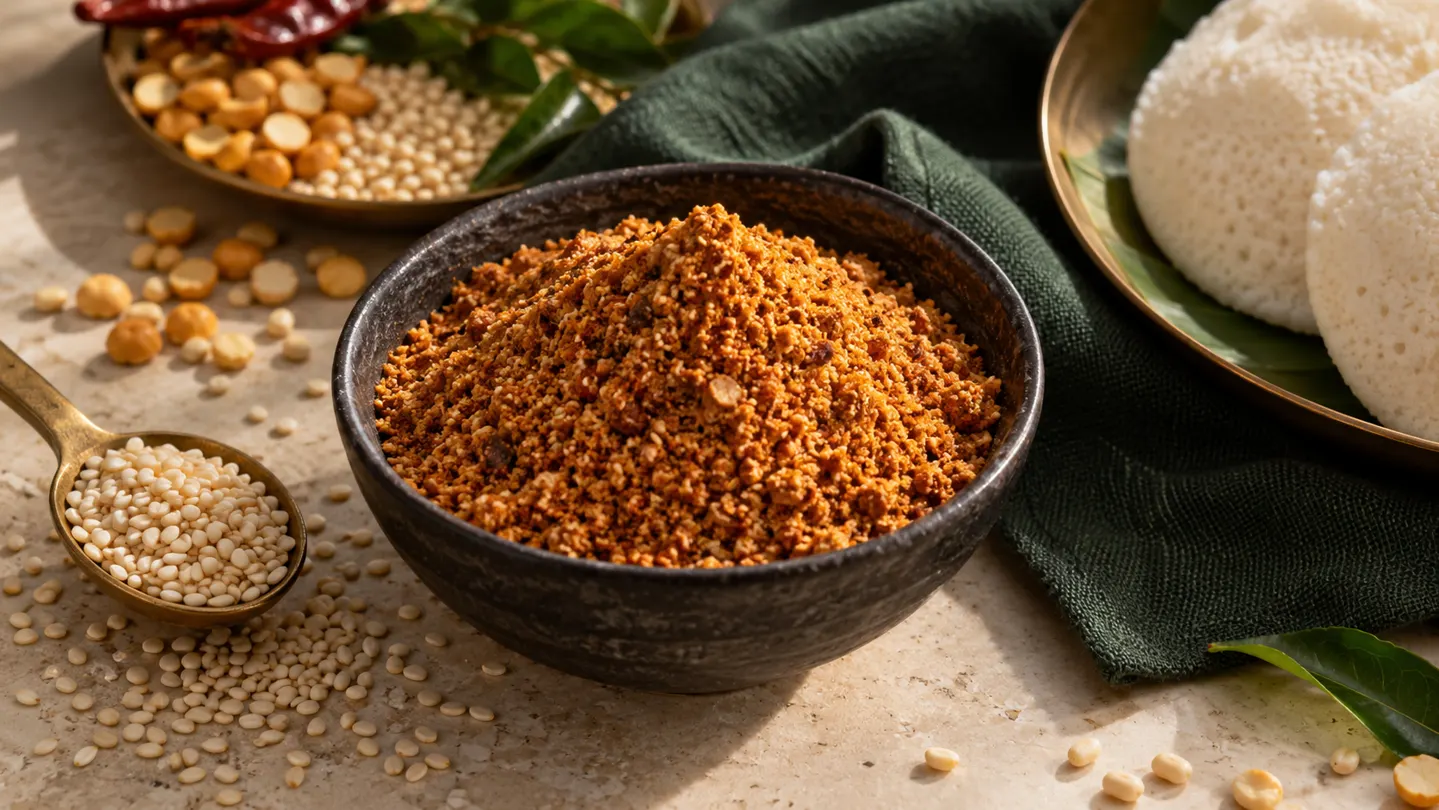
What coarse podi brings to the plate
Coarse podi feels lively. You can often see bits of roasted dal, sesame or coconut, depending on the recipe.
- It adds a clear crunch to soft foods such as idli and curd rice.
- It gives each bite small changes in flavour.
- It can stay more noticeable when sprinkled over vegetables or snacks.
- It may fall off dry food unless you add a little oil or ghee.
That last point matters. If half the podi stays on the plate, the problem may be the pairing rather than the blend.
What fine podi does differently
Fine podi coats food easily. It disappears into ghee, sesame oil or curd and creates a smoother mixture.
That makes it handy for spreading inside a dosa, stirring into hot rice or dusting over popcorn. It can also taste hotter at first because the chilli spreads across your tongue more evenly.
Very fine doesn’t always mean better, though. Grind a lentil-heavy podi too far and you may lose the toasted crunch that gives it character.
Which texture works best with idli, dosa and rice?
Idli
Soft idli can handle some texture. A medium or coarse podi mixed with sesame oil gives you contrast without turning the bite gritty.
Dosa
A finer podi is easier to spread inside a dosa with oil or ghee. A coarse blend works well on top when you want more crunch.
Hot rice
Fine and medium podi mix through rice with less effort. Coarse podi suits people who want the roasted ingredients to remain distinct.
If you’re unsure how much to start with, use our practical podi serving guide.
Can you change the texture at home?
You can make a coarse podi slightly finer with a clean, dry mixer jar. Use short pulses. Don’t run the mixer continuously, especially with blends containing sesame or coconut, because their natural oils may make the powder clump.
Going the other way isn’t possible. Once a podi is finely ground, you can’t bring back the original crunch.
So, which one should you choose?
Choose by the food you eat and the bite you enjoy.
Pick coarse podi for crunch, visible ingredients and stronger texture. Pick fine podi for smooth mixing, even coating and quick everyday use. A medium grind often gives you a bit of both.
There’s no official podi texture police. Your breakfast, your rules.
Related posts
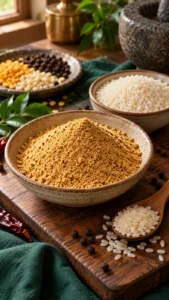
Rice in podi can shape its texture and toasted flavour. Learn why some recipes use it, with Rapidli Kerala Podi as a clear ingredient-list example.
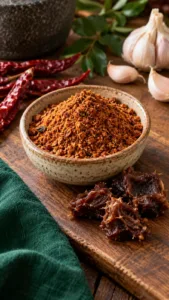
Tamarind adds a sour note to Andhra Podi. Learn how it works with chilli and garlic, and why a dry blend behaves differently from a...more
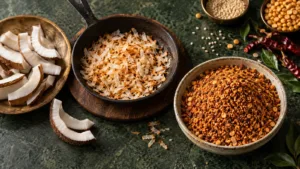
Dry coconut gives podi a rounder flavour and fuller mouthfeel. Here’s how roasting, natural fat and moisture control change the final spoonful.
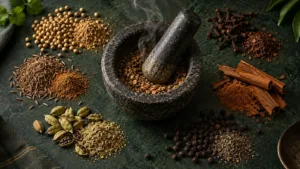
Grinding spices releases their aroma quickly, but it also exposes them to air. Here’s why ground spices smell stronger at first and fade sooner.
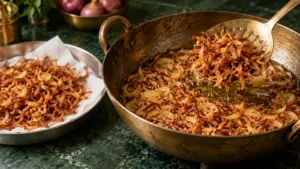
Fried onions do far more than add sweetness to biryani. They shape its aroma, colour, texture and the way the layers come together during dum.