


No products in the cart.
Return To Shop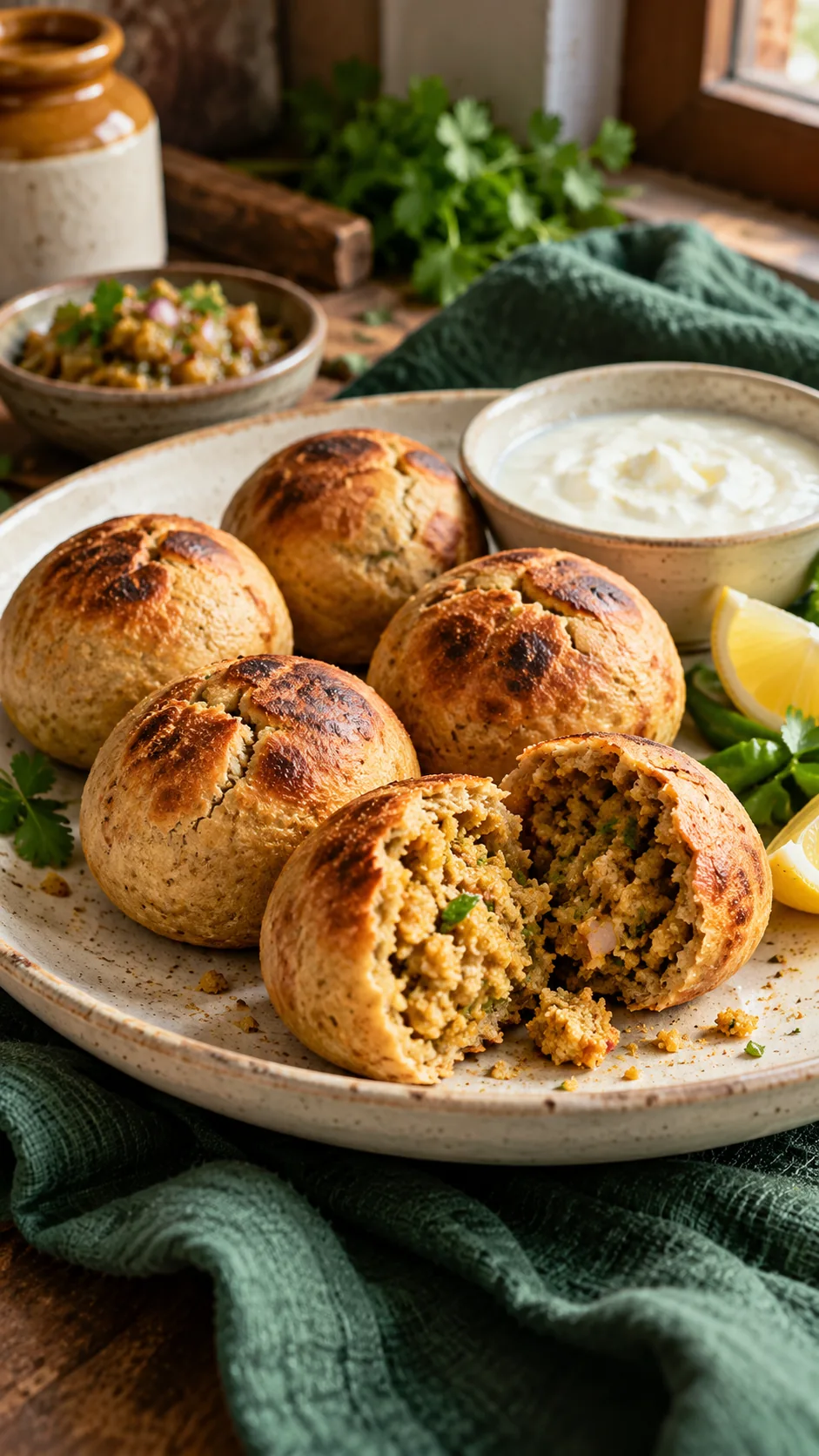
Litti puts a roasted filling inside a baked atta shell. In this podi version, Karnataka Podi joins sattu, onion and lemon for a filling with plenty of flavour.
This is a home adaptation of the Bihar-style dish. The main lesson stays the same: the filling should feel lightly moist, and the dough needs time to cook through. A golden outside is only part of the job.
The recipe at a glance
Makes 8 small litti. Serves 2 to 3 with sides. Prep: 25 minutes. Bake: roughly 30 to 40 minutes.
For the dough
- 1½ cups atta, about 180 g
- 1 tbsp ghee or oil
- ¼ tsp salt
- About ½ cup water, added gradually
- A little ghee or oil for brushing
For the filling
- ¾ cup roasted gram sattu, about 75 g
- 1 tbsp Rapidli Karnataka Podi
- 2 tbsp very finely chopped onion
- 2 tbsp chopped coriander
- ½ tsp grated ginger
- 2 tsp lemon juice
- 2 tsp oil
- 1 to 3 tbsp water, as needed
- Salt only if needed
Use roasted gram sattu, which is ready to eat. Raw besan behaves differently and isn’t a direct substitute for this filling.
Make a dough that closes neatly
Mix atta and salt, then rub in the ghee or oil. Add water a little at a time and knead into a smooth, medium-soft dough. It should bend without cracking but still hold its shape.
Cover and rest for 20 minutes. If it feels very firm after resting, knead in another teaspoon of water. Avoid making it sticky.
Moisten the sattu gently
Mix sattu, podi, onion, coriander and ginger. Stir in lemon juice and oil, then add water a teaspoon at a time.
A squeezed handful should hold together lightly and break apart when touched. It shouldn’t drip or turn into a paste. Onion will release some moisture too, so stop as soon as the filling holds.
Taste before adding salt. Both the podi and any seasoned sattu can affect how much the filling needs.
Fill and seal
- Heat the oven to 200°C, or about 180°C in a fan oven. Line a baking tray.
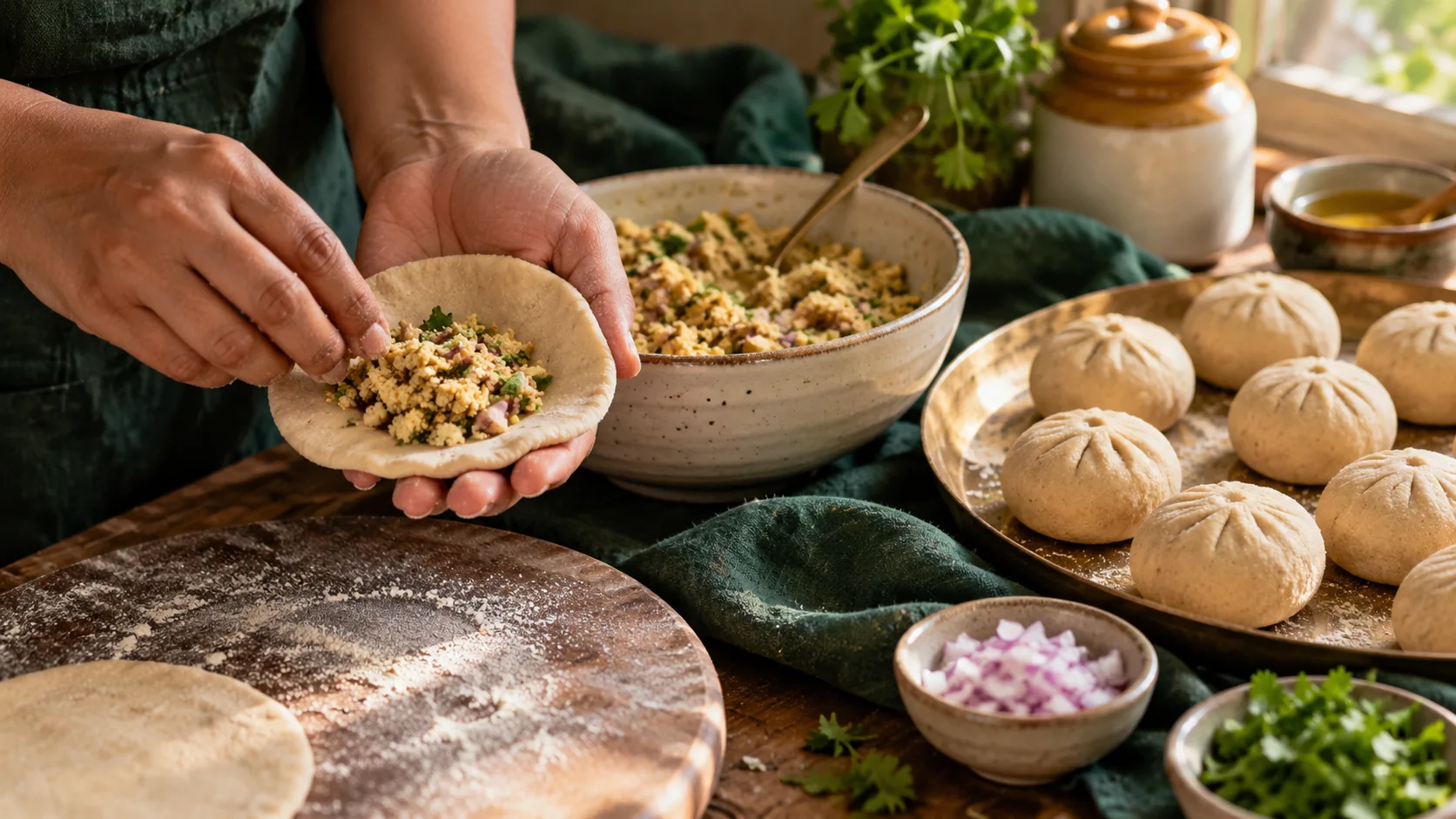
- Divide dough and filling into 8 portions each.
- Flatten a dough portion into a small disc, keeping the middle slightly thicker than the edges.
- Place one portion of filling in the centre. Bring the edges together, pinch shut and roll gently into a ball.
- Put it seam-side down on the tray. Repeat and brush the tops lightly with oil or ghee.
If the dough tears, reduce the filling a little or make the disc wider. A thick filling mound takes more dough to close around than you might expect.
Bake until the shell is cooked
- Bake for about 30 to 40 minutes, turning the litti every 10 to 12 minutes for more even browning.
- Check one by breaking it open. The atta shell should be cooked through without a gummy raw layer beside the filling.
- If the outside is darkening before the dough is cooked, lower the oven temperature slightly and loosely cover the tray with foil.
- Brush the hot litti with a little ghee if wanted, then serve warm.
Size and oven behaviour affect the timing. Keep the balls small and similar in size rather than making a few oversized ones.
Fix a dry or heavy filling
If the sattu feels dusty before filling, work in another teaspoon of water. Don’t drown it. A wet centre can make sealing difficult and slow the dough’s cooking.
Use a modest podi amount in the first batch. Sattu already has a roasted taste; the seasoning should join it without taking over.
For another stuffed atta dish, try podi aloo paratha. The potato filling needs a different moisture check.
Serve with a moist side
Chokha, plain curd or a simple tomato side makes litti easier to enjoy. Our small-batch tomato chutney works as a home-style accompaniment too.
Refrigerate leftovers promptly in a covered container. Reheat until hot through; a covered pan with a few drops of water can help soften the shell before a short uncovered finish.


Related posts

Mix podi into fresh methi thepla dough for a savoury flatbread. Follow the dough, rolling and pan tips to keep each thepla soft.
Make a podi variation on Gujarati khichu with cooked rice flour, cumin and a Tamil Podi finish. Learn how to keep it soft and avoid...more

Make a tofu scramble with Karnataka Podi, onion and tomato. Drain firm tofu and reduce the tomato first so the crumbles keep their texture.
Make raw banana cutlets with Tamil Podi and a light breadcrumb crust. Cool the cooked banana before mashing and fry a tester before shaping the...more

Make small sabudana thalipeeth with potato, peanuts and Tamil Podi. Drain the pearls well and shape gently for pancakes that hold together.