


No products in the cart.
Return To Shop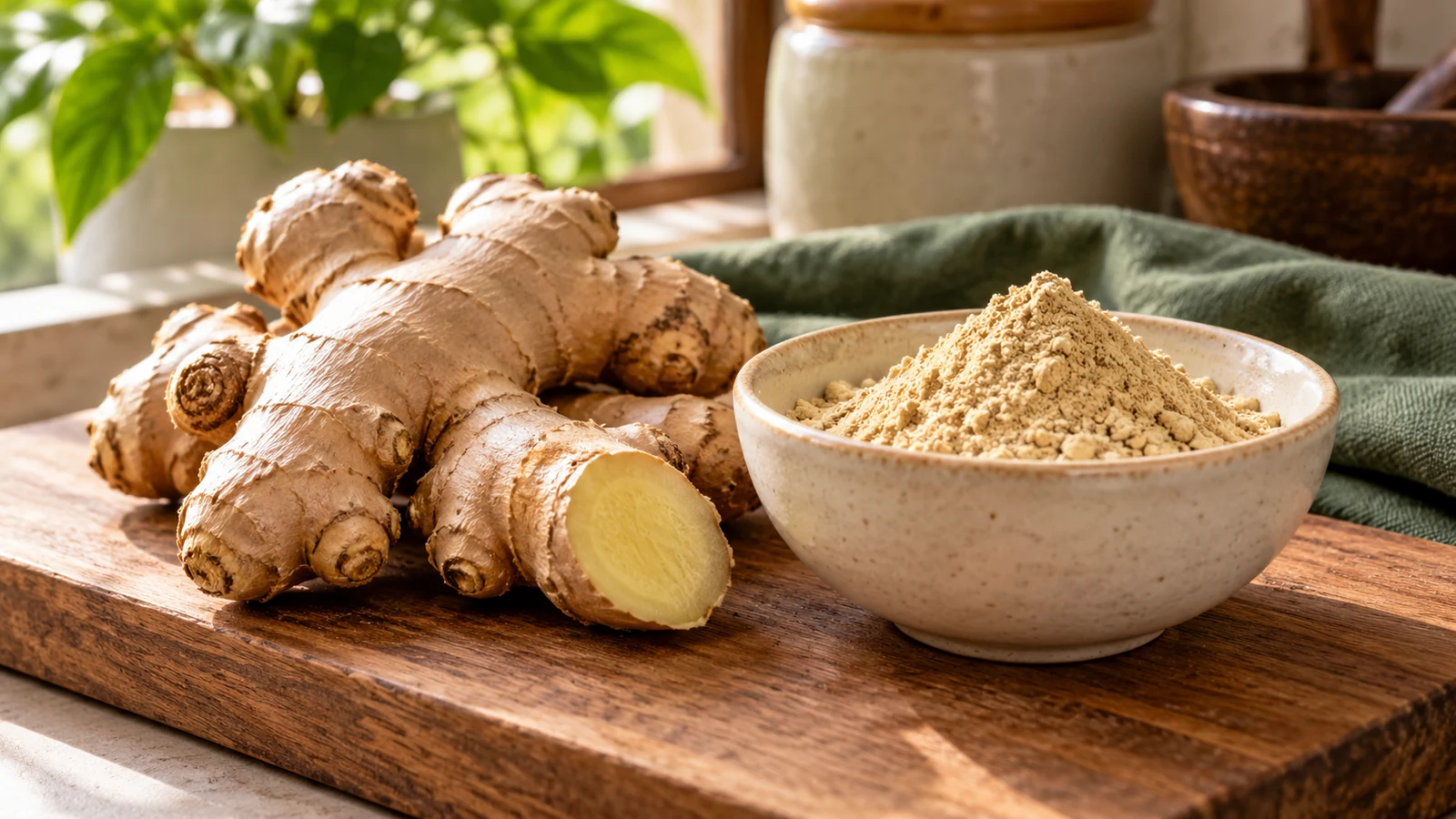
Fresh ginger gives a curry a lively bite. Dry ginger powder brings a warm, rounded flavour to many spice blends and sweets. They’re related ingredients, but a spoonful of one won’t behave exactly like a spoonful of the other.
Before swapping, ask what the ginger is doing in the recipe. A fragrant background note is easier to adapt than a dish that depends on ginger’s fresh texture.
Fresh ginger brings water and texture
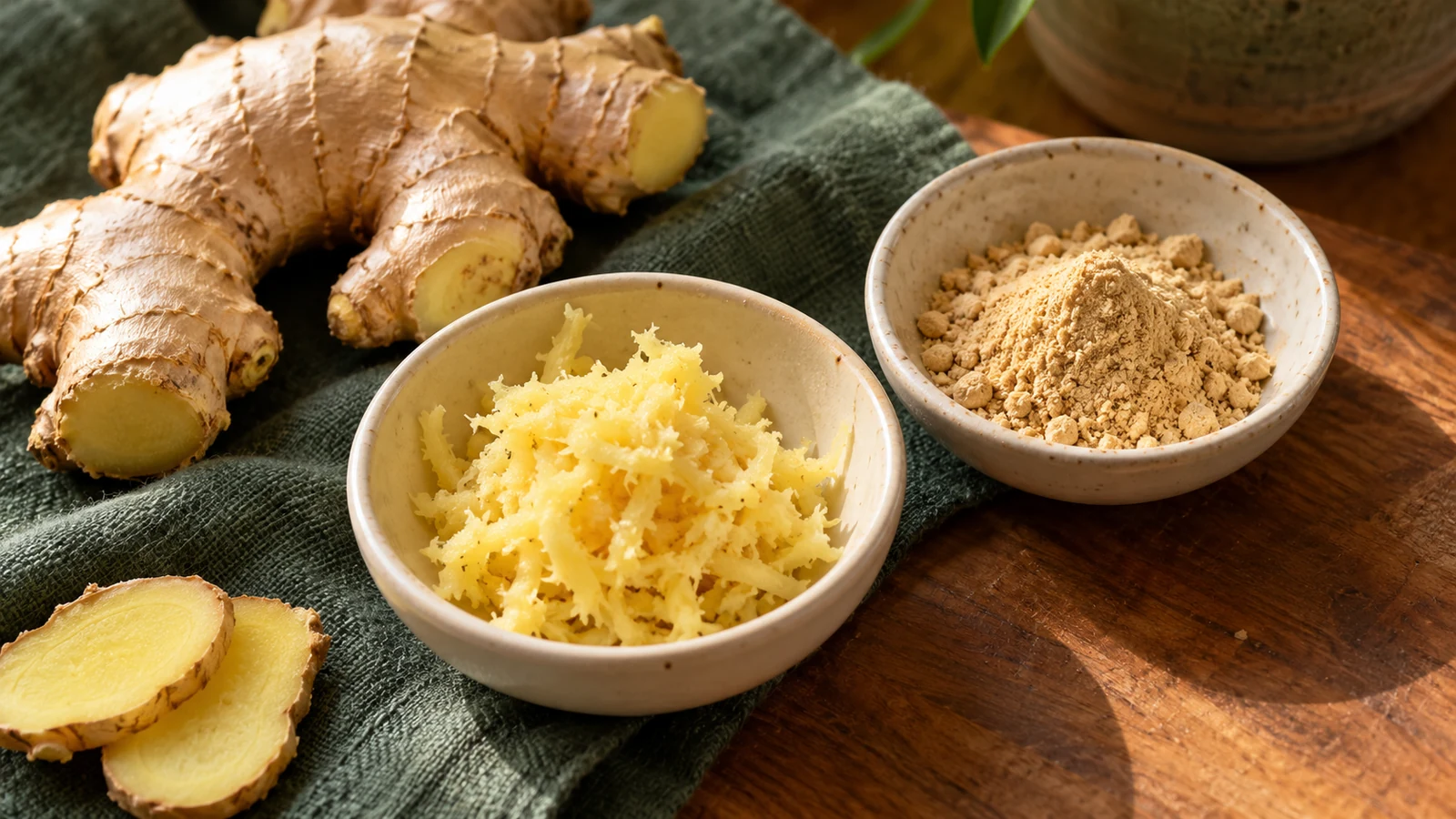
The knobbly piece you buy is a rhizome, an underground stem. Grate it and you’ll see how moist and fibrous it is. Slice it into fine strips and that texture stays part of the meal.
In an onion-based gravy, crushed fresh ginger can cook with garlic and other ingredients. In a stir-fry, fine slices leave small bursts of flavour. Chai can take crushed ginger too, giving the drink a lively character.
A recipe may specify a paste, grated ginger or strips because those shapes behave differently. A smooth powder can’t replace the chew of a ginger garnish.
Dry ginger powder spreads through the food
Dry ginger is also known as sonth or saunth. Removing water and grinding it changes both its form and its flavour. The powder is easy to mix through dry ingredients and spice blends.
You’ll find it in foods such as panjiri, some laddoos and ginger biscuits, as well as savoury spice mixtures. Its flavour often feels warmer and less fresh than newly cut ginger. Age and storage can also change what you taste.
Powder doesn’t add fresh ginger’s moisture or visible pieces. It can clump in a wet mixture if tipped in carelessly, so follow the method rather than adding it anywhere in the cooking process.
Why a single swap ratio falls short
Fresh ginger varies in pungency, and a loosely filled spoon of grated ginger differs from a tightly packed one. Powders vary too. That’s why a conversion gives you a starting point rather than an identical result.
McCormick’s ground-ginger guidance suggests ¼ teaspoon of its ground ginger for 1 teaspoon of grated fresh ginger. Follow the guidance on your own packet where available, then consider whether the change suits the dish.
In a flexible savoury gravy, begin modestly and taste after the spice has cooked through. Adding more is easier than removing an overpowering ginger note. In baking, use a recipe written for the form you have, because moisture and the overall spice balance matter.
Choose around the meal
If the dish needs fresh ginger strips scattered over the top, powder won’t give the same result. You could leave the garnish out and serve the dish with its own flavour intact.
If you’re mixing a dry seasoning, fresh grated ginger may introduce moisture you didn’t plan for. Make a small portion for immediate cooking rather than storing a damp homemade spice mixture as if it were dry powder.
Keep both in good condition
Store fresh ginger chilled and check it before use. Keep powder tightly closed in a dry cupboard away from heat. Scoop it with a clean, dry spoon, and smell it occasionally rather than keeping it indefinitely.
For another pantry question where similar names cause confusion, read our cumin and caraway comparison. The useful choice depends on the flavour and texture your meal needs.


Related posts
Understand why oil appears around cooked masala, what other signs to check and why a low-oil curry may never show a clear pool.
Learn how green and black cardamom differ in aroma, common uses and handling, and why swapping the pods can change your dish.
Learn why curd turns grainy in gravy, how to add it gently and what you can realistically rescue once the sauce has split.
Learn why dal forms foam, when skimming helps and how to manage a rising pot. Cooking foam alone can’t tell you whether soaked dal is...more
Dried fenugreek leaves and methi seeds have different jobs in the kitchen. Learn where each fits, when to add it and how to approach substitutions.