


No products in the cart.
Return To Shop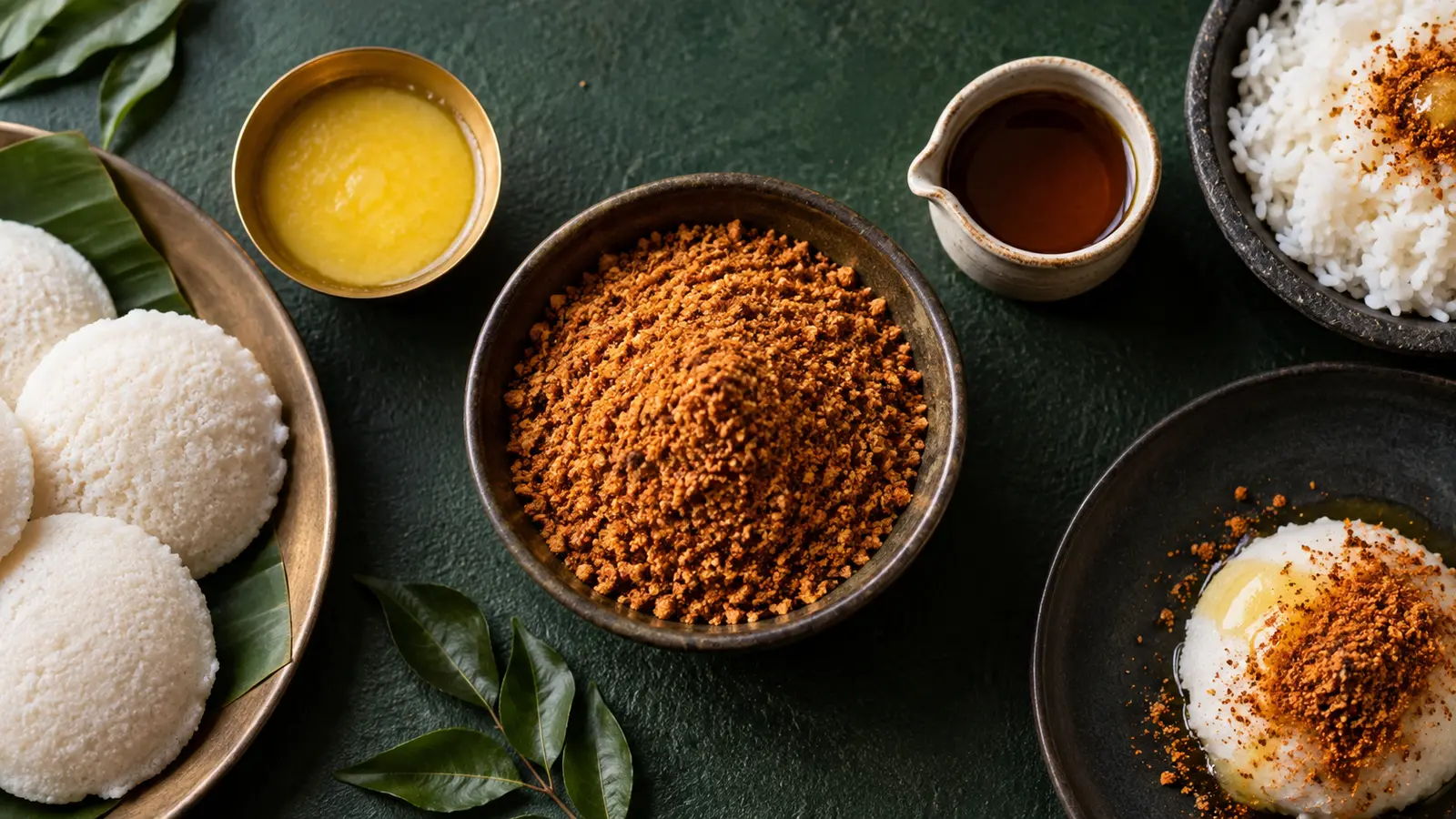
A spoonful of podi tastes good on its own. Mix it with ghee or sesame oil and the blend opens up.
The fat carries aroma, helps the powder cling to food and softens the direct hit of chilli. But ghee and sesame oil don’t give you the same bowl.
What ghee does to podi
Ghee brings a rich, buttery aroma and a rounded taste. It can soften a sharp chilli edge while making roasted dal feel warmer and fuller.
It works especially well when the food is hot enough to melt it. Add a small spoon to steaming rice, sprinkle podi over it and mix. Simple. Very hard to dislike.
Ghee also suits:
- Hot idli when you want a soft, comforting flavour.
- Ghee roast dosa or podi dosa.
- Khichdi and plain dal-chawal.
- Roasted potatoes or makhana.
What sesame oil brings
Sesame oil has its own roasted, nutty character. It doesn’t sit quietly in the background. That’s exactly why many people love it with idli podi.
The oil turns dry powder into a loose paste that coats idli and dosa beautifully. It also works well with blends containing sesame, chilli and lentils because those flavours already speak the same language.
For the classic pairing, use edible sesame oil intended for cooking. Toasted East Asian sesame oil has a much stronger flavour and may take over the blend.
Ghee or sesame oil for idli?
Use sesame oil when you want a bold, savoury and nutty bite. Use ghee when you want something richer and milder.
Fresh, hot idli works with both. Try one idli with each before choosing. That’s a better test than arguing about tradition at the breakfast table.
What about dosa?
For podi spread inside a dosa, both fats help the powder stick.
Ghee gives the dosa a rich aroma and works well for crisp roasting. Sesame oil gives the filling a more assertive South Indian flavour. If your dosa already has a generous amount of cooking fat, start with less in the podi mixture.
Which one works better with rice?
Ghee is the easy choice for hot rice because it melts and coats every grain. Sesame oil makes a sharper, more fragrant bowl.
Add podi gradually rather than burying the rice in one go. Our guide on how much podi to use gives sensible starting points.
Can you use other oils?
Of course. A mild oil can help podi cling without adding much flavour. Coconut oil can be lovely with blends that already contain coconut or curry leaves.
Strong mustard oil changes the profile quite a lot. Use it only if you enjoy that punch.
A quick way to decide
- Choose ghee for richness, warmth and hot rice.
- Choose sesame oil for a nutty aroma and classic idli pairing.
- Use less fat first, then add more until the podi coats the food without turning greasy.
The best choice depends on the podi too. Taste it both ways. You may find that one blend loves ghee while another comes alive with sesame oil.
Related posts
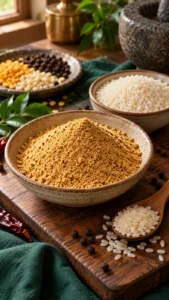
Rice in podi can shape its texture and toasted flavour. Learn why some recipes use it, with Rapidli Kerala Podi as a clear ingredient-list example.
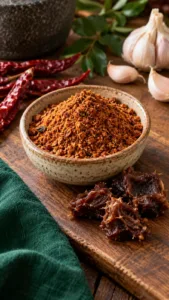
Tamarind adds a sour note to Andhra Podi. Learn how it works with chilli and garlic, and why a dry blend behaves differently from a...more
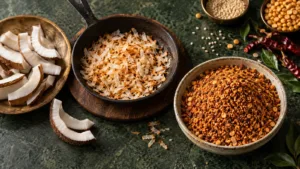
Dry coconut gives podi a rounder flavour and fuller mouthfeel. Here’s how roasting, natural fat and moisture control change the final spoonful.
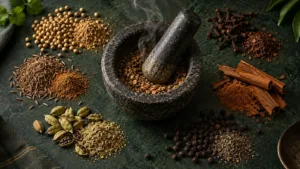
Grinding spices releases their aroma quickly, but it also exposes them to air. Here’s why ground spices smell stronger at first and fade sooner.
Fried onions do far more than add sweetness to biryani. They shape its aroma, colour, texture and the way the layers come together during dum.