


No products in the cart.
Return To Shop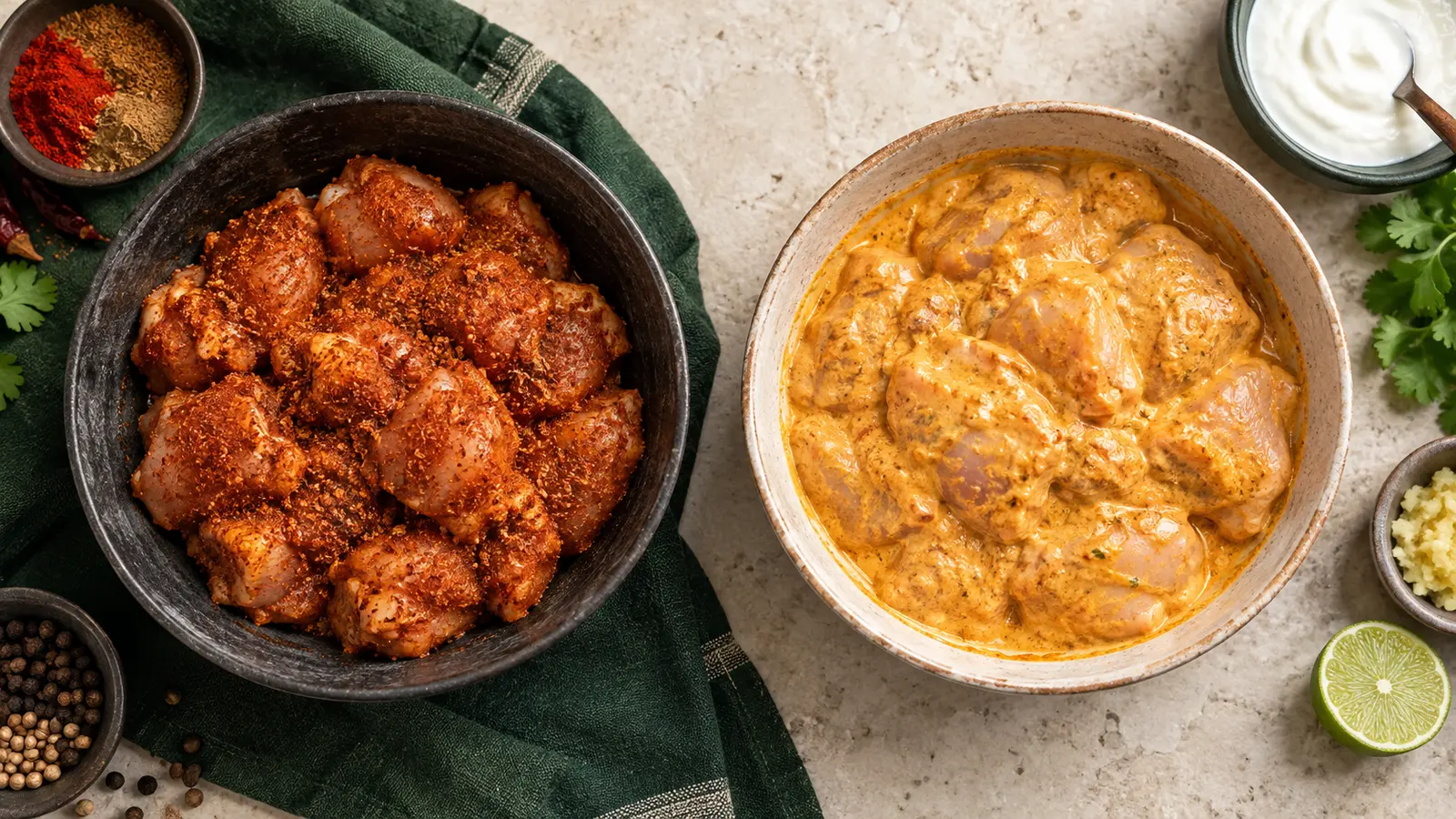
A dry rub and a curd marinade can both make good chicken. They don’t produce the same result.
The better choice depends on the cut, the cooking method and how much time you have.
Choose a dry rub for quick, direct cooking
A dry rub is simply spice blend and salt worked over the chicken, sometimes with a little oil or lemon juice.
It suits quick pan cooking, grilling and air frying when you want a drier surface and a stronger spice crust.
Boneless pieces are especially handy here. They cook fast, so the seasoning doesn’t need hours to reach every bite.
What a dry rub does well
- It keeps the outside relatively dry for better browning.
- It gives the spices a clear, direct taste.
- It works when dinner can’t wait all evening.
- It suits pieces that will cook over direct heat.
Add just enough oil to help the masala coat the chicken. Too much can make the spices slide off and collect in the pan.
Choose curd for coating and gentler cooking
Curd creates a thicker coating around the chicken. It carries the spices, softens their sharp edges and helps them stay on the meat.
It works well for tandoori-style cooking, oven roasting and curries where a moist masala coating makes sense.
Curd also contains acid, but don’t treat it like a magic tenderiser. The cut, size and cooking time still matter.
What a curd marinade does well
- It spreads masala evenly over uneven pieces.
- It gives the cooked surface a softer, richer coating.
- It works well with bone-in chicken and longer cooking.
- It can help spices stick during roasting.
Use thick curd if you’re grilling or roasting. Watery curd can drip, slow browning and leave the tray messy.
How long should you marinate?
For a dry rub, even 20 to 30 minutes can help the salt and spices settle on small boneless pieces.
A curd marinade usually benefits from more time, but more isn’t always better. Leaving chicken in a strongly acidic marinade for too long can make the surface feel soft or pasty.
Keep marinating chicken covered in the refrigerator, never on the kitchen counter. Cook it fully and avoid using raw marinade as a sauce unless you boil it properly.
What about lemon juice?
Lemon can brighten either method. Use it with restraint, especially in a curd marinade that already has acidity.
Too much sourness can drown the spice blend and affect the surface texture.
If you want a fresh lemon note, squeezing a little over cooked chicken often tastes cleaner than loading the raw marinade.
Match the method to the dish
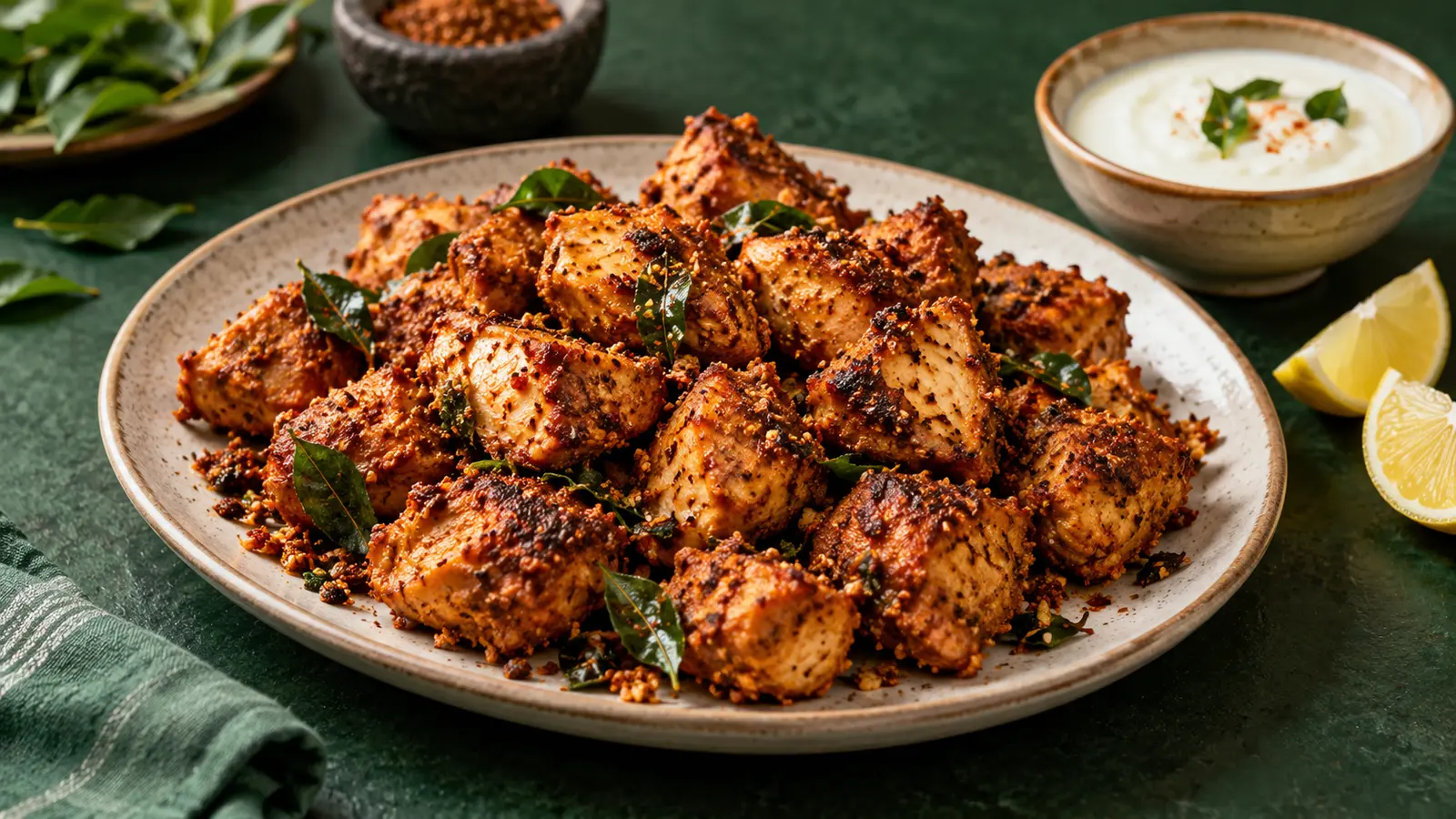
Use a dry rub for chicken strips, quick tawa pieces, wings and a spice-forward grilled finish.
Use a curd marinade for tikka-style chunks, larger bone-in pieces, oven cooking and dishes where you want a thicker coating.
For a curry, you can use either. A dry-rubbed chicken gives the gravy a clearer spice taste. Curd-marinated chicken adds body and tang, so adjust the tomatoes or other sour ingredients.
Don’t let the masala burn
Both methods need sensible heat.
Dry spices can scorch over a fierce flame. Curd can catch on the pan before the chicken cooks through. Start with controlled heat, turn the pieces as needed and raise the heat near the end only if the surface needs more colour.
So, which one wins?
Neither wins every time.
Pick a dry rub when speed and browning matter. Pick curd when you want a clingy coating and have time to marinate.
Good chicken masala should work with the method, not force every dish to taste the same. If biryani is next on your list, see how Awadhi and Hyderabadi biryani masalas differ.


Related posts
Rice in podi can shape its texture and toasted flavour. Learn why some recipes use it, with Rapidli Kerala Podi as a clear ingredient-list example.
Tamarind adds a sour note to Andhra Podi. Learn how it works with chilli and garlic, and why a dry blend behaves differently from a...more
Dry coconut gives podi a rounder flavour and fuller mouthfeel. Here’s how roasting, natural fat and moisture control change the final spoonful.
Grinding spices releases their aroma quickly, but it also exposes them to air. Here’s why ground spices smell stronger at first and fade sooner.
Fried onions do far more than add sweetness to biryani. They shape its aroma, colour, texture and the way the layers come together during dum.