


No products in the cart.
Return To Shop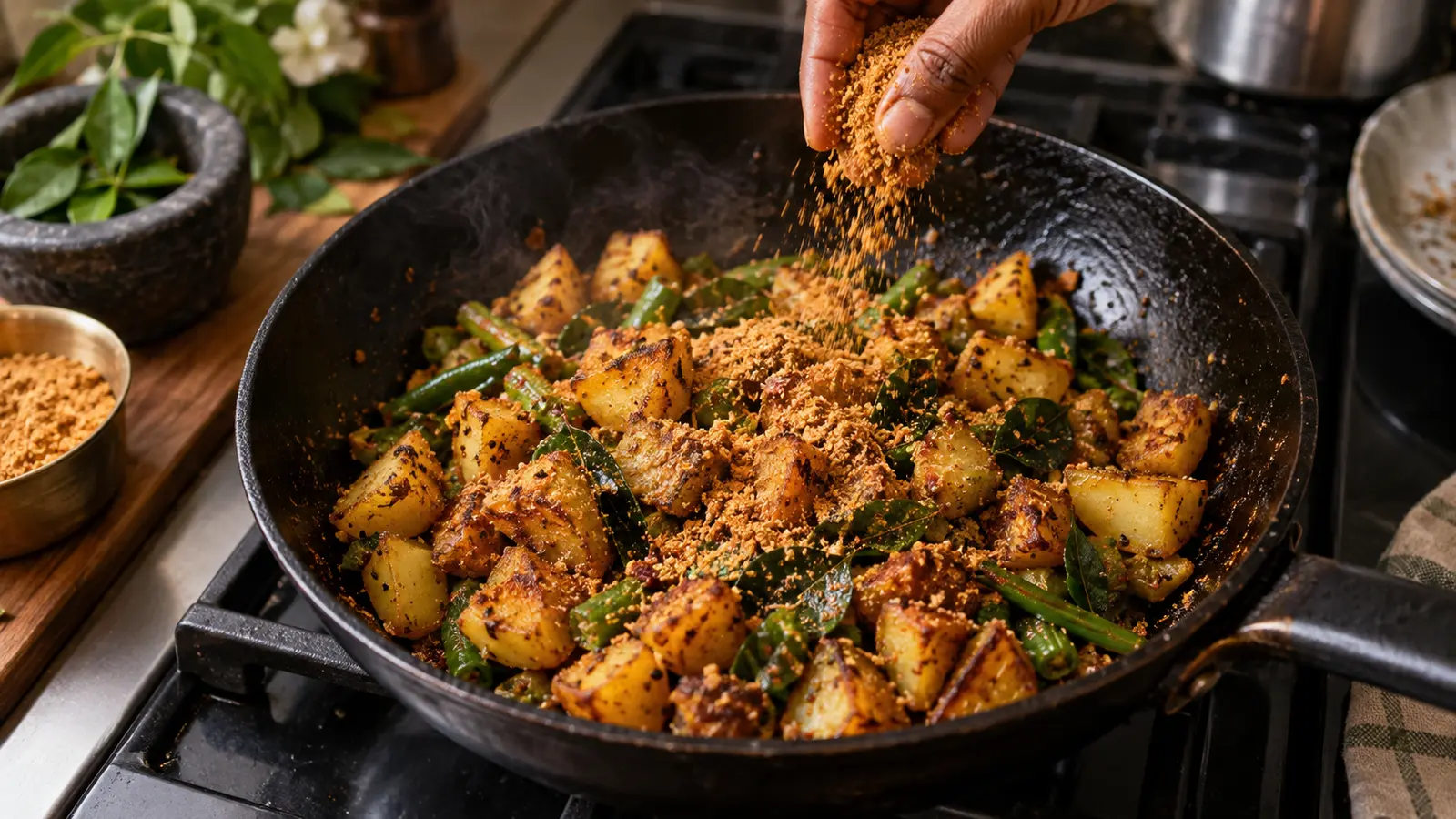
Podi can turn plain potatoes, eggs, rice or vegetables into something you’ll actually look forward to eating.
The timing matters more than people think.
Add it too early over high heat and the fine spices can burn. Add it too late to dry food and half the seasoning may slide to the bottom of the plate.
The easiest rule
For most dry dishes, add podi during the final minute or just after switching off the heat.
The food should still be hot, and there should be a thin coating of oil or ghee for the podi to grab.
Toss well. Taste. Add more only if needed.
Why podi burns quickly
Podi isn’t one single spice. It may contain ground chillies, roasted lentils, sesame, coconut, curry leaves, garlic and other ingredients.
Those fine particles have a lot of surface area. Direct heat reaches them fast.
A whole chilli can sit in a pan longer than chilli powder. The same basic idea applies here. Ground ingredients colour and burn sooner.
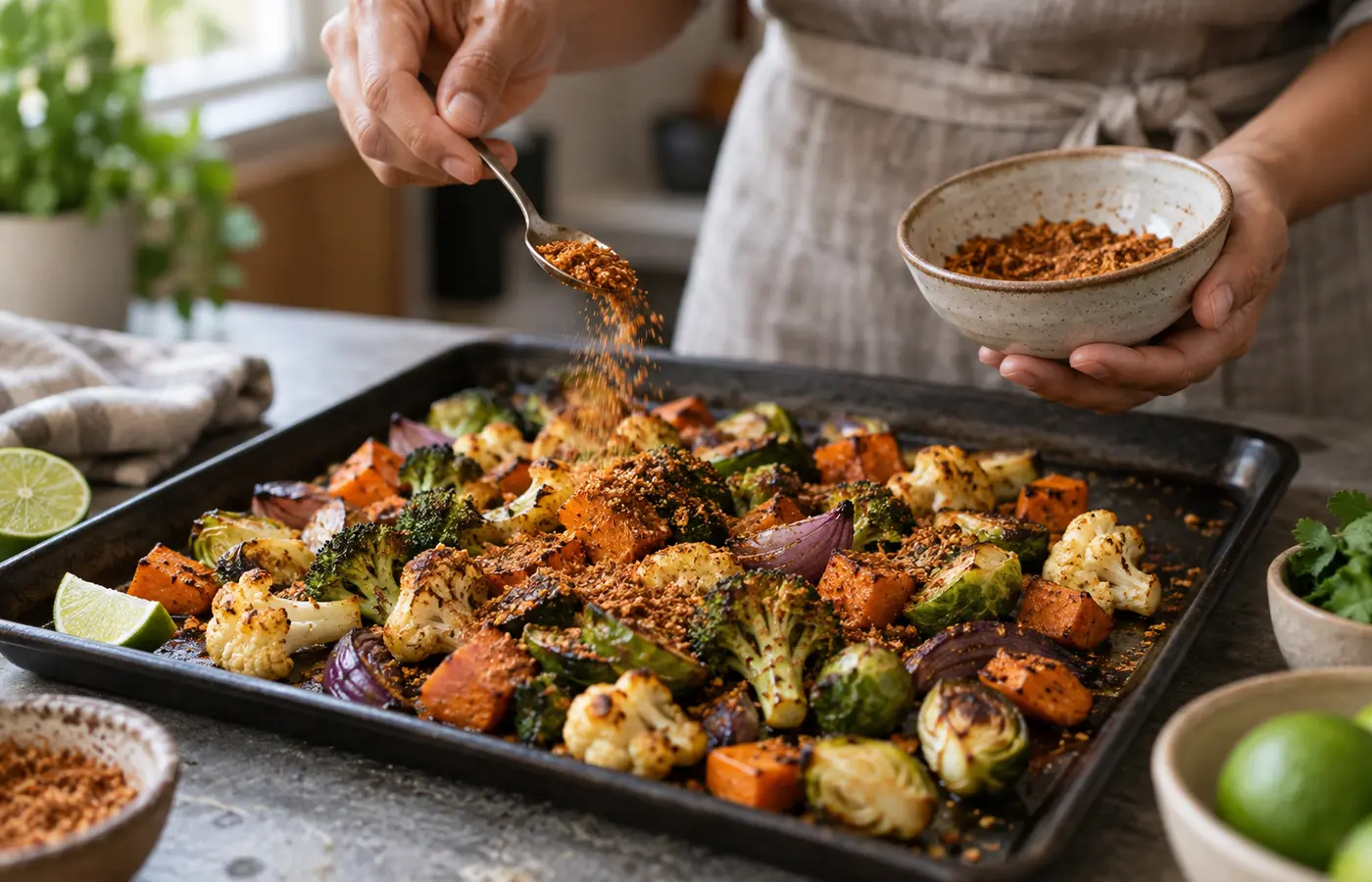
For potatoes and roasted vegetables
Cook the vegetables until they’re nearly done. Lower the heat or switch it off, add podi and toss for 20 to 30 seconds.
If the pan looks dry, add a small spoon of oil first. Don’t pour podi onto a bare, smoking surface.
For oven or air-fryer vegetables, season near the end or after roasting. Our podi-roasted vegetable recipe shows a practical method.
For eggs and paneer
Cook the egg or paneer first. Sprinkle podi while the surface is still hot and slightly moist or oily.
For scrambled eggs, fold it through just before the eggs finish setting. For fried eggs, sprinkle it after flipping or once the egg reaches the plate.
Paneer needs gentle heat anyway. Add podi late, toss briefly and stop before the spices darken.
For leftover rice
Warm the rice and break up any lumps. Add a little ghee or oil, then lower the flame before adding podi.
Toss until the grains look evenly coated. You don’t need to fry the podi for several minutes. The ingredients have already been roasted.
If the rice feels dry, a spoon of curd on the side works better than pouring extra oil into the pan.
For wet dishes
A moist dish gives you more room. You can stir podi into curd, dal or a quick sauce without worrying about direct scorching.
Cooking it for longer will blend the flavour into the dish. Adding it at the end will keep the aroma clearer.
Choose based on what you want, not a rigid rule.
What if the podi falls off?
The food probably needs a little moisture or fat.
- Use a teaspoon of oil or ghee, not a flood.
- Add podi while the food is hot.
- Toss in a bowl or pan instead of sprinkling only on top.
- Work in small amounts so the coating stays even.
What if it tastes bitter?
High heat is the likely suspect, especially if the podi darkened in the pan.
Next time, finish cooking the main ingredient first. Lower the heat, add the podi and move the food right away.
You can also use podi without cooking it at all. Read whether podi needs cooking before you eat it for the simple answer.
One last check
Your nose will tell you a lot. Freshly warmed podi smells roasted and lively. Burnt podi smells sharp before it tastes bitter.
Stay near the pan. The final toss takes seconds, not minutes.

Related posts
Rice in podi can shape its texture and toasted flavour. Learn why some recipes use it, with Rapidli Kerala Podi as a clear ingredient-list example.
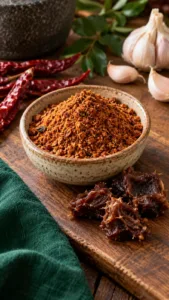
Tamarind adds a sour note to Andhra Podi. Learn how it works with chilli and garlic, and why a dry blend behaves differently from a...more
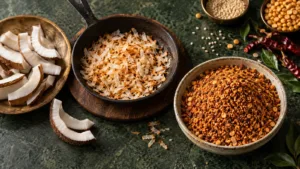
Dry coconut gives podi a rounder flavour and fuller mouthfeel. Here’s how roasting, natural fat and moisture control change the final spoonful.
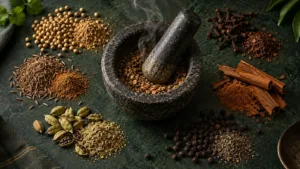
Grinding spices releases their aroma quickly, but it also exposes them to air. Here’s why ground spices smell stronger at first and fade sooner.
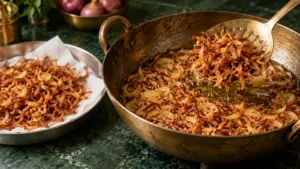
Fried onions do far more than add sweetness to biryani. They shape its aroma, colour, texture and the way the layers come together during dum.