


No products in the cart.
Return To Shop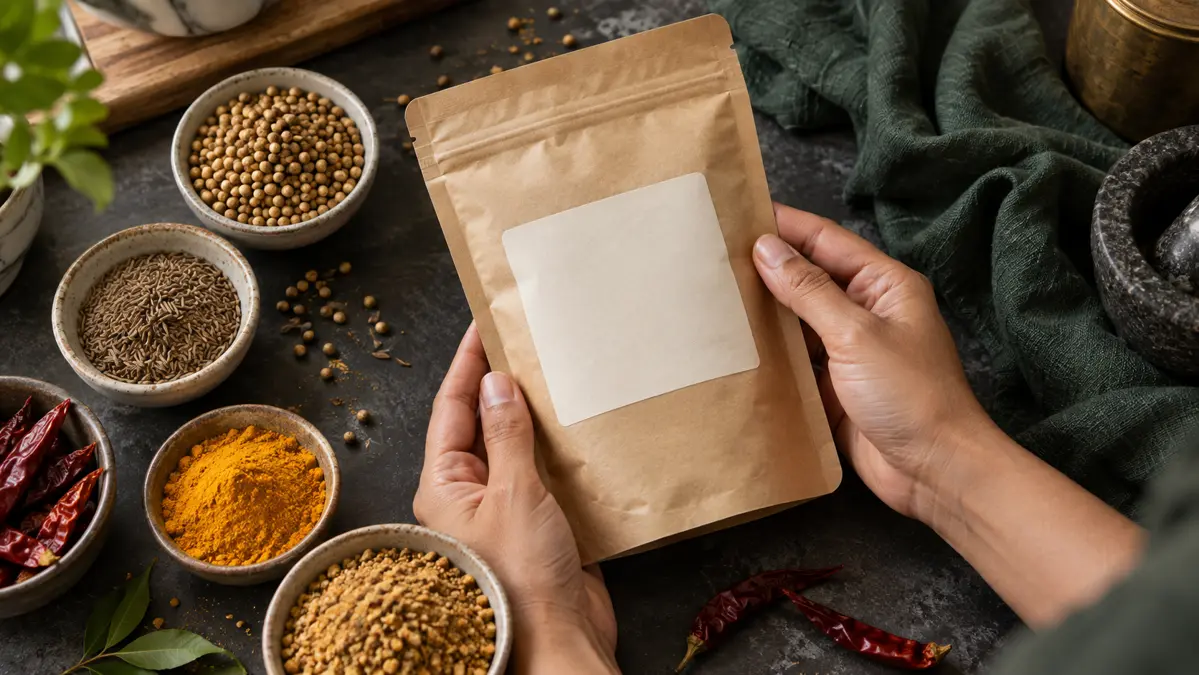
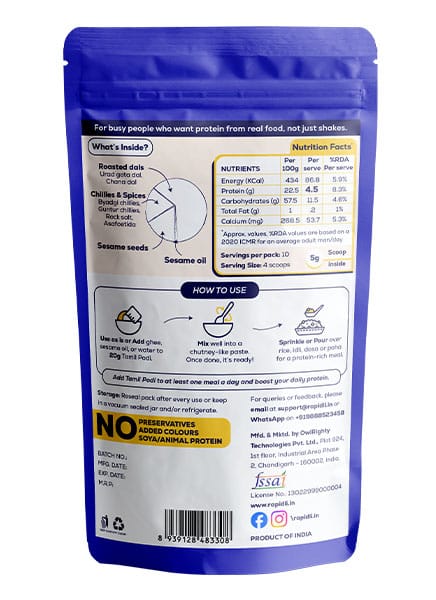
Spice blend ingredients can tell you more than the big promise on the front of the pack. Turn it over. Take a minute.
You don’t need to memorise food rules to make a better choice. Start with what’s in the blend and whether it suits the meals you actually cook.
Read from the top of the list
For packaged foods in India, ingredients generally appear in descending order by weight or volume at manufacture, as applicable. In plain language, the ingredients near the beginning make up more of the recipe than those near the end.
You can check the detailed rules in FSSAI’s labelling guidance. The useful shopping habit is simple: read the whole list before judging the front of the pack.
Position doesn’t tell you the exact percentage unless the label declares it. It also doesn’t predict which flavour you’ll notice most. A small amount of a strong spice can still stand out.
Use a pretend label to practise
Example only: coriander, cumin, chilli, turmeric, black pepper, salt.
That list suggests coriander makes up more of the recipe than salt. It doesn’t tell you the blend’s exact heat level or how much sodium your finished curry will contain.
This is a made-up example, not a Rapidli label. For a real purchase, read the actual pack in your hand or its current product details.
Check for salt before seasoning the pan
Some blends contain salt. Others leave you to add it yourself.
If salt appears in the ingredient list, start cautiously when seasoning your dish. Taste as you cook rather than adding your usual amount automatically.
When you want to compare salt-related nutrition, use the sodium values on the nutrition panel on the same basis, such as per 100 g. Ingredient order alone won’t give you that number.
Read every ingredient you need to avoid
Don’t assume a spice blend contains only whole spices. A recipe may also include dal, seeds, dried coconut, garlic or other ingredients.
Read the complete ingredient list alongside any allergen and cross-contact statements. If you have a food allergy and the label leaves you unsure, contact the maker before using it.
For example, check sesame carefully if you avoid it. Check the components of a compound ingredient, such as a seasoning preparation, when the label lists them.
Don’t judge an unfamiliar name on sight
A long word doesn’t automatically mean an ingredient is harmful. Equally, a short list doesn’t guarantee a blend suits your needs.
Look at what the ingredient does and whether you want it in your food. If the pack names an additive by a class and number, ask the maker or check an official source rather than guessing.
Choose for the meal you’ll cook
A blend meant for a simmered curry may behave differently from a ready-to-use podi. The directions help you work out when and how to add it.
- Check whether the maker tells you to cook the blend or use it as a finishing seasoning.
- Read the suggested quantity before seasoning a full pan.
- Look for ingredients you enjoy and those you prefer to avoid.
- Check the storage instructions and date marking.
- Compare the same pack sizes when weighing up price.
If you’re new to podi, our dry chutney powder comparison explains how it fits alongside other condiments.
What the list can’t tell you
The ingredient list won’t tell you whether you’ll love the flavour. Roast level, ingredient quality and the balance of the recipe all play a part.
It also won’t prove a protein or other nutrition claim by itself. Check the nutrition information and the serving size rather than treating the presence of dal as the whole answer.
A better way to compare two packs
Put the lists side by side. Look at the main ingredients, anything you avoid, the directions and the nutrition values that matter to you.
Then choose for your kitchen. A pack you know how to use is more useful than one bought for a catchy phrase.
Browse Rapidli’s current range and read the product details before choosing. For podi quantities, start with our practical serving guide.


Related posts
Rice in podi can shape its texture and toasted flavour. Learn why some recipes use it, with Rapidli Kerala Podi as a clear ingredient-list example.
Tamarind adds a sour note to Andhra Podi. Learn how it works with chilli and garlic, and why a dry blend behaves differently from a...more
Dry coconut gives podi a rounder flavour and fuller mouthfeel. Here’s how roasting, natural fat and moisture control change the final spoonful.
Grinding spices releases their aroma quickly, but it also exposes them to air. Here’s why ground spices smell stronger at first and fade sooner.

Fried onions do far more than add sweetness to biryani. They shape its aroma, colour, texture and the way the layers come together during dum.