


No products in the cart.
Return To Shop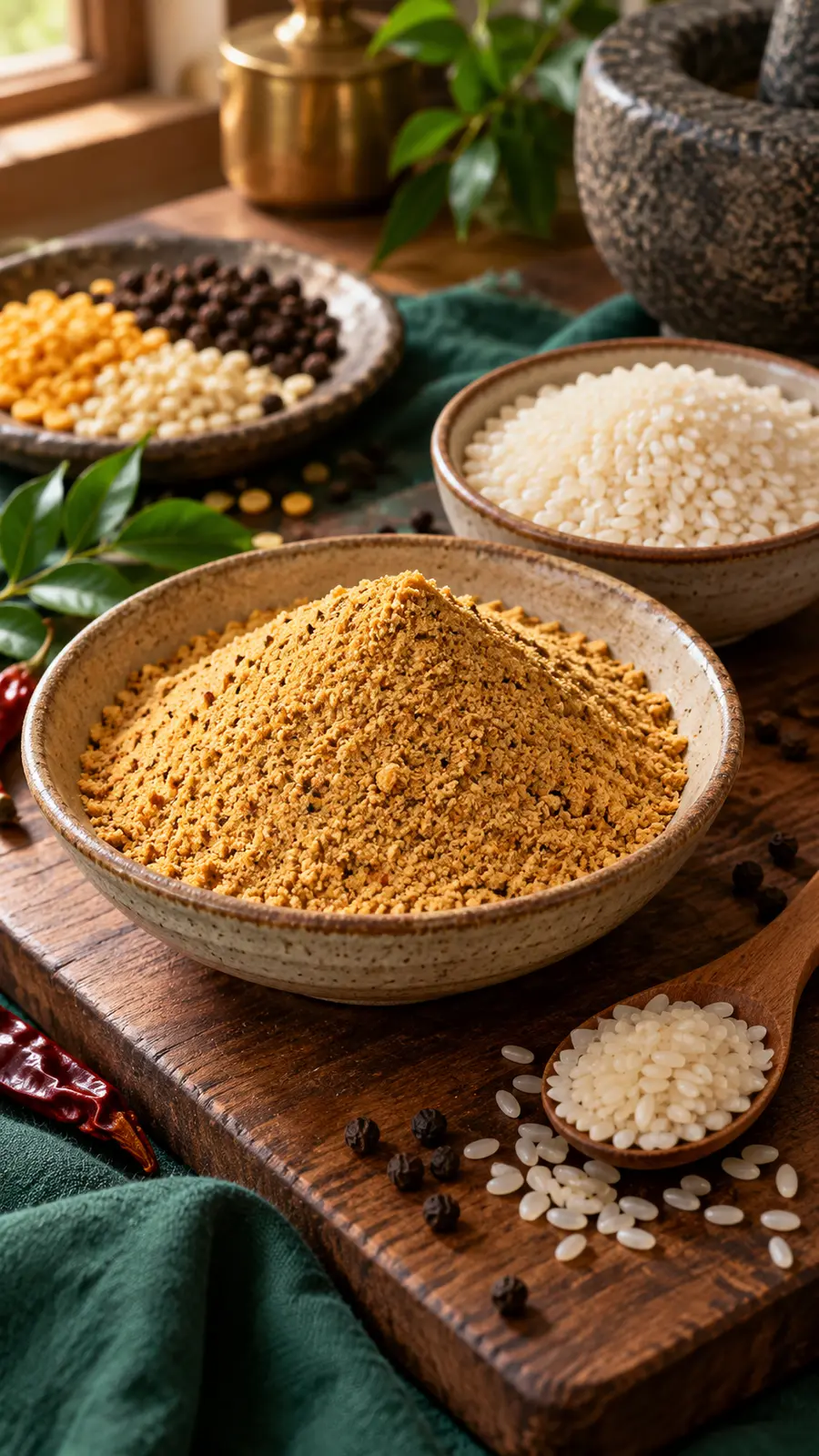
Rice in podi can be a deliberate part of the recipe. It helps shape the dry blend’s texture and gives the stronger spices another ingredient to sit beside.
Not every podi uses rice. Some rely mostly on dal, while others include coconut or seeds. The ingredient list tells you which kind of blend you’re buying.
Rice brings a different kind of body
Rice has a milder flavour than chilli or black pepper. When it’s prepared and ground for a podi, it adds dry particles that affect how the powder feels.
The amount and grind matter. A coarser grind can feel grainier, while a finer one mixes more smoothly. Rice alone doesn’t decide whether a podi will be coarse or fine.
We cover that wider question in our guide to podi texture.
Roasting can add a gentle toasted note
In recipes that roast the rice, the heat can bring out a light toasted aroma. The aim is a pleasant roast, not dark grains that taste burnt.
How noticeable that flavour becomes depends on the rest of the blend. Pepper, chilli and hing can all be much louder.
That quieter role is still useful. Every ingredient doesn’t need to lead the spoonful.
What rice does in Kerala Podi
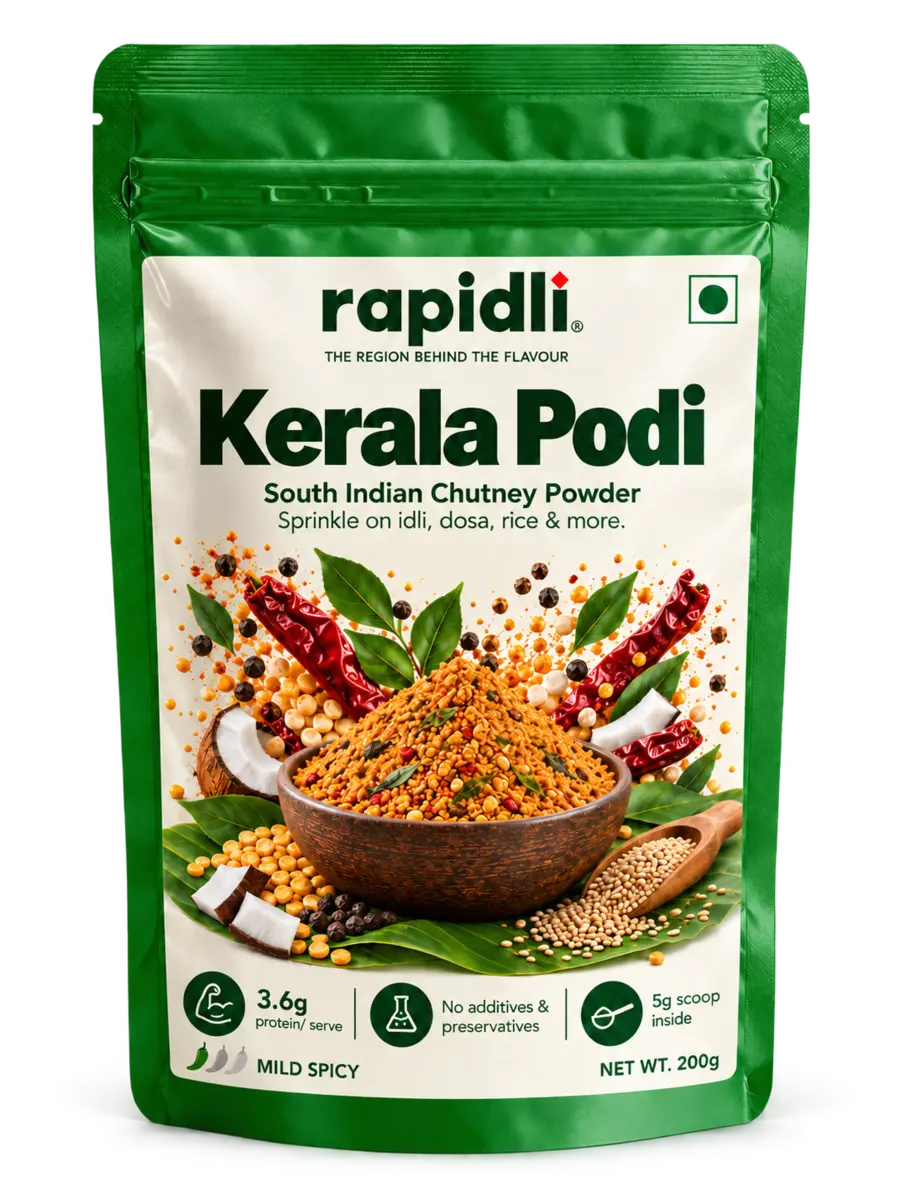
Rapidli Kerala Podi lists idli rice alongside urad dal, chana dal, Guntur chillies, black pepper, sesame, hing and rock salt.
That gives the blend a different base from a podi built around coconut and garlic. Rice is one part of the recipe, while the dals, sesame and spices bring their own flavour and texture.
Black pepper also has a character of its own. Read how pepper heat differs from chilli heat if you want to know what to notice.
Does rice make a podi mild?
It can help spread strong ingredients through a larger mix. But the final heat still depends on the amount and type of chilli and pepper.
A rice-based blend can still be hot. A dal-based blend can be gentle. Looking at one ingredient won’t tell you the whole story.
Check the stated spice level, then start with a small spoonful on your food.
Is rice just filler?
The useful question is whether it has a clear place in the recipe. Rice can be there for flavour and texture, just as dal or sesame can.
You should still compare the full ingredient list and nutrition panel. Rice doesn’t do the same job as a lentil, and two blends with rice can have very different recipes.
Our guide to reading spice blend ingredients helps you make that comparison without guessing from the front of the pack.
Don’t add raw rice to ready-to-use podi
This is about rice prepared as part of a dry blend. Stirring uncooked rice into finished podi at home won’t recreate that process or texture.
Use the ready-to-eat blend as it comes. If you’re making podi from scratch, follow a complete recipe for roasting, cooling and grinding.
Rice has a quiet role in some podis. Taste the whole blend before deciding what that role means for your plate.
Related posts
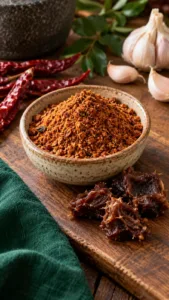
Tamarind adds a sour note to Andhra Podi. Learn how it works with chilli and garlic, and why a dry blend behaves differently from a...more
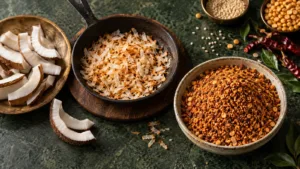
Dry coconut gives podi a rounder flavour and fuller mouthfeel. Here’s how roasting, natural fat and moisture control change the final spoonful.
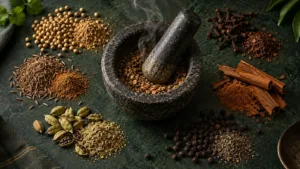
Grinding spices releases their aroma quickly, but it also exposes them to air. Here’s why ground spices smell stronger at first and fade sooner.
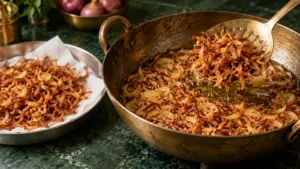
Fried onions do far more than add sweetness to biryani. They shape its aroma, colour, texture and the way the layers come together during dum.
A darker masala isn’t automatically stronger, hotter or better. Roasting, chilli choice and ingredient proportions can all change colour differently.