


No products in the cart.
Return To Shop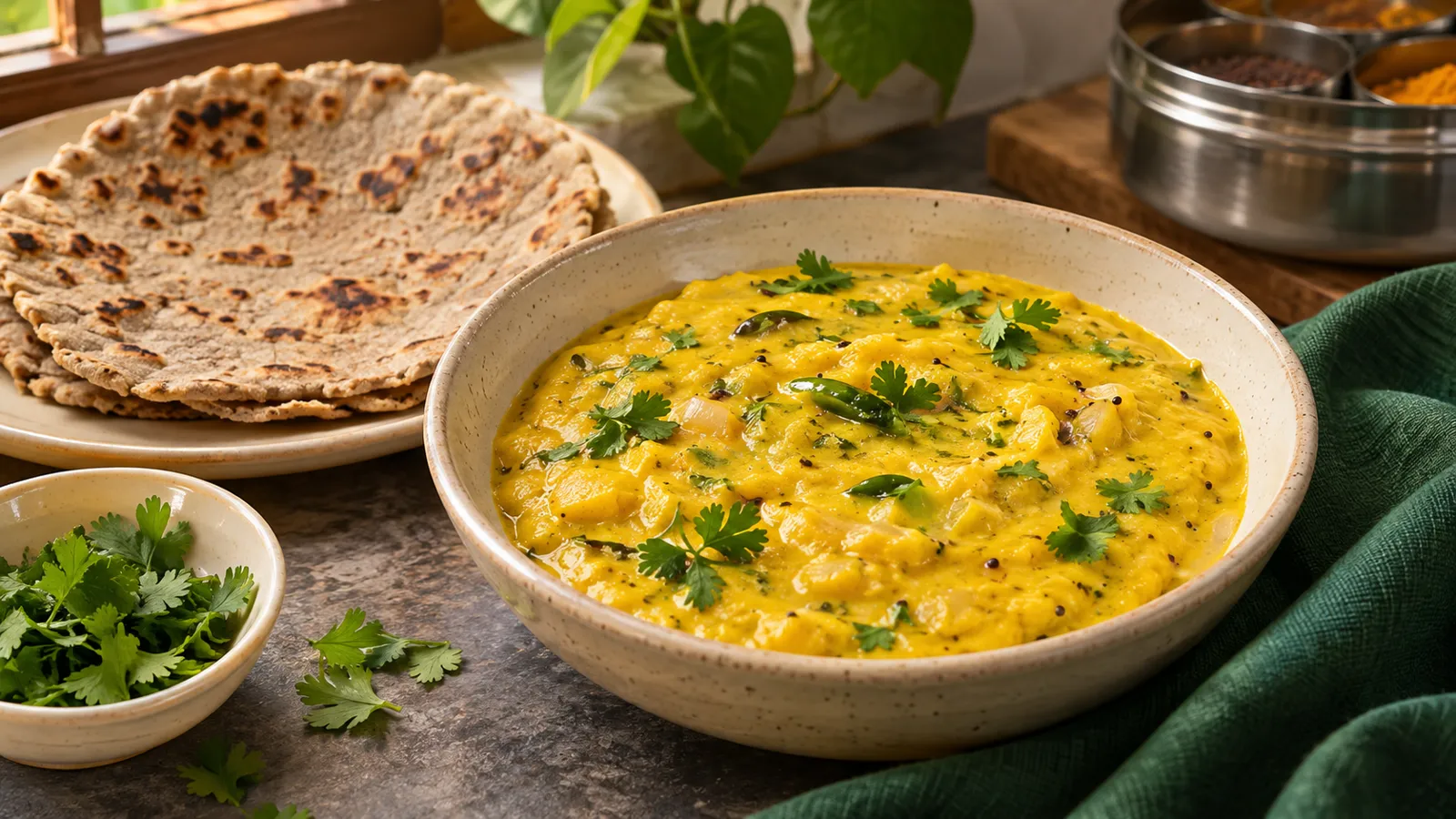
Besan can turn into dinner without much help from the vegetable drawer. Pithla is a comforting Maharashtrian favourite, often served with bhakri. This podi variation keeps that simple spirit and adds Tamil Podi near the end. The important part is giving the besan time to cook.
Serves 3. Prep 10 minutes; cook about 20 minutes.
Ingredients
- 75 g besan
- 600 ml water, divided, plus more as needed
- 1 tbsp oil
- ½ tsp mustard seeds
- ½ tsp cumin seeds
- 6 curry leaves
- 1 small onion, finely chopped
- 2 garlic cloves, chopped
- ¼ tsp turmeric
- 1 tbsp Rapidli Tamil Podi
- 2 tbsp chopped coriander
- Salt as needed
Method
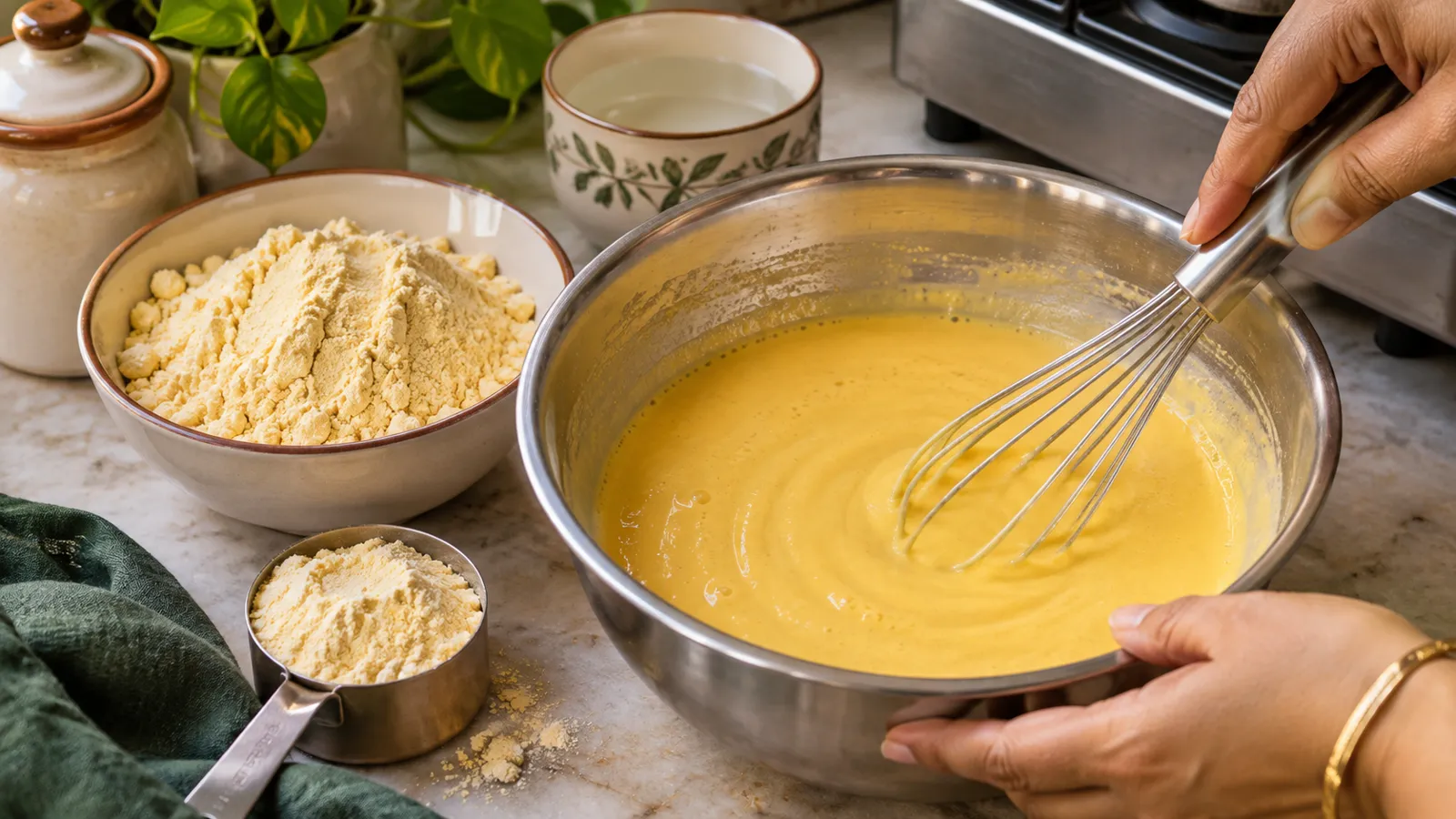
- Whisk the besan with 250 ml cool water until smooth. Crush any lumps against the bowl with the whisk before they reach the pan.
- Heat the oil in a deep pan over medium heat. Add mustard and cumin. Once the mustard splutters, carefully add dry curry leaves, then onion and garlic. Cook until the onion softens.
- Add turmeric and the remaining 350 ml water. Bring to a gentle simmer. Whisk the besan slurry again, since it settles, and pour it in slowly while stirring.
- Cook over low to medium heat for 12–15 minutes, stirring across the base frequently. The mixture will thicken. Add hot water in small splashes if it catches or becomes too stiff before the besan is cooked.
- Stir in Tamil Podi and simmer for another 2 minutes. Taste for salt. The curry should taste cooked and savoury, without a raw flour note. Add coriander and serve hot.
Choose the thickness at the end
For bhakri or roti, a spoonable pithla works well. With rice, add a little more hot water. Besan keeps thickening as it sits, so leave it slightly looser than the final consistency you want.
If lumps appear
Press small lumps against the pan with a spoon while stirring. Lower the heat first; working harder with the spoon won’t help if the base is scorching. A smooth slurry makes this stage much easier.
Serve with a fresh onion salad or cooked greens. Start with the measured podi amount, then offer extra at the table for anyone who wants more heat.
For more ways to use a measured amount of seasoning, see how to use podi.
Related reading: how besan and sattu behave differently.


Related posts

Podi Rajma Sandwich: A Lunch That Holds Together with practical tips for everyday cooking.

Podi Lotus Stem Fry: Crisp Edges and Plenty of Flavour with practical tips for everyday cooking.
Beetroot Poriyal With Karnataka Podi and Coconut with practical tips for everyday cooking.