


No products in the cart.
Return To ShopSalt some cucumber and leave it in a bowl. Come back a little later and you’ll find a pool of water at the bottom.
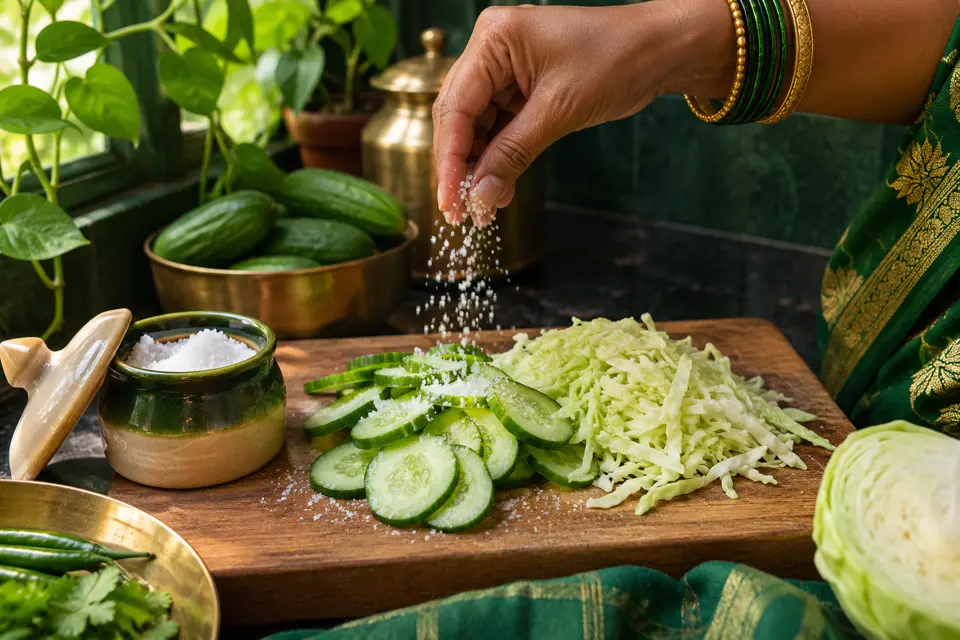
That can be useful. It can also leave a stir-fry wetter than you wanted. Here’s what’s going on and how to use it to your advantage.
What happens when you add salt?
Vegetables contain water inside their cells. Salt on the surface draws some of that water out through a process called osmosis. The amount you notice depends on the vegetable, how it’s cut and how long it sits.
Heat also softens vegetables and releases moisture, so a wet pan isn’t always caused by salt alone.
When early salting helps
For cucumber salad or raita, a little salt and a short rest can draw out water before you mix in the dressing. Drain or gently squeeze the cucumber, then taste before adding more salt.
Salting shredded cabbage before a slaw can soften it too. How long to leave it depends on how much crunch you want.
When you may want to wait
For a quick mushroom or cabbage stir-fry, use a wide pan and avoid crowding it. If moisture collects, let it cook off so the vegetables can brown. Salting later can help you judge the final seasoning once the food has reduced.
There’s no single rule for every pan. Early salting can be useful when you want vegetables to soften; a later sprinkle gives you more control over the finished taste.
What if you’re adding podi?
Check whether your podi already contains salt. Add a little towards the end, toss and taste before reaching for the salt shaker. Try it with a simple podi cabbage stir-fry.
Related posts

Get to know black and yellow mustard seeds, from their flavour to the dishes they suit.

What Do Cloves Add to an Indian Masala? with practical tips for everyday cooking.
Why Does Palak Shrink So Much When It Cooks? with practical tips for everyday cooking.