


No products in the cart.
Return To Shop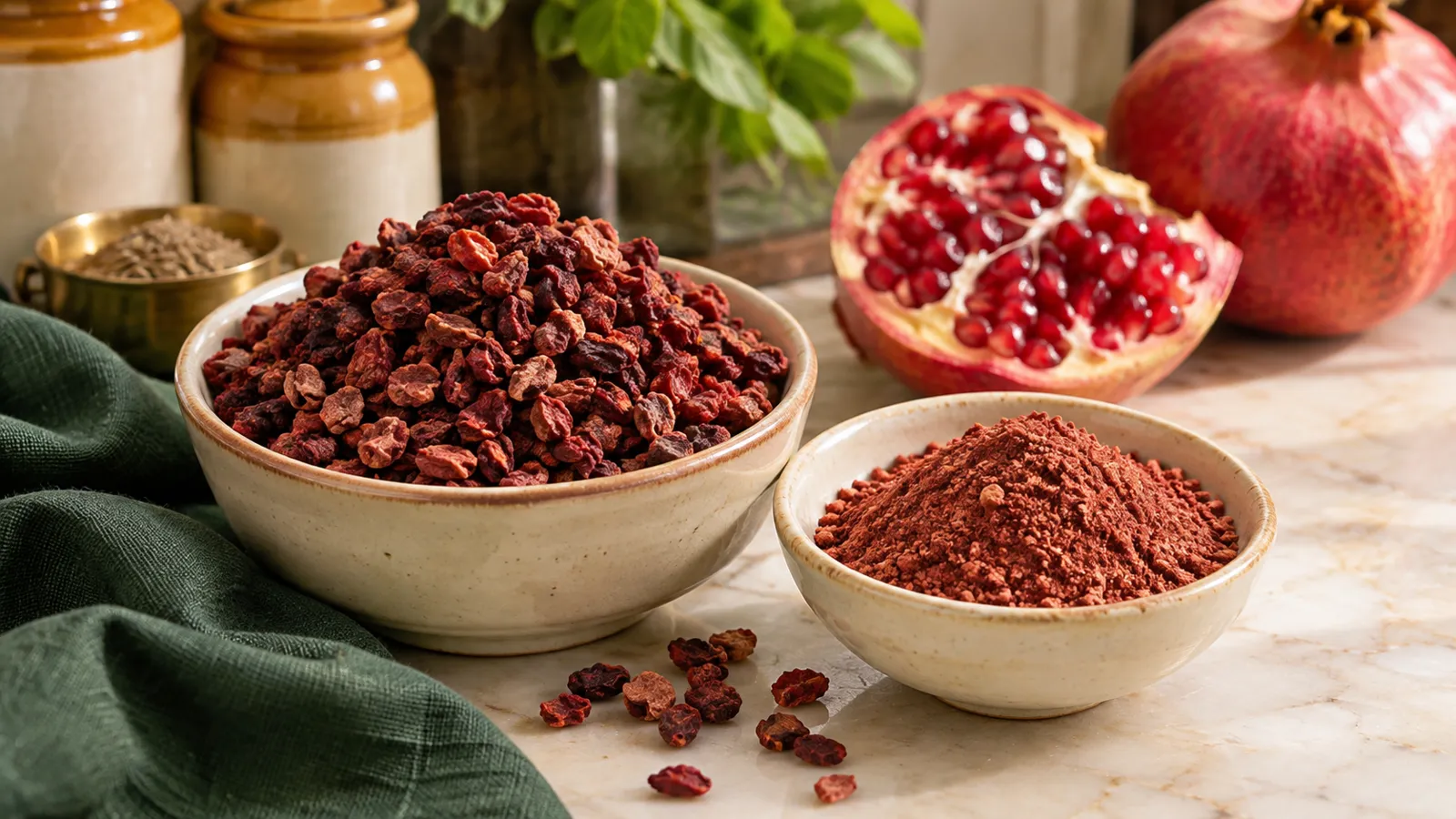
Anardana brings a fruity sourness that sits comfortably in chole and potato fillings. It’s made from dried pomegranate seeds, but it won’t taste like scattering fresh arils over a salad. Drying changes the texture, and the tartness is concentrated into a small ingredient.
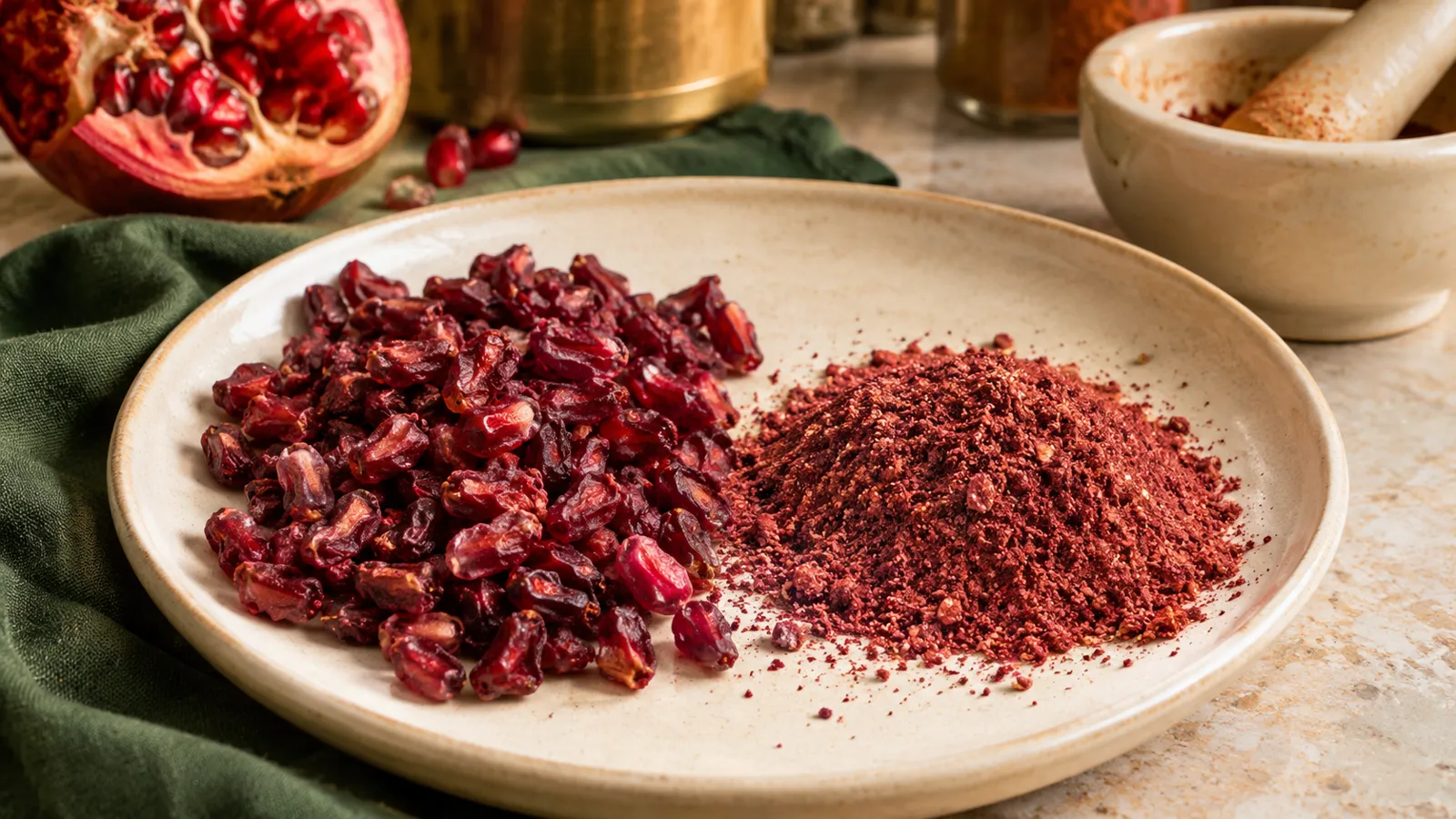
Whole seeds leave a different bite
Whole anardana can be chewy or gritty, depending on the product and how it was prepared. That may be welcome in a coarse chutney. In a smooth potato filling, an unexpected hard seed is less appealing.
Ground anardana spreads more evenly through a dish. If grinding whole seeds at home, use a suitable spice grinder and check the texture before adding it. Don’t assume a short pulse has reduced every hard bit.
Use it to adjust the dish gradually
The strength varies between packets. Follow your recipe’s starting amount and taste after the seasoning has mixed through. Chole with tomato already has some acidity, and a stuffing may also contain lemon or amchur. Count those ingredients before adding another sour one.
Anardana often has more fruit character and texture than lemon juice. Swapping them spoon for spoon can change both the moisture and flavour. Make a small adjustment, then taste the food with the bread or rice you’ll serve beside it.
Match the form to the job
For a dry filling, powder is easier to distribute without adding liquid. For a rustic chutney, crushed seeds may suit the texture. In a gravy, give the ingredient time to mingle before deciding it needs more.
If the packet has picked up moisture, check its condition rather than simply grinding the clumps. Keep it sealed and use a dry spoon.
Where podi fits
Andhra Podi already contains tamarind. If you’re adding it to a filling that also uses anardana, taste before adding more sour seasoning. The aim is a balanced bite, with enough room left for the main ingredient.
For more ways to use a measured amount of seasoning, see how to use podi.
Related reading: what amchur adds to a dish.


Related posts

Get to know black and yellow mustard seeds, from their flavour to the dishes they suit.
Learn when salting vegetables early helps, and when to wait until they're cooked.

What Do Cloves Add to an Indian Masala? with practical tips for everyday cooking.