


No products in the cart.
Return To Shop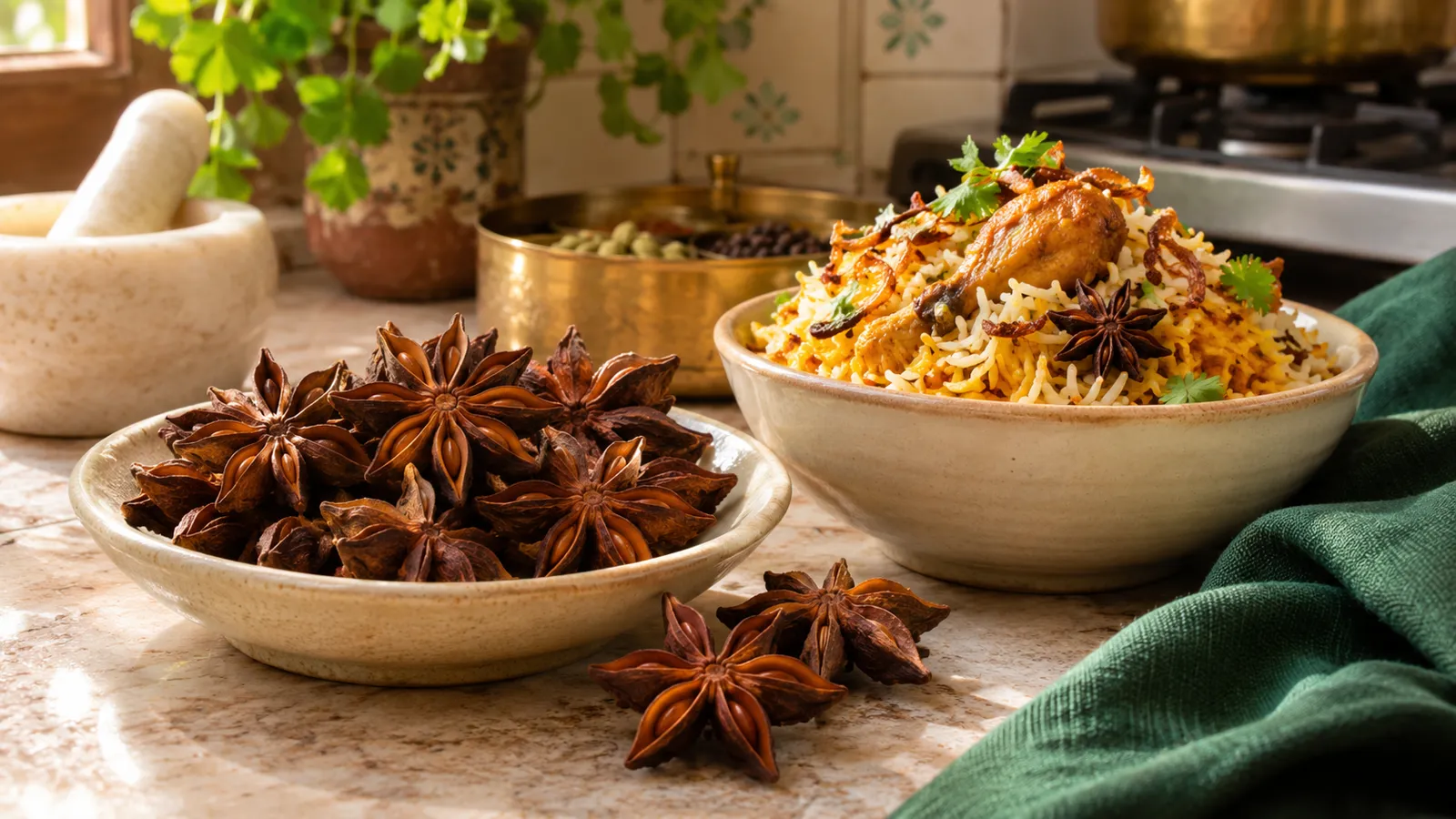
Star anise can announce itself before you lift the lid. Its sweet, liquorice-like aroma is strong, which is useful in a big pot and easy to overdo in a small one. It works best when it supports the rice and other spices.

Know the ingredient
Culinary star anise is the dried fruit of Illicium verum. The woody star-shaped fruit holds the seeds. It is different from aniseed, even though their aromas have something in common. Buy a food-grade spice from a reliable seller rather than relying on shape alone.
The Spices Board’s spice list identifies star anise separately from other spices. Packet names and botanical names can help when a shop uses several common names.
One star isn’t a fixed measure
Size and the number of intact points vary. A large star and a broken half don’t contribute the same amount. Follow a recipe written for the quantity of rice you’re cooking, and use a restrained amount on your first attempt.
Ground star anise is harder to remove if you overdo it. It also spreads through the food differently from a whole piece. Don’t substitute a spoon of powder for a single star.
Let the cooking method guide you
Some biryani recipes use whole spices in the rice water, others in the meat or vegetable base. Adding star anise to both stages without considering the total can make the finished dish too perfumed.
Watch it when warming spices in fat. Fragrant is the goal; scorched woody pieces leave bitterness. Once the aroma is clear, continue with the recipe rather than leaving the spices alone in hot oil.
Remember the serving spoon
Whole stars stay hard. Remove visible pieces before serving, particularly from portions for children. Count them as you add them so you know what to look for later. A strong aroma should be part of the meal, not a surprise bite of woody spice.
For more ways to use a measured amount of seasoning, see how to use podi.

Related posts

Get to know black and yellow mustard seeds, from their flavour to the dishes they suit.
Learn when salting vegetables early helps, and when to wait until they're cooked.

What Do Cloves Add to an Indian Masala? with practical tips for everyday cooking.