


No products in the cart.
Return To Shop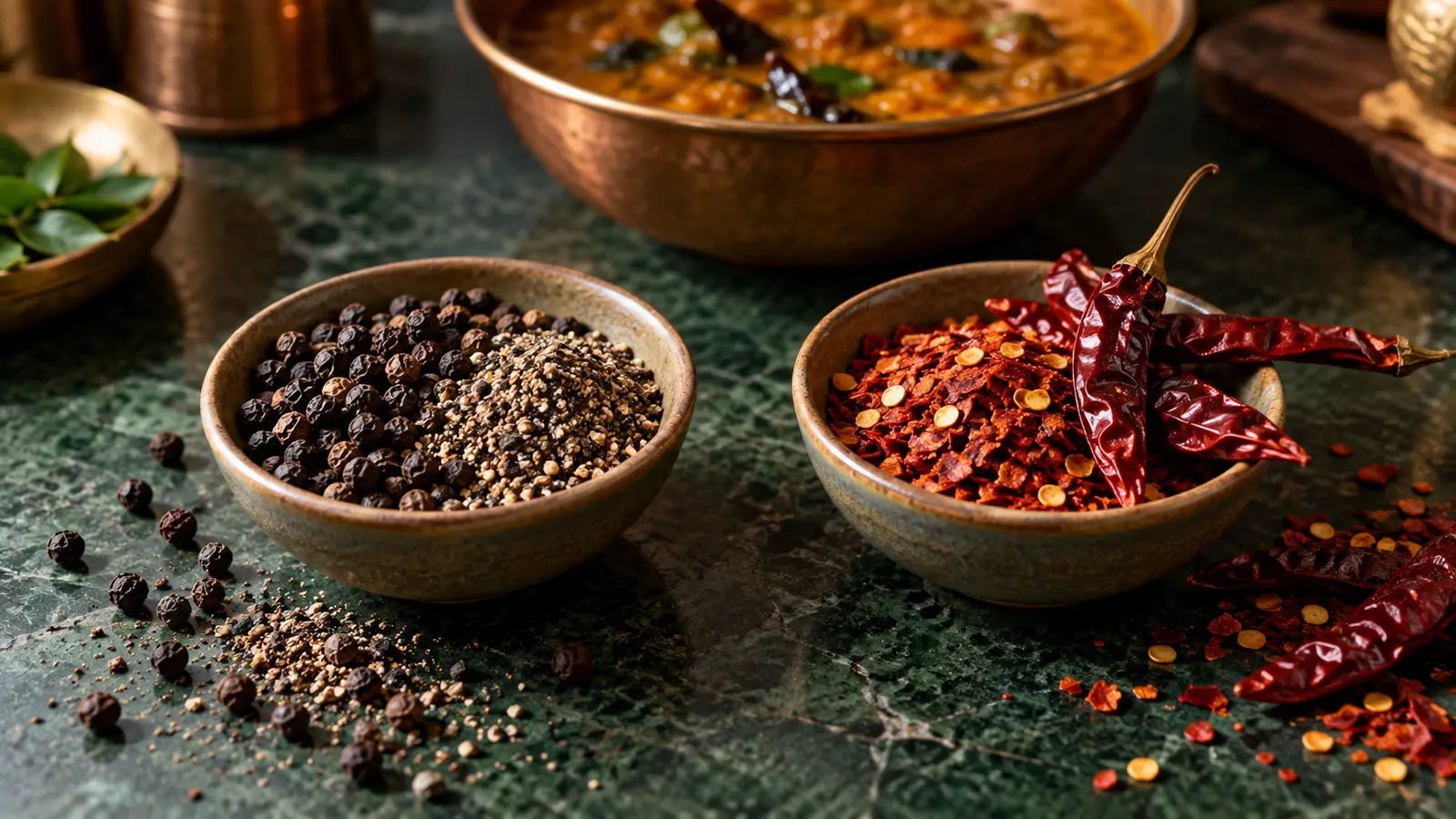
Black pepper and chilli can both make you reach for water. Still, they don’t create the same kind of heat.
Chilli usually builds and lingers. Black pepper feels sharper, drier and more immediate. It may even seem to rise into your nose.
That difference matters when you’re choosing spices for rasam, pepper chicken, podi or an everyday curry.
They get their heat from different compounds
Chillies contain capsaicin. It activates heat-sensitive receptors in your mouth, which is why a spicy chilli can feel genuinely hot even when the food isn’t.
Black pepper gets most of its bite from piperine. The sensation is often brisk and prickly rather than slow and glowing.
Your experience also depends on the amount used, how finely the spice is ground and what else is in the dish.
Chilli heat tends to stay longer
Capsaicin binds well with fat and doesn’t wash away easily with plain water. A hot chilli can therefore leave a lasting burn on the tongue and lips.
That lingering quality is useful when heat is meant to run through the whole dish. It works in pickles, chutneys, curries and podis where chilli also contributes colour and aroma.
Different chillies don’t behave alike. Our guide to Byadgi and Guntur chillies explains why colour and heat shouldn’t be treated as the same thing.
Black pepper feels quicker and more aromatic
Freshly crushed pepper often hits the nose before the chilli heat has fully developed. Its aroma can feel woody, citrusy and warm.
This makes pepper especially useful in dishes where fragrance matters as much as heat. Think pepper rasam, milagu kuzhambu, pepper chicken or a simple egg seasoned at the table.
Pre-ground pepper loses that bright top note faster. It still adds warmth, but the result can feel flatter and dustier.
Grinding changes the way both spices behave
A coarse crack of pepper releases its flavour in small bursts. Fine pepper spreads more evenly and can taste stronger because more surface area meets your tongue.
Whole dried chilli releases flavour gradually in a tempering or simmering gravy. Chilli powder disperses quickly, colours the food and makes the heat harder to avoid.
This is one reason measurements aren’t interchangeable. One teaspoon of fine pepper doesn’t behave like one teaspoon of lightly crushed peppercorns.
Fat can soften the experience
Oil, ghee, coconut milk and curd help carry spice compounds through food. They can also make chilli heat feel rounder than it would in a thin, watery dish.
Pepper works well with fat too, but heavy cream can mute its fresh aroma. Add a final pinch near the end when you want the pepper to stay noticeable.
Where pepper works better
Choose black pepper when you want dry warmth, aroma and a clean bite. It suits broths, rasam, eggs, grilled vegetables, meat rubs and dishes built around ginger or curry leaves.
Pepper is also useful when strong red colour would look out of place.
Where chilli works better
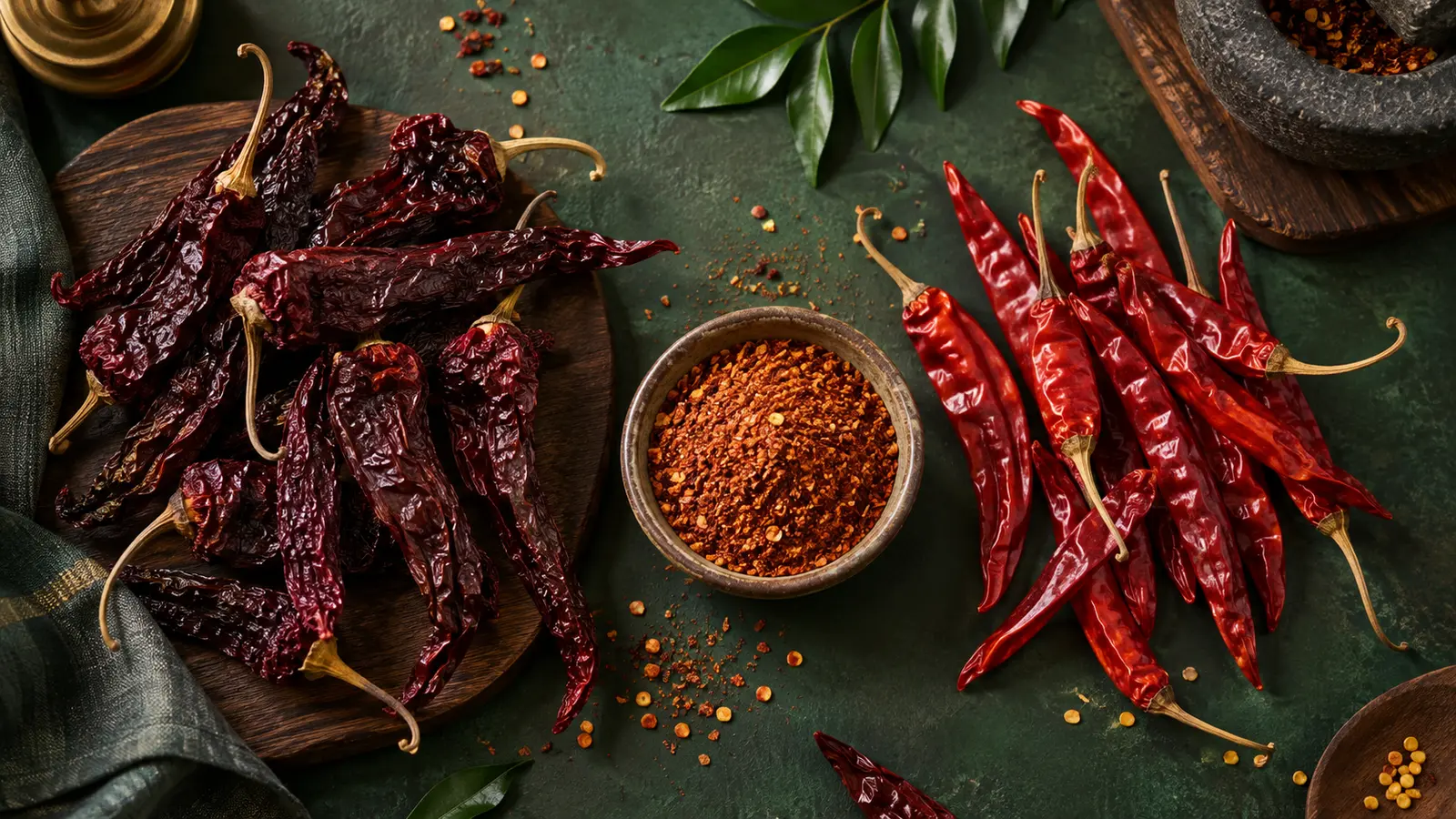
Choose chilli when you want heat that spreads through the dish, along with red colour and a recognisable dried-chilli flavour.
It’s the natural choice for many podis, gravies, pickles and fried snacks. The exact chilli matters because some varieties bring more colour while others bring a sharper burn.
Can you use both?
Absolutely. Many good spice blends do.
Chilli creates the main line of heat while pepper adds lift and a different kind of bite. The balance should feel deliberate. Simply adding more of both usually makes a dish noisy rather than exciting.
The short answer
Black pepper feels sharp, aromatic and quick. Chilli heat usually builds, spreads and stays longer.
Neither is a substitute for the other. They’re different tools, and regional Indian cooking has spent centuries proving it.

Related posts
Rice in podi can shape its texture and toasted flavour. Learn why some recipes use it, with Rapidli Kerala Podi as a clear ingredient-list example.
Tamarind adds a sour note to Andhra Podi. Learn how it works with chilli and garlic, and why a dry blend behaves differently from a...more
Dry coconut gives podi a rounder flavour and fuller mouthfeel. Here’s how roasting, natural fat and moisture control change the final spoonful.
Grinding spices releases their aroma quickly, but it also exposes them to air. Here’s why ground spices smell stronger at first and fade sooner.

Fried onions do far more than add sweetness to biryani. They shape its aroma, colour, texture and the way the layers come together during dum.