


No products in the cart.
Return To Shop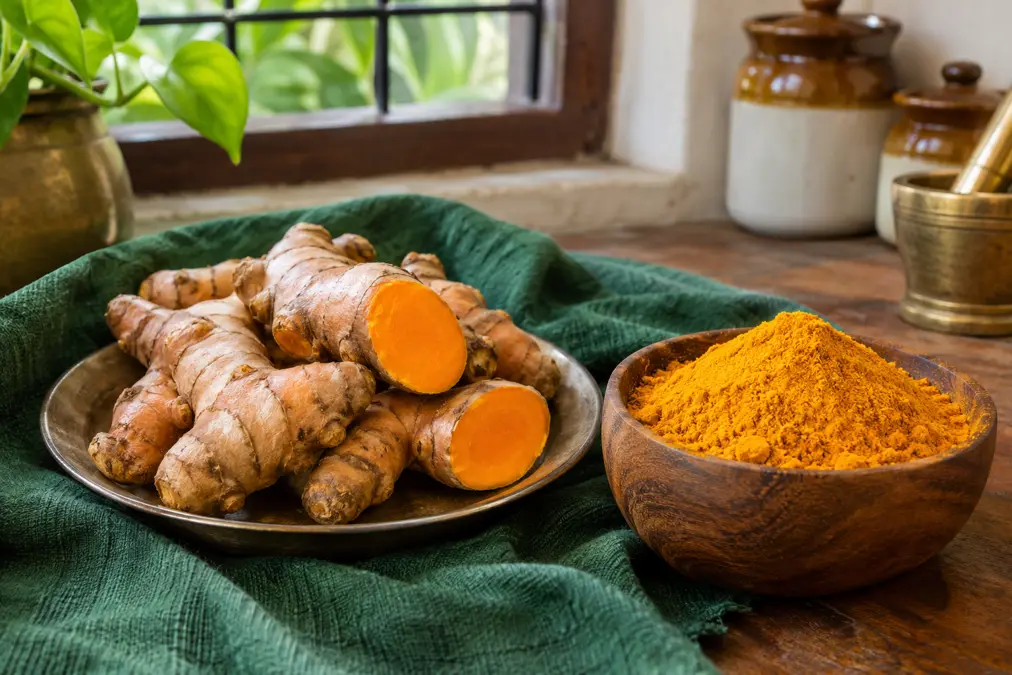
Fresh haldi looks like a small, knobbly root. The powder in your masala box has already been dried and ground. Both bring colour, but they don’t behave quite the same way in a recipe.
Start with the form
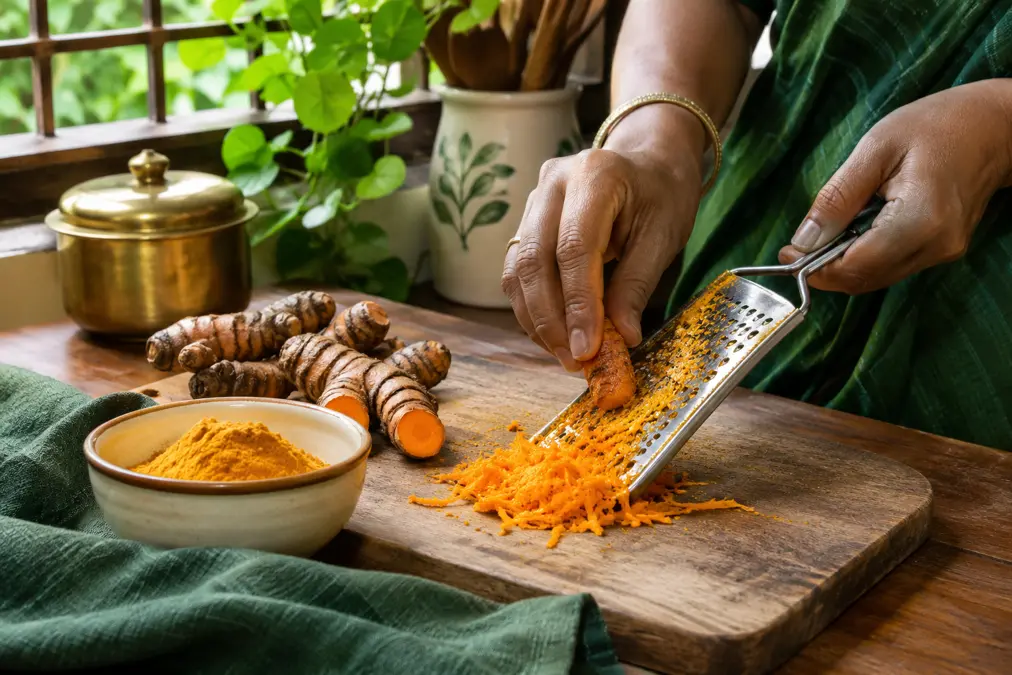
Fresh turmeric is firm and needs washing before use. Peel or scrape it, then grate or chop it as your recipe directs. It can stain fingers, boards and cloth, so choose your tools with that in mind.
Powder is ready to add. It can be stirred into the cooking liquid or warmed briefly with other ground spices, taking care not to scorch it.
What changes in flavour?
Fresh turmeric can taste brighter and more earthy; dried powder has its own concentrated, familiar character. The result depends on freshness, the amount used and the rest of the dish.
Try comparing a small pinch in two separate portions of a simple vegetable dish. Add gradually and taste as it cooks.
Can you swap one for the other?
Often you can adapt a curry or dal, but don’t assume a spoonful of grated fresh root equals a spoonful of powder. Fresh turmeric contains water, and powders vary. Start with less, taste, and adjust the next time you make the dish.
If fresh haldi is central to the recipe, such as a preparation built around slices of the root, powder will change the texture too.
Keep each form ready
Follow the packet or shop’s storage guidance for powder, and keep the container sealed. Buy fresh roots that feel firm and use them while fresh.
More ideas for flavouring everyday food are on Rapidli’s how-to-use page.

Related posts

Get to know black and yellow mustard seeds, from their flavour to the dishes they suit.
Learn when salting vegetables early helps, and when to wait until they're cooked.

What Do Cloves Add to an Indian Masala? with practical tips for everyday cooking.