


No products in the cart.
Return To Shop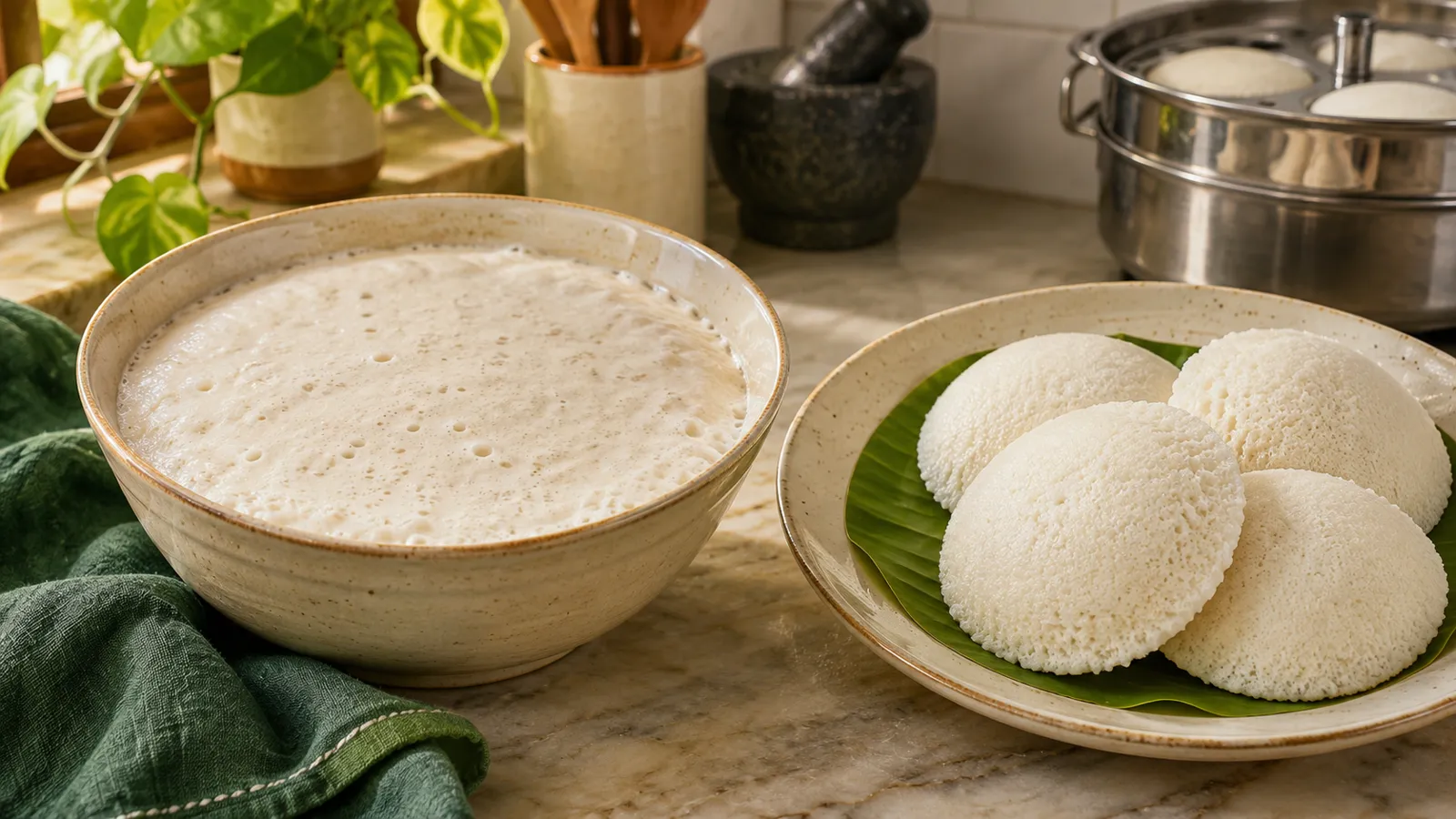
The bowl looked full of promise at bedtime. By breakfast, the batter barely seems to have moved. A cool kitchen is a common reason for slow idli fermentation, but temperature isn’t the only thing worth checking.
Use the recipe as your starting point
Rice-to-urad ratio, grinding and water all affect the batter. Follow a reliable recipe rather than trying to fix several unknowns at once. Very thin batter may not hold gas well, so a small rise doesn’t always mean no fermentation happened.
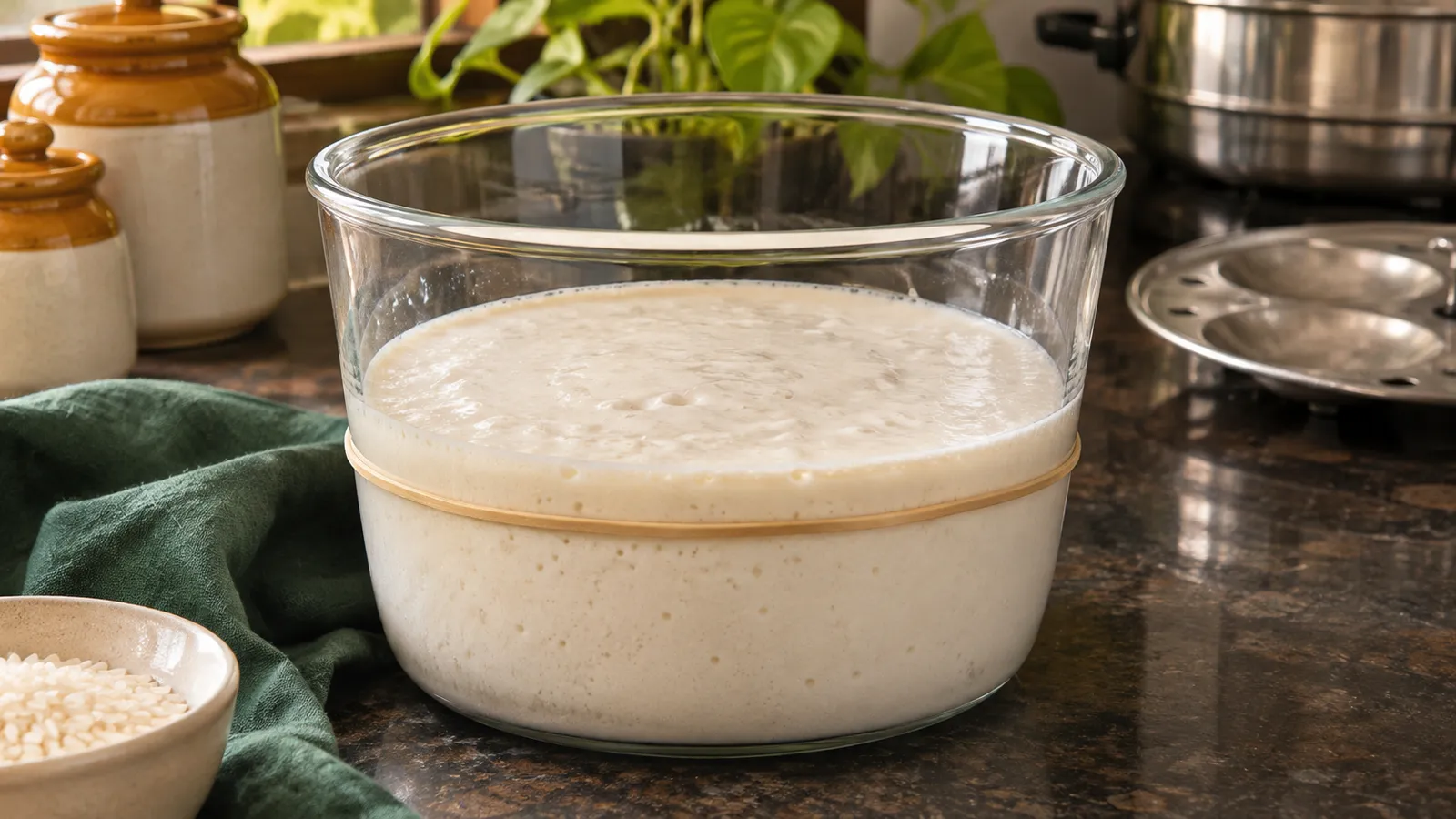
Mark the starting level on the outside of the bowl. Use a container with room for expansion and a loose cover. That makes changes easier to see than relying on memory.
Warmth helps; hot spots don’t
Choose a gently warm spot. CFTRI research on idli fermentation found 25–30°C favourable for the batter studied. A switched-off oven can be useful, but confirm it isn’t hot and won’t be switched on by someone else. Direct heat from a hot appliance can overheat part of the bowl.
A colder night may need longer than the recipe’s usual timing. Follow the recipe’s temperature guidance and inspect the batter rather than assuming every batch must be ready after the same number of hours.
Look for more than height
Bubbles and a lighter texture can signal fermentation even when the rise is modest. Avoid repeatedly beating the batter while checking it, since that releases trapped gas. A small test idli can help assess cooking texture once the batter is properly fermented.
Smell and appearance can’t guarantee food safety. Discard batter with mould, unusual coloured patches or a clearly unpleasant smell. Don’t taste questionable raw batter or assume steaming will make spoiled batter suitable to eat.
Next time, change one thing
Note the room temperature, recipe and water amount. Use fresh ingredients and clean equipment. Adjust one factor on the next batch so you can tell what helped.
Baking soda may change texture, but it doesn’t recreate fermentation or solve spoilage. Once the idlis are cooked, bring out the podi. Getting the batter right gives the seasoning a much better base.
For more ways to use a measured amount of seasoning, see how to use podi.
Related reading: serving podi with idli and dosa.


Related posts

Get to know black and yellow mustard seeds, from their flavour to the dishes they suit.
Learn when salting vegetables early helps, and when to wait until they're cooked.

What Do Cloves Add to an Indian Masala? with practical tips for everyday cooking.