


No products in the cart.
Return To Shop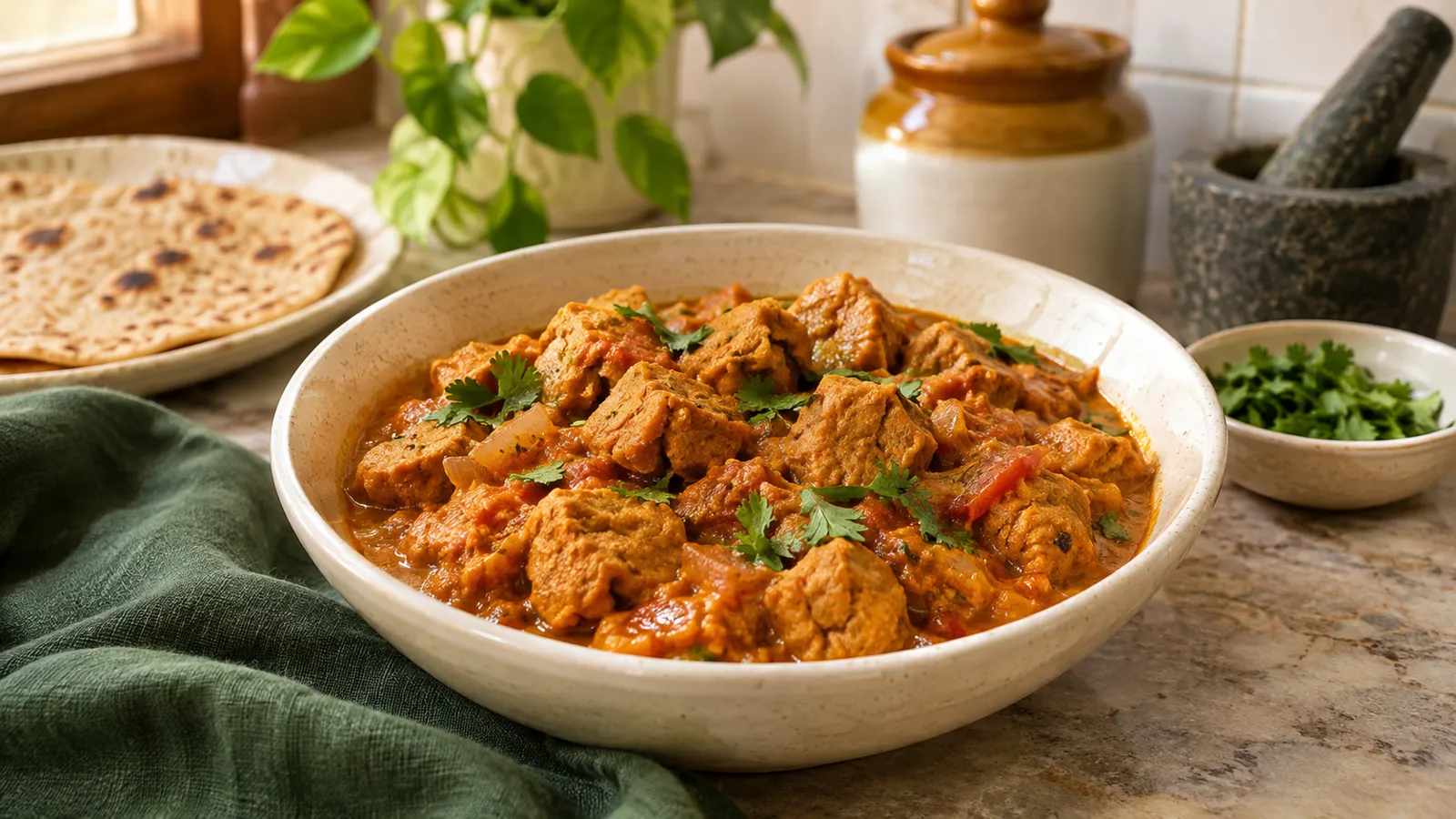
Soya chunks can be coated in a dark gravy and still taste plain in the middle. The answer usually starts before the masala goes in. Proper hydration and a chance to cook in seasoned liquid matter more than a last-minute shower of powder.
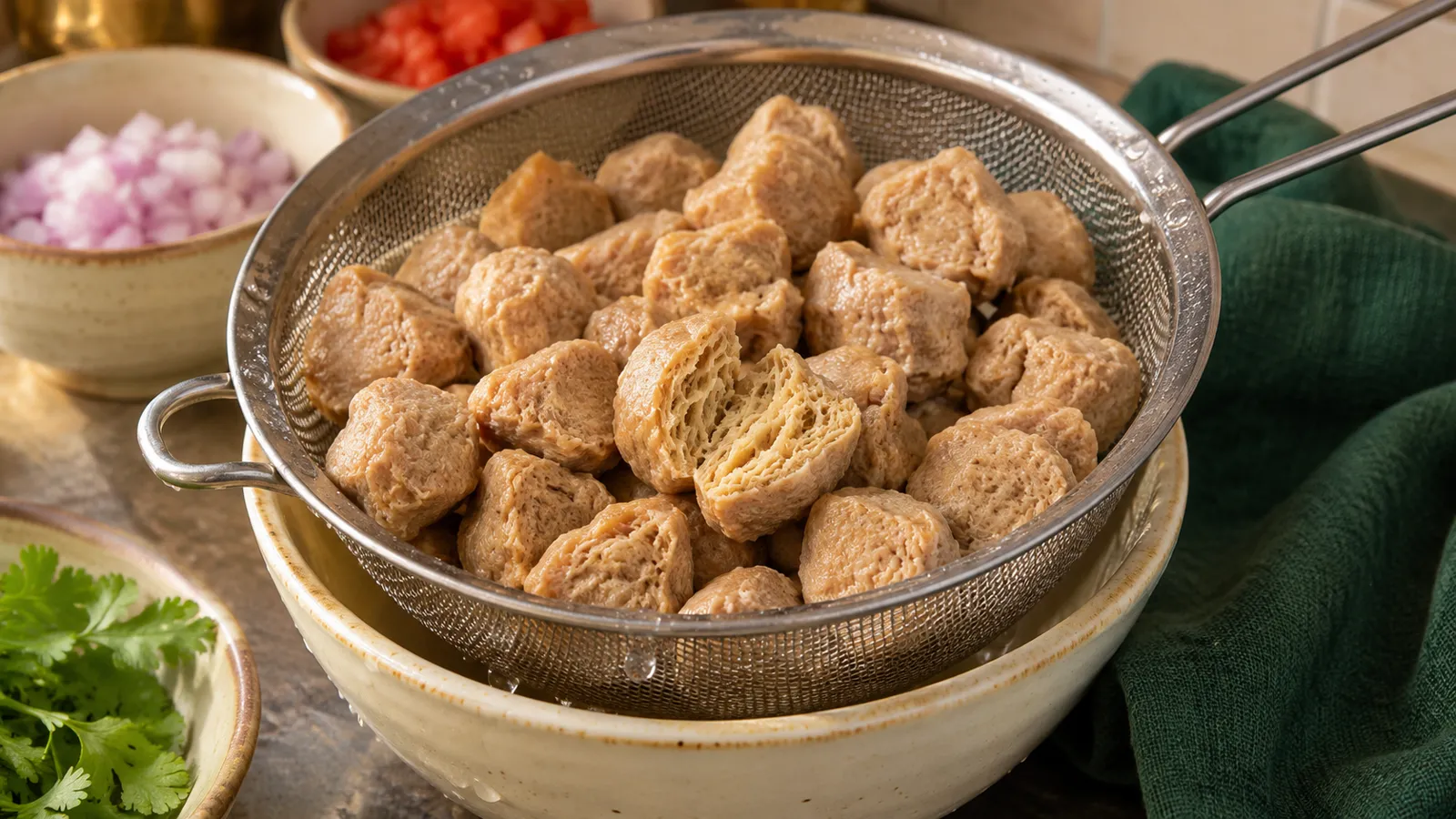
Follow the preparation on your packet
Chunk sizes and brands differ. Use the packet’s boiling or soaking method so the centre softens fully. A piece that is still hard in the middle won’t become pleasant just because the outside has plenty of spice.
Drain as directed. When cool enough to handle safely, squeeze gently to remove excess plain water. Don’t crush every piece into shreds. If the product calls for rinsing, do that as part of its preparation.
Make room for seasoned liquid
Waterlogged chunks can dilute the sauce they enter. After draining, simmer them in the dish’s seasoned liquid so the flavour has time to reach more than the surface. Keep enough moisture in the pan for that stage.
A thick, dry masala coating may taste strong on its own while barely changing the centre. Adding more dry powder can make the outside dusty or harsh. Taste a whole cooked piece, not just the sauce.
Check salt and size
Salt is part of the flavour picture, but don’t keep adding it blindly. If the sauce tastes balanced and the chunks taste plain, give them more time in the sauce. Large pieces may need a longer simmer than small ones. Cut a cooled piece open to check the centre’s texture.
Using podi
Mix a measured amount into the moist dish, then keep a little for a finishing adjustment if wanted. Podi contains salt, so include it in the seasoning decision. Avoid scorching it in a nearly dry pan while waiting for the chunks to soften.
This approach also helps with a pulao: prepare the chunks properly before they join the rice. Trying to hydrate very dry pieces inside a carefully measured pot can upset both textures.
For more ways to use a measured amount of seasoning, see how to use podi.
Related reading: podi soya chunk pulao.


Related posts

Get to know black and yellow mustard seeds, from their flavour to the dishes they suit.
Learn when salting vegetables early helps, and when to wait until they're cooked.

What Do Cloves Add to an Indian Masala? with practical tips for everyday cooking.