


No products in the cart.
Return To Shop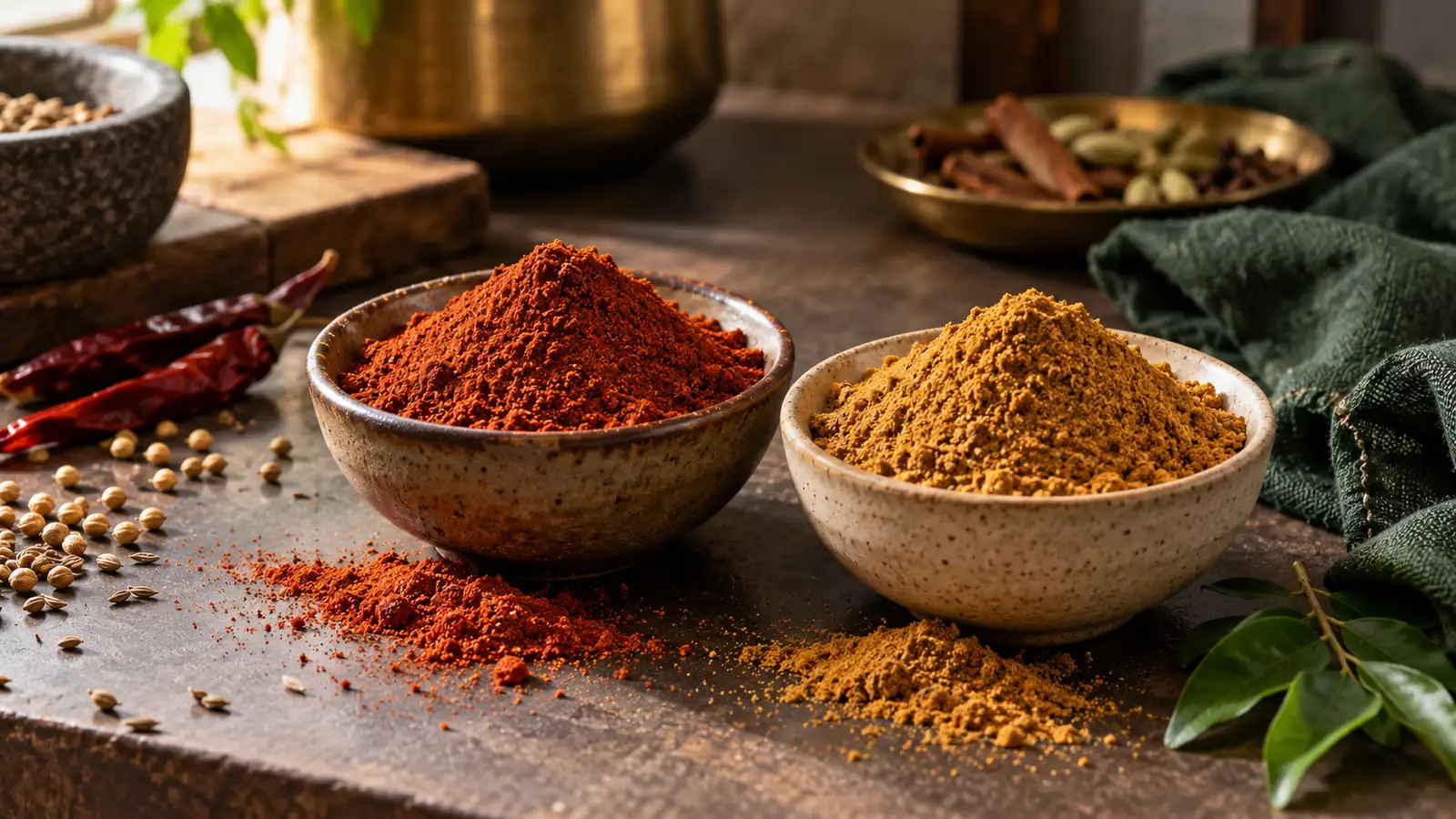
A deep brown masala can look powerful. A bright red one can look fiery. A pale blend may seem mild before you’ve even opened the pack.
Colour creates expectations, but it isn’t a reliable strength meter.
Masala colour comes from the ingredients and how they’re treated. Flavour strength depends on what those ingredients taste like together.
Roasting can make a blend darker
Spices deepen in colour as they roast. Coriander turns warmer and browner. Cumin darkens. Coconut, lentils and onions can move from pale gold to deep brown.
That change often brings toasted, nutty flavours. It doesn’t always bring more chilli heat.
If roasting goes too far, the blend may become dark because ingredients have scorched. That gives bitterness, not desirable strength.
Chillies colour a masala in different ways
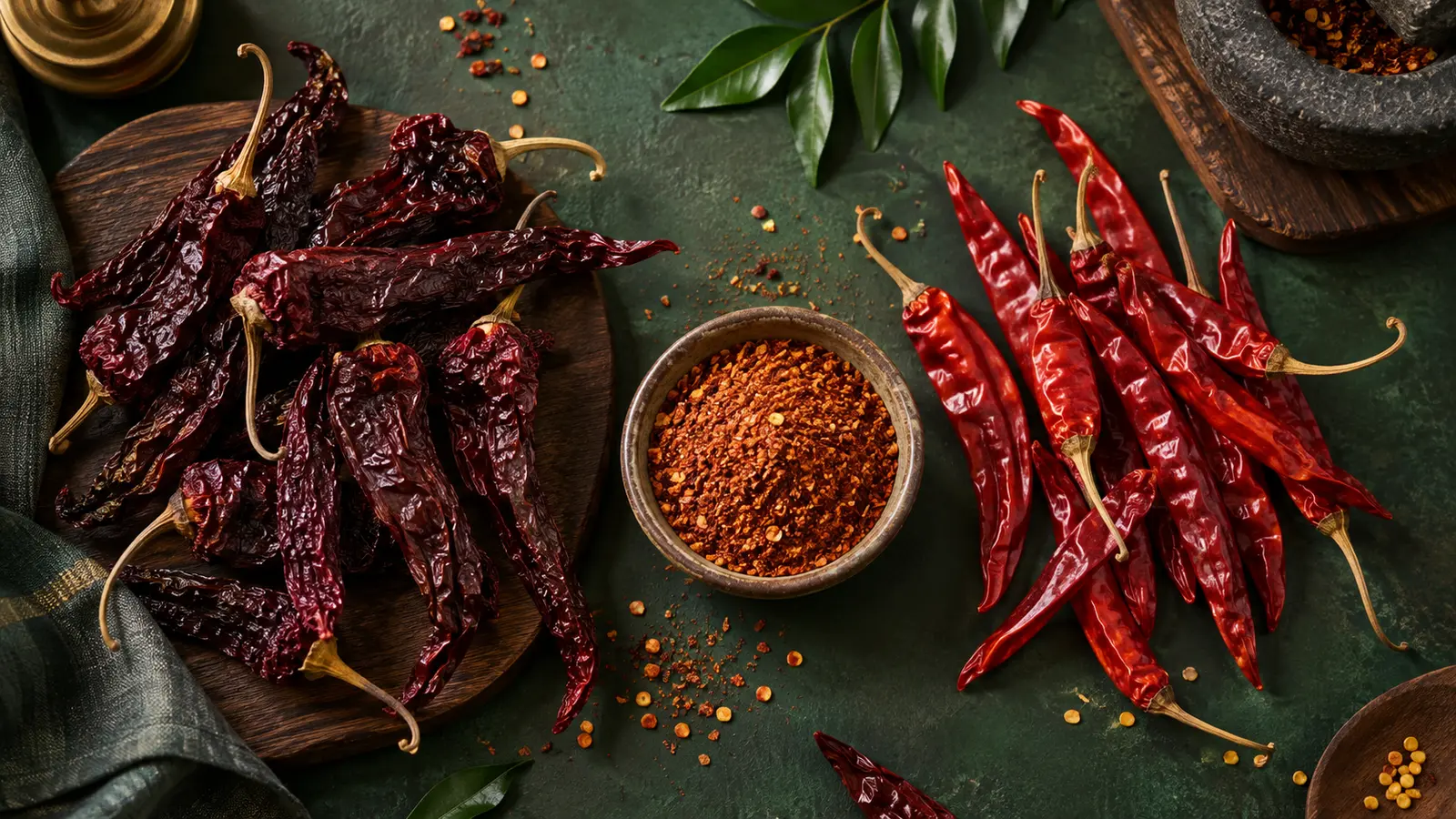
Some dried chillies bring rich red colour with moderate heat. Others look less dramatic but feel much hotter on the tongue.
This is why a bright masala isn’t automatically fierce, and a brown masala isn’t automatically mild.
Our guide to Byadgi and Guntur chillies explains how colour, aroma and heat can move in different directions.
Turmeric can make a blend look lighter
Turmeric adds a strong yellow tone even when used in modest amounts. Mixed with coriander and other pale spices, it can make a masala look golden rather than dark.
That says little about how aromatic the blend will become in a pan. Cardamom, clove, pepper or hing can be powerful without making the powder much darker.
Texture changes how colour appears
A fine powder often looks more even and intense because light hits a smooth surface. A coarse blend shows separate flecks of chilli, seed, dal or leaf.
The same ingredients can look different after a finer grind. They can also taste different because smaller particles spread and release flavour more quickly.
We’ve explored that effect in coarse versus fine podi.
Age can dull or deepen colour
Light, air, moisture and heat can change a spice blend during storage. Bright chilli and turmeric tones may fade. Natural oils can darken or look uneven.
A colour change doesn’t tell you everything about safety or quality, but it’s a reason to check the pack, storage conditions, aroma and best-before guidance.
Keep blends sealed and away from the stove. A clear jar in direct sunlight may look attractive, but the spices inside won’t thank you.
Regional masalas aren’t judged by one colour scale
A Chettinad-style masala may look dark because of roasting and pepper. A Kashmiri-influenced blend may look vivid because of its chillies. A coriander-led masala may stay relatively light.
None of those colours is the universal sign of authenticity. The useful question is whether the blend suits the dish and regional flavour it promises.
How should you judge a masala?
Start with the ingredient list. Check which ingredients appear first, whether salt is included and whether the blend matches the food you plan to cook.
Then notice the aroma and the result in the finished dish. A balanced masala should support the main ingredients rather than flatten everything into one generic taste.
Our guide to reading a spice blend’s ingredient list can help before you buy.
The short answer
A darker masala may be more heavily roasted, use darker ingredients or simply be ground differently. It isn’t automatically hotter, stronger or better.
Colour is one clue. The region, recipe and balance behind it matter far more.
Related posts
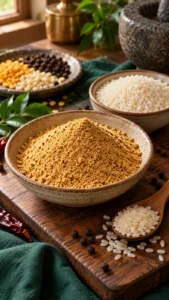
Rice in podi can shape its texture and toasted flavour. Learn why some recipes use it, with Rapidli Kerala Podi as a clear ingredient-list example.
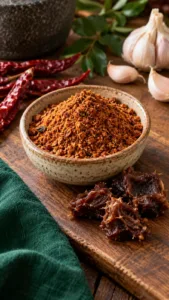
Tamarind adds a sour note to Andhra Podi. Learn how it works with chilli and garlic, and why a dry blend behaves differently from a...more
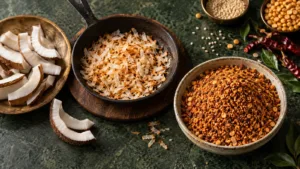
Dry coconut gives podi a rounder flavour and fuller mouthfeel. Here’s how roasting, natural fat and moisture control change the final spoonful.
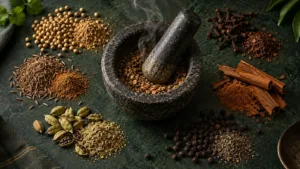
Grinding spices releases their aroma quickly, but it also exposes them to air. Here’s why ground spices smell stronger at first and fade sooner.
Fried onions do far more than add sweetness to biryani. They shape its aroma, colour, texture and the way the layers come together during dum.