


No products in the cart.
Return To Shop
The chicken is still cooking, but the masala at the bottom of the kadai has already turned dark. It sticks to the spoon, smells bitter and makes you wonder whether dinner is finished before it has properly begun.
This usually isn’t a bad masala. It’s a mismatch between heat, moisture and timing.
Once you know what’s happening in the pan, it becomes much easier to prevent.
Powdered spices burn quickly
Whole spices release their aroma slowly. Ground spices have far more surface exposed to the heat, so they cook much faster.
Chilli powder, coriander, cumin and fine spice blends can scorch when they sit against a hot, dry pan. The smaller the particles, the less time you have.
This is why powdered masala is often added after onions, tomatoes, curd or another moist ingredient. That moisture lowers the immediate heat around the spices and helps them spread.
The flame may be too high
Chicken releases water as it cooks, but that doesn’t happen instantly. If the pan is very hot, the masala can catch before enough moisture comes out.
Use medium heat when the chicken first meets the masala. Stir and turn the pieces so the coating isn’t pressed against one spot for too long.
High heat can be useful for browning, but it needs attention. Leaving the pan alone at that stage is where trouble starts.
Your pan may be too dry
A thick masala needs enough fat or liquid to move freely. If it looks pasty and drags across the base, it’s close to sticking.
Add a small splash of hot water, not half a jug. Two tablespoons may be enough to loosen the browned bits and create steam.
Keep the water nearby before you begin. It’s much easier than searching for it while the masala is already smoking.
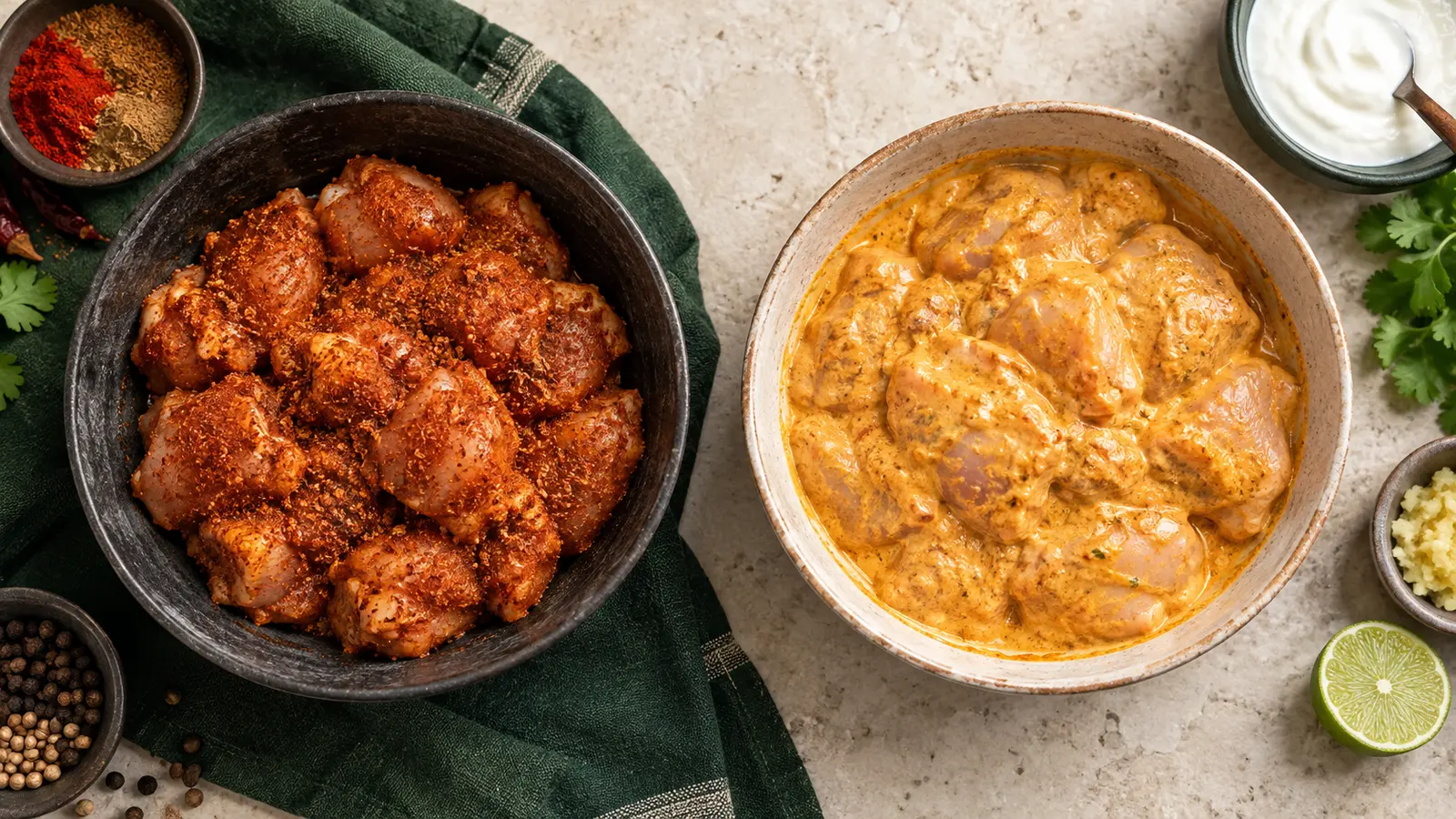
Curd marinades need gentler handling
Curd adds moisture and helps spices coat the chicken, but it can split when it hits intense heat. A thick curd marinade can also cling firmly to the pan while its moisture cooks away.
Shake off a heavy excess before adding the chicken, or cook on moderate heat until the marinade settles. If you’re using a large amount of curd, bring it closer to room temperature first and stir the pan regularly.
Our guide to dry rubs and curd marinades for chicken masala explains when each approach works better.
Some ingredients brown faster than others
Sugar, honey, sweet sauces and heavily browned onion paste can catch quickly. So can garlic paste if it sits directly on a hot surface.
If your marinade contains a sweet ingredient, use a lower flame and watch the base closely. The colour may deepen before the chicken is cooked through.
Kashmiri chilli can also make a dish look darker without being burnt. Trust the smell and taste, not colour alone.
What to do when the masala starts sticking
- Lower the flame immediately.
- Add a small splash of hot water around the edge of the pan.
- Use a flat wooden spatula to lift the browned masala gently.
- Move the chicken so the same pieces aren’t sitting on the hottest spot.
If the stuck layer smells toasted and releases easily, you may have caught it in time. Those browned bits can add flavour.
If it smells sharply burnt, don’t scrape the black layer into the curry. Move the chicken and unburnt masala to a clean pan. Adding more spice to the burnt pan won’t hide the bitterness.
A crowded pan creates another problem
Too much chicken in a small kadai releases lots of water and drops the temperature. That sounds safer, but it can leave you with pale chicken and a wet coating.
Then, when the water finally evaporates, the thick masala can suddenly begin sticking. Use a wide pan or cook in batches when necessary.
The practical rule
Watch the texture at the bottom of the pan. Masala should look glossy and move when stirred. When it turns dry, thick and reluctant, lower the heat or add a little moisture before it burns.
Good chicken masala needs time to cook into the meat. A steady flame gives it that time. A fierce flame mostly tests how quickly you can find the water.

Related posts
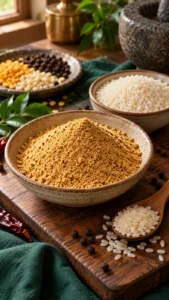
Rice in podi can shape its texture and toasted flavour. Learn why some recipes use it, with Rapidli Kerala Podi as a clear ingredient-list example.
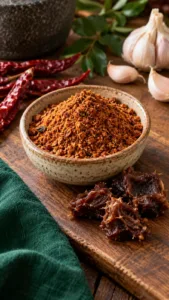
Tamarind adds a sour note to Andhra Podi. Learn how it works with chilli and garlic, and why a dry blend behaves differently from a...more
Dry coconut gives podi a rounder flavour and fuller mouthfeel. Here’s how roasting, natural fat and moisture control change the final spoonful.
Grinding spices releases their aroma quickly, but it also exposes them to air. Here’s why ground spices smell stronger at first and fade sooner.
Fried onions do far more than add sweetness to biryani. They shape its aroma, colour, texture and the way the layers come together during dum.