


No products in the cart.
Return To Shop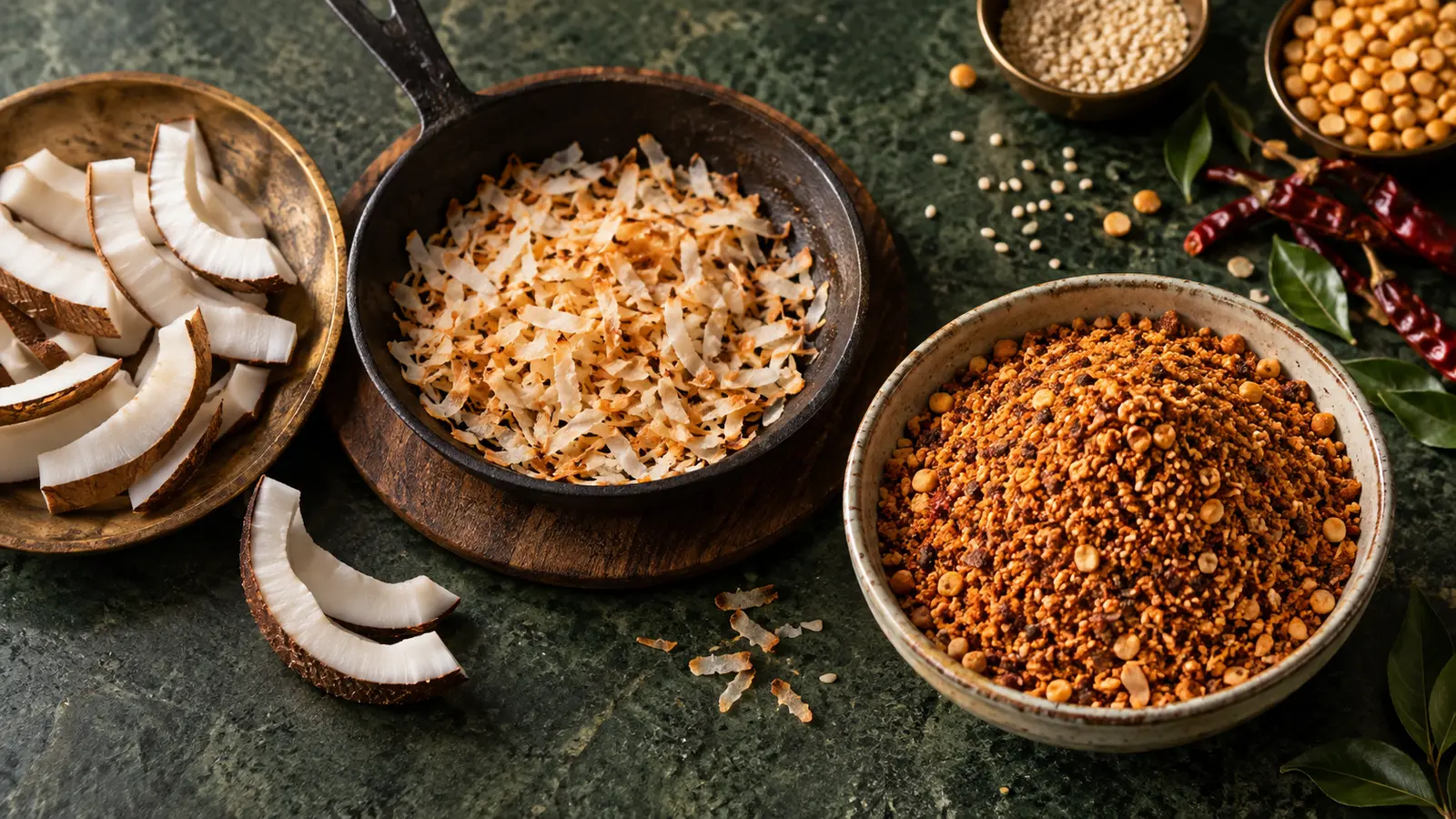
Dry coconut doesn’t shout in a podi. You may notice the chilli or garlic first.
Take the coconut away, though, and the blend can feel leaner, sharper and less rounded. That’s because dry coconut changes more than the taste. It also changes how the podi feels in your mouth and how its other flavours arrive.
Dry coconut carries natural fat
Coconut contains natural fat, even when it looks dry. That fat gives a spice blend a fuller mouthfeel and helps carry aroma across the palate.
Chilli may feel less abrupt because it reaches you alongside the coconut’s richness. Roasted lentils can taste rounder and less powdery.
This doesn’t mean the podi becomes mild. It means the heat has more texture around it.
It adds a gentle sweetness
Dry coconut has a mild natural sweetness. In a savoury podi, that sweetness usually stays in the background.
It helps balance chilli, black pepper, salt and bitter roasted notes. The blend still tastes savoury, but the edges feel less severe.
Too much coconut can pull the podi away from its intended spice and lentil balance. The ingredient should support the blend rather than turn it into coconut powder with seasoning.
Roasting changes the aroma
Unroasted dry coconut can taste flat or slightly waxy. Gentle roasting brings out a warmer, nuttier aroma.
The colour should deepen gradually. Once coconut begins to brown, it can move towards burnt very quickly. Stirring and moderate heat matter.
Dark, scorched pieces spread bitterness through the whole batch after grinding. Picking them out later is rarely as easy as it sounds.
It changes the texture of the grind
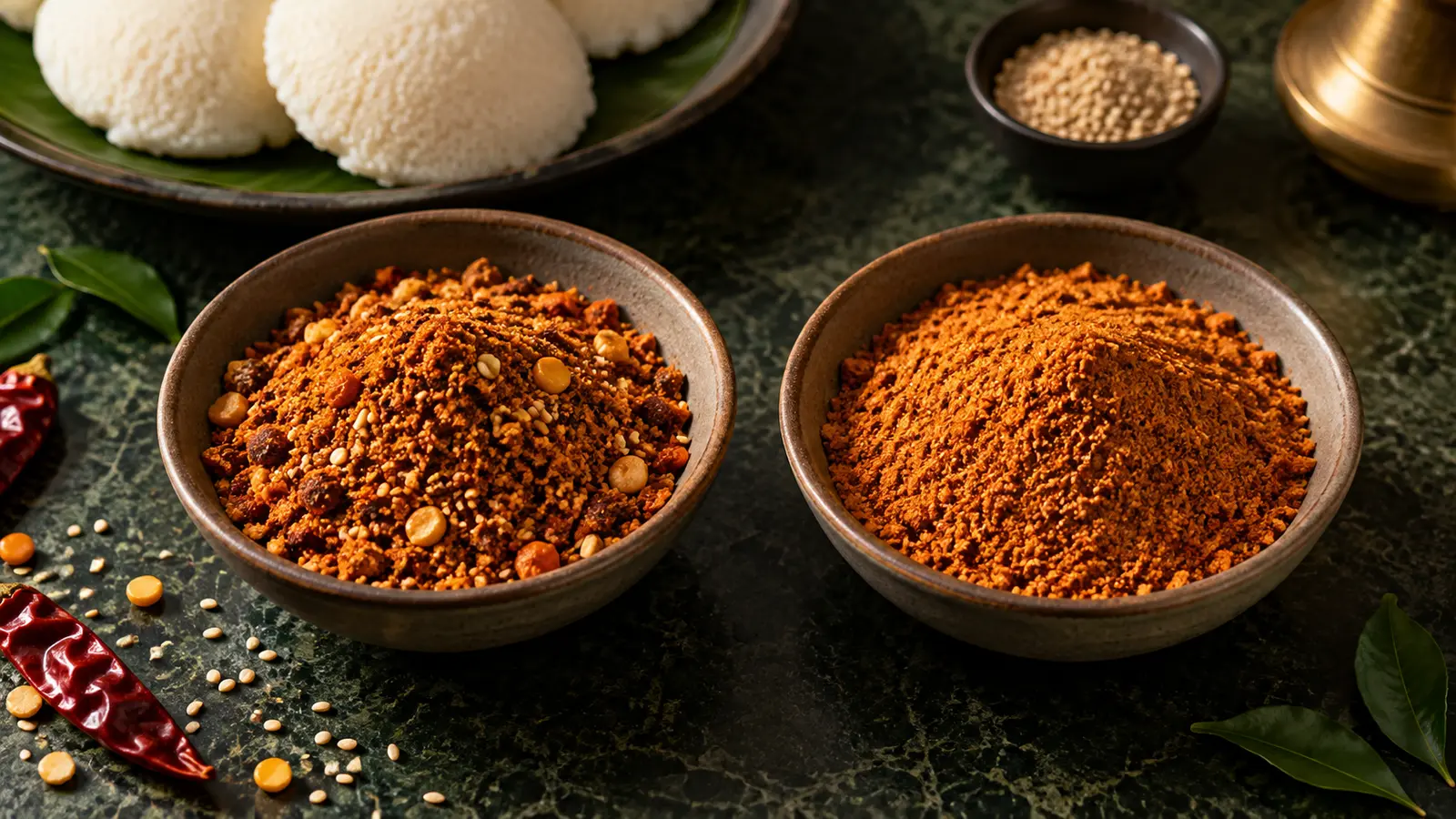
Dry coconut doesn’t behave like roasted dal. Lentils can give podi crunch and a dry, grainy structure. Coconut adds softer particles and natural richness.
Together, they can create a blend that feels coarse without seeming dusty. The exact result depends on the roast, grind size and proportion of every ingredient.
We’ve explored how grind size changes the eating experience in our guide to coarse and fine podi.
Why moisture control matters
Fresh coconut contains much more water than dry coconut. That makes it excellent for fresh chutney, but unsuitable as a casual substitute in a shelf-stable podi.
Moisture can encourage clumping and shorten the useful life of a dry blend. Ingredients need to be properly dried, roasted and cooled before grinding and packing.
Even dry coconut should cool fully after roasting. Packing a warm blend can trap heat and moisture inside the container.
Natural fat needs protection too
The fat that makes coconut taste rich can also pick up stale flavours over time. Heat, air and light speed up that change.
Keep the pack sealed and away from the stove. Use a dry spoon, and close the pouch or jar soon after serving.
For practical storage advice, read how to store podi after opening.
What it does in Karnataka Podi
In Rapidli Karnataka Podi, dry coconut sits alongside roasted dals, sesame, chillies, garlic, curry leaves, pepper and hing.
Its job isn’t to dominate every bite. It helps join those ingredients into a richer, more rounded spoonful.
That also reflects the regional character of the blend. Coconut isn’t a decorative addition. It changes the structure of the flavour.
Can every podi use dry coconut?
No. Podi is a broad family of dry blends, not one fixed recipe. Some rely more heavily on dal, sesame, peanuts, curry leaves or spices.
Adding coconut to every version would blur those differences. A regional blend should taste like itself, not like a standard base with a new name.
The short answer
Dry coconut makes podi taste richer because its natural fat, mild sweetness and roasted aroma soften sharp edges and improve mouthfeel.
Handled carefully, it supports the chilli, lentils and spices without taking over. That quiet richness is exactly why you notice when it’s missing.


Related posts
Rice in podi can shape its texture and toasted flavour. Learn why some recipes use it, with Rapidli Kerala Podi as a clear ingredient-list example.
Tamarind adds a sour note to Andhra Podi. Learn how it works with chilli and garlic, and why a dry blend behaves differently from a...more
Grinding spices releases their aroma quickly, but it also exposes them to air. Here’s why ground spices smell stronger at first and fade sooner.

Fried onions do far more than add sweetness to biryani. They shape its aroma, colour, texture and the way the layers come together during dum.
A darker masala isn’t automatically stronger, hotter or better. Roasting, chilli choice and ingredient proportions can all change colour differently.