


No products in the cart.
Return To Shop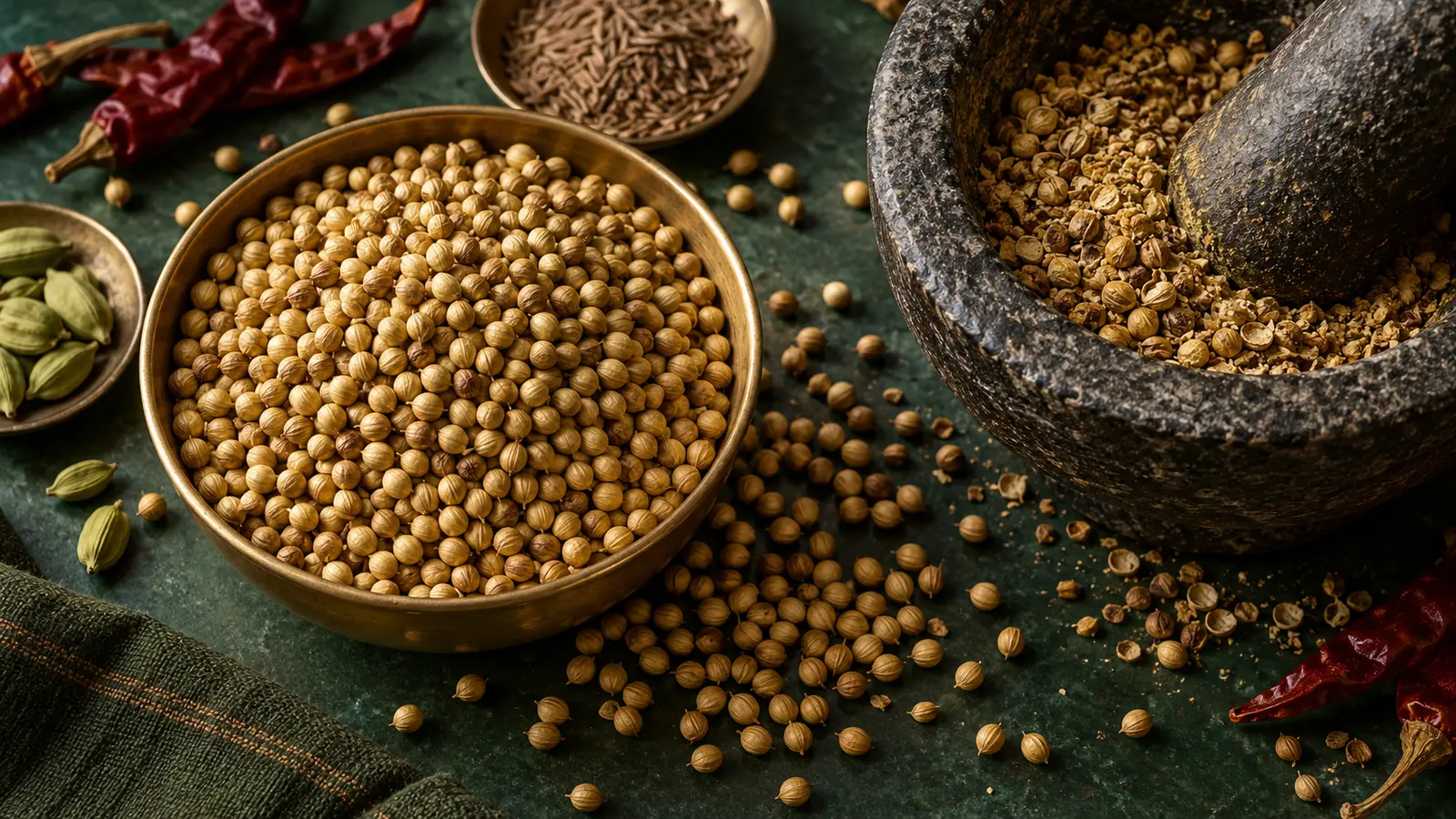
Coriander seeds are rarely the spice people brag about.
Cardamom gets called fragrant. Pepper gets called bold. Chilli gets all the warnings.
Meanwhile, coriander quietly appears in chicken masala, sambhar powder, pav bhaji masala and countless regional blends. There’s a good reason for that.
Coriander builds a broad flavour base
Whole coriander seeds taste warm, earthy and gently citrusy. They have enough character to shape a blend without overpowering every other spice.
That makes coriander useful as a base. It fills the space between sharper ingredients such as chilli, pepper, clove and cumin.
A masala with only intense spices can feel narrow or harsh. Coriander gives those spices more room to work.
It adds body as well as aroma
Ground coriander usually forms a larger share of a masala than strongly aromatic spices do. It adds volume and helps the powder spread through onion, tomato, curd or gravy.
This doesn’t make it cheap filler. Used properly, coriander is part of the flavour structure.
Of course, a blend can still lean too heavily on it. If coriander dominates without enough support, the finished masala may taste flat or dusty.
Roasting changes its personality
Raw coriander seeds smell light and slightly citrusy. Gentle roasting makes them warmer, nuttier and more rounded.
High heat can erase their brighter notes and bring bitterness. The aim isn’t to make every seed as dark as possible.
Let the seeds cool before grinding. Hot spices release aroma quickly, and trapped warmth can create moisture inside a closed container.
It works differently in different masalas
The presence of coriander doesn’t make two blends interchangeable.
In chicken masala, it may sit with cumin, pepper, chilli and warming whole spices. In sambhar powder, it works with lentils, chillies, fenugreek and other regional ingredients. Pav bhaji masala builds a different balance again.
The supporting cast changes what coriander tastes like and what job it performs.
Coriander can soften sharper edges
Chilli brings heat. Clove can feel medicinal when overused. Black pepper has a dry bite. Coriander helps round these edges without making the dish bland.
Its citrus note can also lift rich gravies. You may not identify coriander in the final bite, but the blend can feel emptier without it.
Whole seeds and powder behave differently
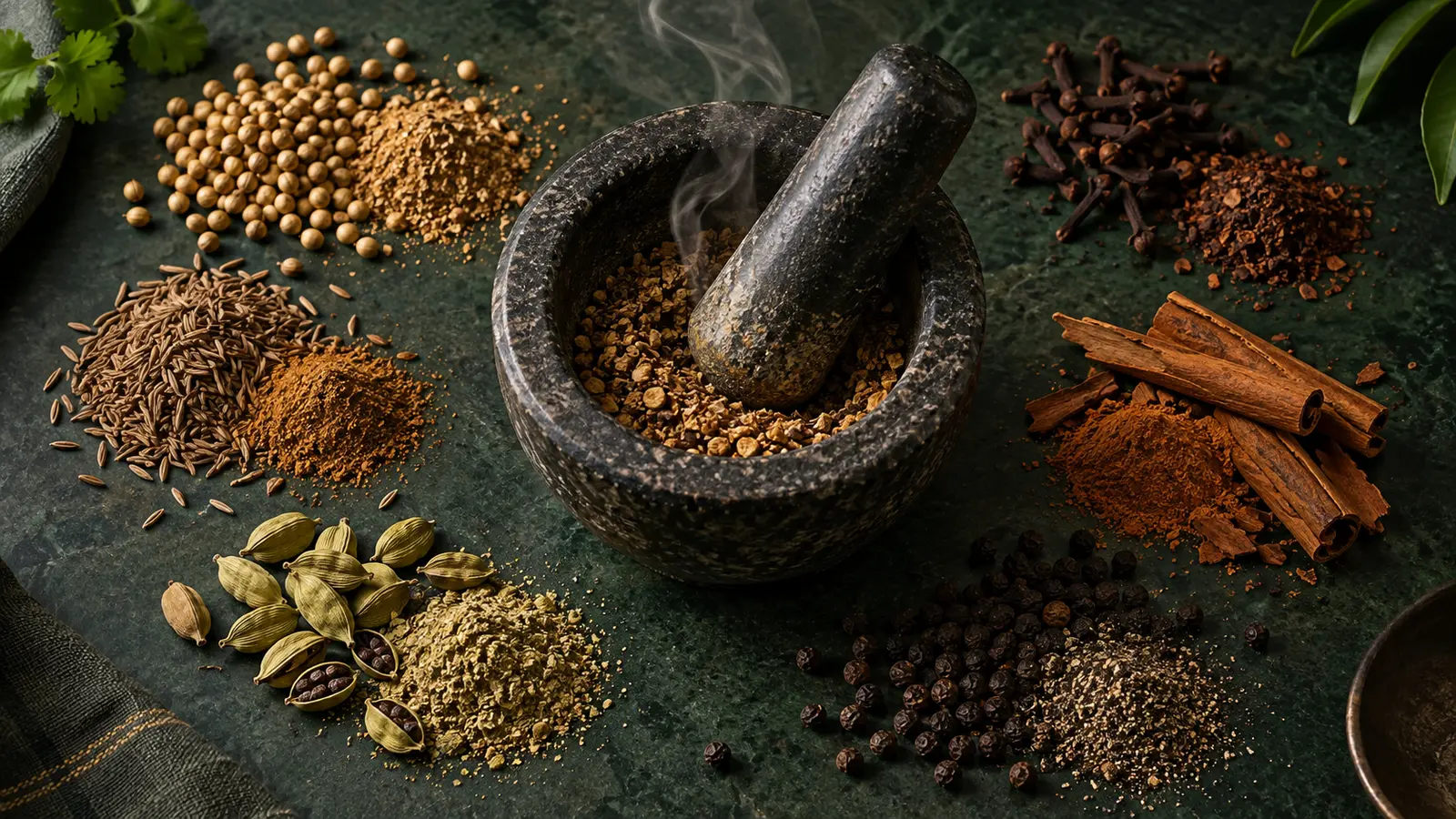
Whole coriander releases flavour gradually, especially when toasted or tempered. Ground coriander spreads quickly through a sauce and thickens it slightly.
Freshly crushed seeds can bring both texture and aroma. Very fine powder disappears more completely into the gravy.
If you’re curious about what grinding changes, read why freshly ground spices smell stronger but fade faster.
Should coriander be the first ingredient?
Not always. Ingredient order depends on the intended recipe and the proportions used.
A coriander-led blend can be completely appropriate. The problem begins when a generic base is sold as several regional masalas with only tiny changes around it.
Regional specificity comes from the complete formula, not from adding one signature spice to the same powder.
The short answer
Coriander seeds appear in many Indian masalas because they bring warmth, gentle citrus notes, body and balance.
They don’t need to lead every bite. Their talent is helping louder spices sound like they belong together.


Related posts
Rice in podi can shape its texture and toasted flavour. Learn why some recipes use it, with Rapidli Kerala Podi as a clear ingredient-list example.
Tamarind adds a sour note to Andhra Podi. Learn how it works with chilli and garlic, and why a dry blend behaves differently from a...more
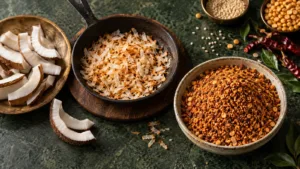
Dry coconut gives podi a rounder flavour and fuller mouthfeel. Here’s how roasting, natural fat and moisture control change the final spoonful.
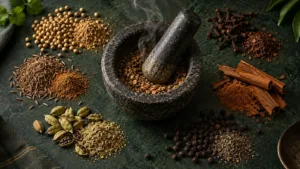
Grinding spices releases their aroma quickly, but it also exposes them to air. Here’s why ground spices smell stronger at first and fade sooner.
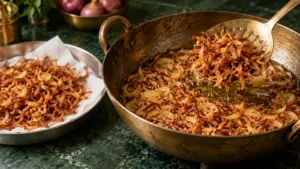
Fried onions do far more than add sweetness to biryani. They shape its aroma, colour, texture and the way the layers come together during dum.