


No products in the cart.
Return To Shop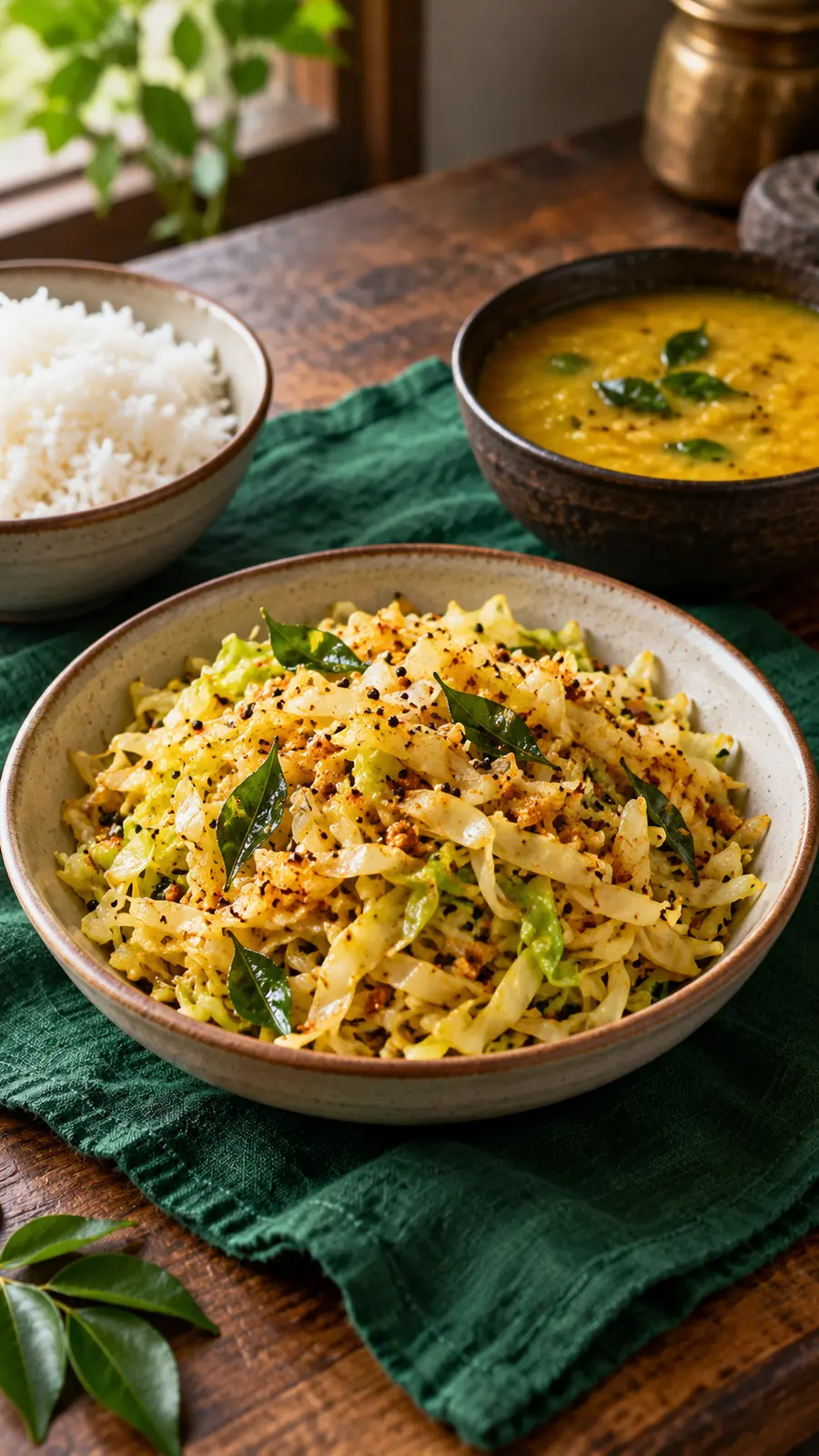
This podi cabbage recipe makes a useful side for dal-chawal with very little prep. Cook the cabbage until just tender, then finish with Tamil Podi for a roasted, savoury edge.
The main detail is moisture. Dry the cabbage after washing and give it space in the pan. You want tender strands with a little bite, without a puddle underneath.
Recipe at a glance
Serves: 2 as a side
Prep: 10 minutes
Cooking: roughly 8 to 10 minutes
Ingredients
- 300 g green cabbage, washed, dried and finely shredded
- 2 teaspoons oil
- ¼ teaspoon mustard seeds
- 6 curry leaves, washed and dried completely, optional
- 2 teaspoons Rapidli Tamil Podi, divided
- ½ teaspoon lemon juice, optional
- Salt only if needed after tasting
How to make podi cabbage stir-fry
- Prepare the cabbage. Remove damaged outer leaves, wash the cabbage and dry well before shredding. Keep the strips fairly even so they cook at a similar rate.
- Make the tempering. Warm the oil in a wide pan over medium heat. Add mustard seeds. When they start to pop, lower the heat and carefully add the dry curry leaves, if using.
- Add the cabbage. Turn the heat back to medium. Stir for about 3 minutes so the cabbage meets the hot pan and starts to soften.
- Cook until just tender. Lower the heat slightly and stir for another 3 to 5 minutes. Keep the pan uncovered. If any water collects, let it evaporate before seasoning.
- Finish with podi. Remove the pan from the heat. Add 1½ teaspoons podi and toss gently through the hot cabbage.
- Taste and serve. Try a forkful. Add the remaining podi, a little salt or the optional lemon only if needed. Serve warm beside dal and rice.
Add the podi after the cabbage cooks
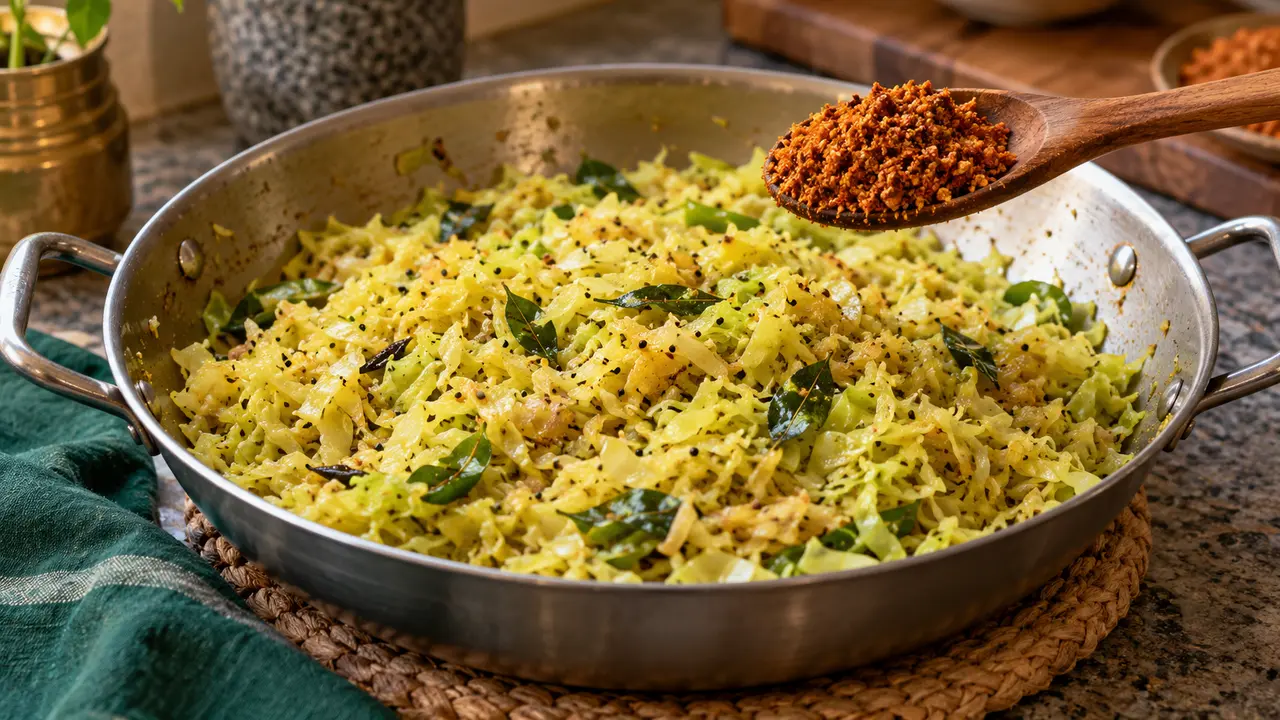
Cabbage needs longer in the pan than a roasted spice powder does. Cooking the vegetable first protects the podi from long contact with the heat.
The warm strands still pick up the flavour when you toss them off the stove. Read when to add podi to hot food for more examples.
Keep the pan wide and the lid off
A small pan filled to the top makes it harder for moisture to escape. Use a wider one, or cook a larger batch in portions.
Don’t add water at the start. Cabbage releases some as it cooks. If it sticks, lower the heat and stir before deciding it needs a tiny splash.
A lid can help soften vegetables quickly, but it also traps steam. For this dry side, an uncovered pan gives you more control.
Make it part of a familiar meal
Serve it beside a mild dal and rice, or use it as a warm side with roti. Taste the meal together before adding extra salt or chilli.
For a different vegetable method, try podi-roasted vegetables. This cabbage version is for days when you’d rather finish dinner in one pan.
If you’re cooking ahead, refrigerate the cooked cabbage promptly in a shallow container. Reheat thoroughly, and expect softer strands than in a fresh batch.


Related posts

Make podi aloo samosas with a simple potato filling and crisp pastry. Includes dough, shaping, sealing and frying tips, with salt checked after podi.
Make podi aloo paratha with a simple potato filling. Learn how to season with podi, check salt and roll stuffed parathas without tearing the dough.

Cook eggs in a thick podi tomato sauce for an easy one-pan breakfast. Includes measured ingredients, sauce tips and clear cues for fully cooked eggs.
Bake thin atta crackers with podi for a savoury tea-time snack. This easy recipe covers dough texture, even rolling, baking and cooling for crunch.
Try a podi dhokla recipe made with semolina and curd. Learn when to add fruit salt, how thick the batter should be and when the...more