


No products in the cart.
Return To Shop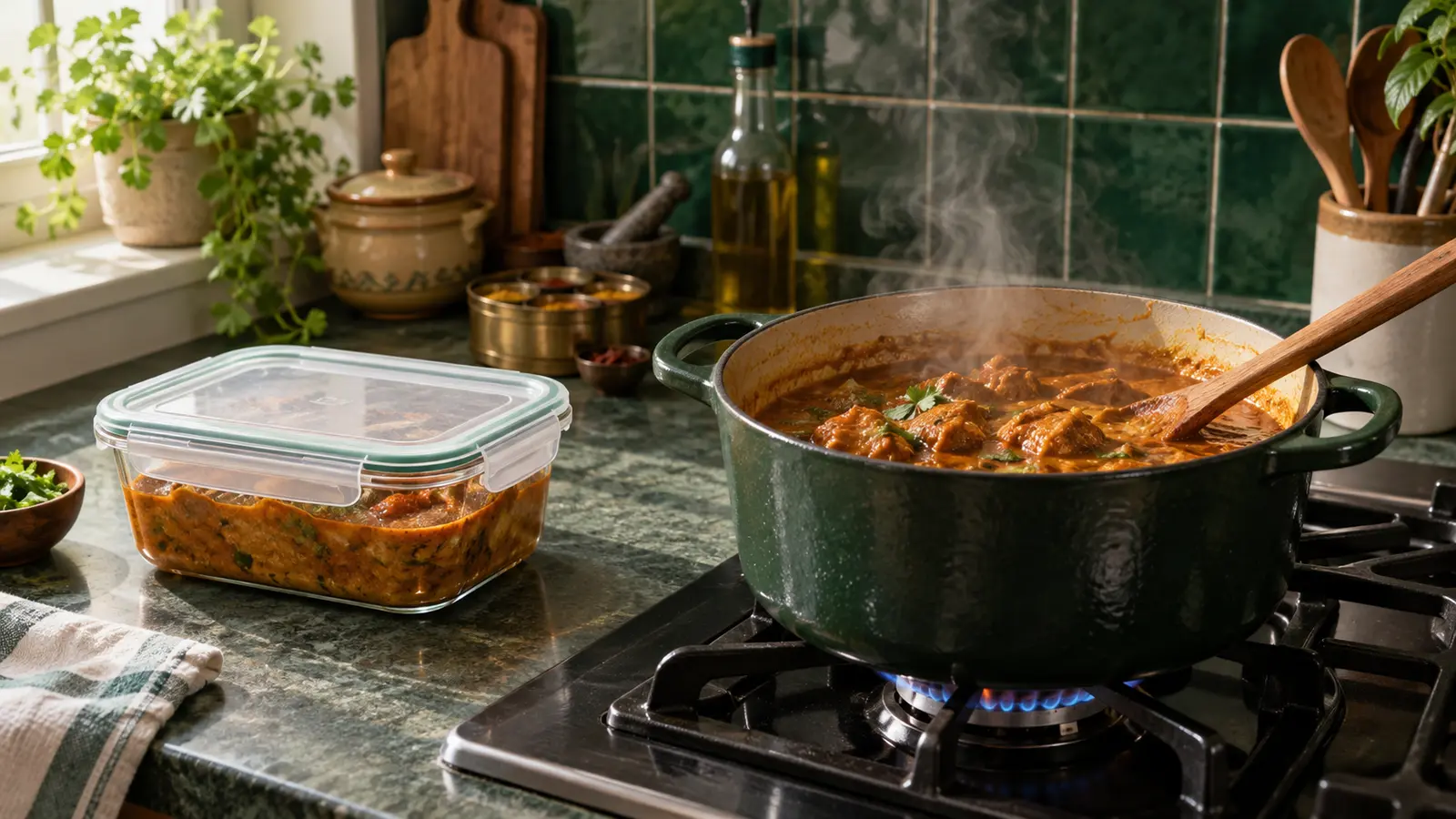
You cook a curry, enjoy it for dinner and put the leftovers away. The next day, it somehow tastes more complete.
The spices haven’t multiplied overnight. What changes is how the flavours move through the dish and how you experience them after resting.
There’s also an important condition: the curry must be cooled, stored and reheated safely.
Flavours keep spreading through the gravy
A curry contains water, fat, spices, salt and ingredients with different textures. While it rests, flavour compounds continue moving through that mixture.
A sharp pocket of spice may become less obvious. Salt and acidity can feel more even. Meat, paneer, beans or vegetables have more time to sit in the seasoned gravy.
The dish often tastes better integrated, not necessarily stronger.
Fat carries aroma
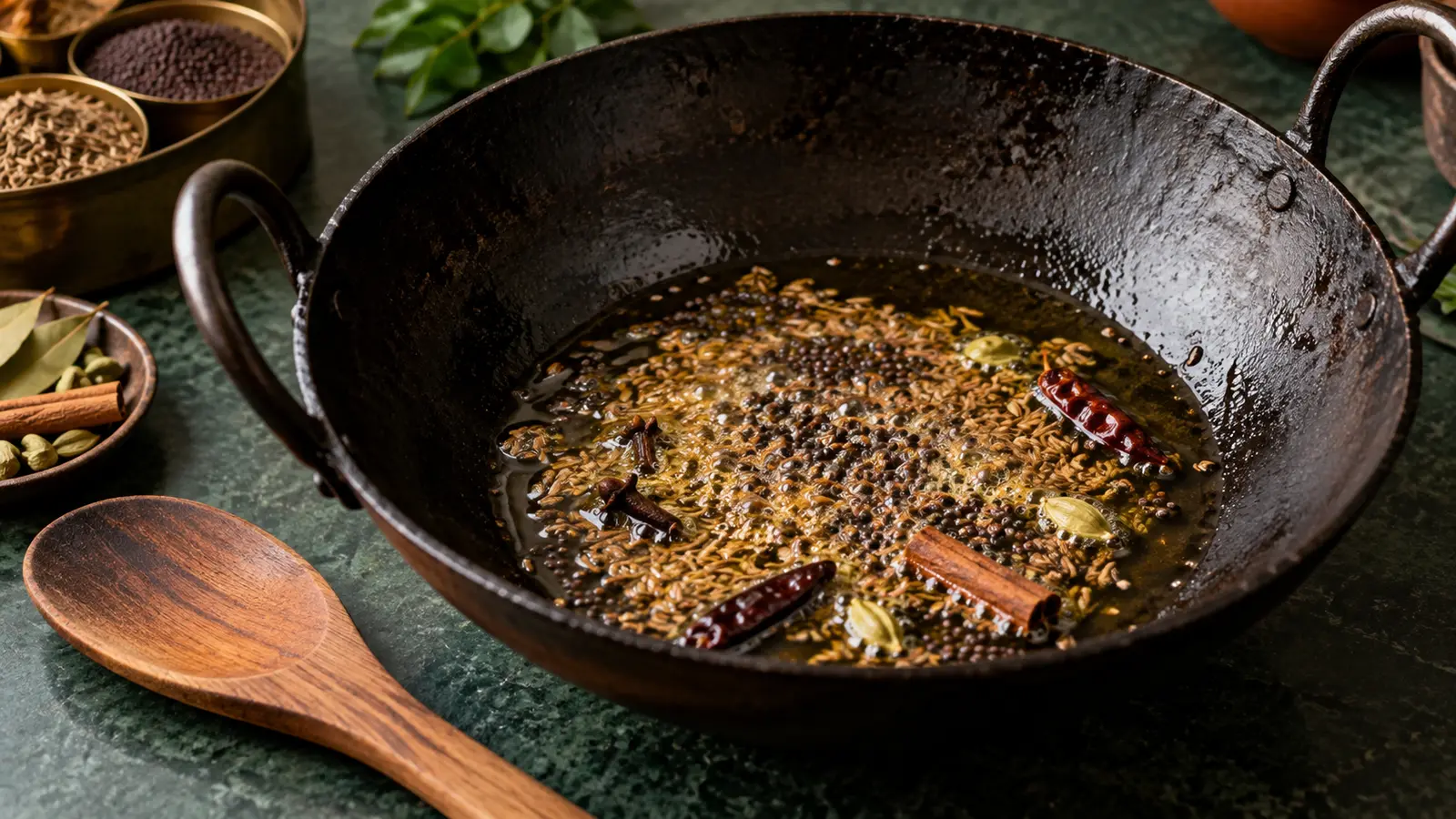
Many spice aromas dissolve well in fat. Ghee, oil, coconut milk or natural fat from meat can hold those aromas and spread them through the curry.
After chilling, the fat may firm up. As the curry reheats, it melts again and releases aroma differently from the first cooking.
This can make the curry smell fuller when it returns to the pan.
Sharp flavours can settle
Fresh ginger, garlic, chilli and some whole spices can feel separate or aggressive just after cooking. Resting may make them feel less pointed as they mingle with the gravy.
That doesn’t mean every curry improves. Fresh herbs can lose brightness. Crisp toppings turn soft. Delicate vegetables may become mushy after another round of heating.
Judge the dish, not the myth.
Cooling safely matters more than flavour
Don’t leave a pot of curry sitting at room temperature all evening so the flavours can “develop.” That isn’t a useful resting method.
FSSAI advises keeping cold food below 5°C and cooked food thoroughly reheated before serving. Its consumer guidance also says leftovers should be refrigerated promptly. For faster cooling, divide a large batch into shallow containers rather than putting one deep, steaming pot into the fridge.
FoodSafety.gov advises refrigerating perishable leftovers within two hours, or within one hour when the surrounding temperature is above 32°C. It also recommends using refrigerated leftovers within four days and reheating them to 74°C.
See the official FSSAI Food Safety at Home guidance and FoodSafety.gov leftover guidance.
Reheat only what you plan to eat
Repeatedly warming and cooling the full container is hard on both quality and safety.
Take out the portion you need. Reheat it evenly until it is piping hot throughout. Stir thick curries so the centre and edges heat properly.
If the gravy has tightened in the fridge, add a small splash of water while reheating. Don’t dilute it before checking the consistency once it is hot.
Can you refresh the flavour?
Yes. A little fresh coriander, a squeeze of lime or a small tempering can restore brightness that resting softened.
Taste first. The curry may not need more masala. Adding another spoonful can make it muddy when all it needed was freshness or a pinch of salt.
When should leftovers be discarded?
Discard curry that has been left out too long, stored improperly or kept beyond safe guidance. Don’t rely only on smell or appearance because harmful bacteria may not announce themselves.
People who are pregnant, very young, older or immunocompromised should be especially careful with leftovers and reheating.
The short answer
Curry can taste better the next day because spices, salt, fat and gravy have had time to spread and settle into a more even flavour.
But “next day” should mean properly refrigerated and thoroughly reheated, not forgotten on the counter overnight.


Related posts
Rice in podi can shape its texture and toasted flavour. Learn why some recipes use it, with Rapidli Kerala Podi as a clear ingredient-list example.
Tamarind adds a sour note to Andhra Podi. Learn how it works with chilli and garlic, and why a dry blend behaves differently from a...more
Dry coconut gives podi a rounder flavour and fuller mouthfeel. Here’s how roasting, natural fat and moisture control change the final spoonful.
Grinding spices releases their aroma quickly, but it also exposes them to air. Here’s why ground spices smell stronger at first and fade sooner.

Fried onions do far more than add sweetness to biryani. They shape its aroma, colour, texture and the way the layers come together during dum.