


No products in the cart.
Return To Shop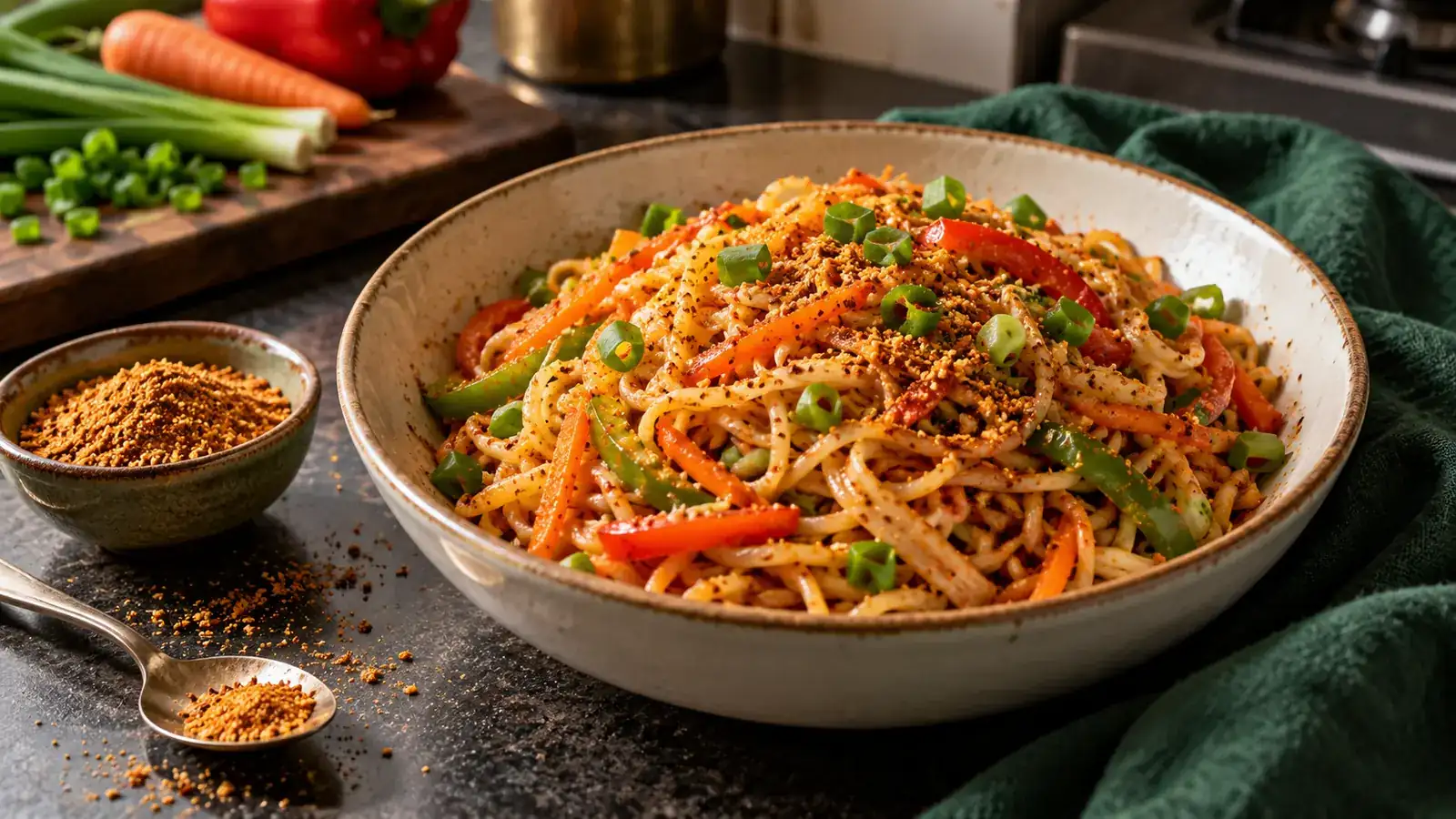
A plain bowl of noodles can take podi surprisingly well. The trick is to help the seasoning coat the strands. If you shake dry podi onto a full pan and hope for the best, some bites may carry all the flavour while others get none.
A little oil and a splash of cooking water make the job easier. Keep the pan gentle near the end so the podi doesn’t catch.
Quick podi vegetable noodles
For two light servings, use:
- 150 g dry noodles
- 1 small carrot, cut into thin strips
- ½ capsicum, thinly sliced
- 2 spring onions, sliced
- 1 tbsp neutral oil
- 1 to 2 tbsp Rapidli Karnataka Podi, to taste
- 2 to 3 tbsp reserved noodle water
- A little lemon juice, if you like
Cook the noodles as the packet directs. Before draining, save a small cup of the cooking water. Drain the noodles.
Warm the oil in a wide pan. Cook the carrot and capsicum for a few minutes, until they soften slightly but still have bite. Add the noodles and toss.
Turn the heat low or off. Mix one tablespoon of podi with two tablespoons of the reserved water in a small bowl. Pour it over the noodles and toss until the strands look evenly coated. Add a little more water if they seem dry.
Taste before adding more podi or salt. Finish with spring onion and, if you want a sharper edge, a squeeze of lemon.
Why mix the podi first?
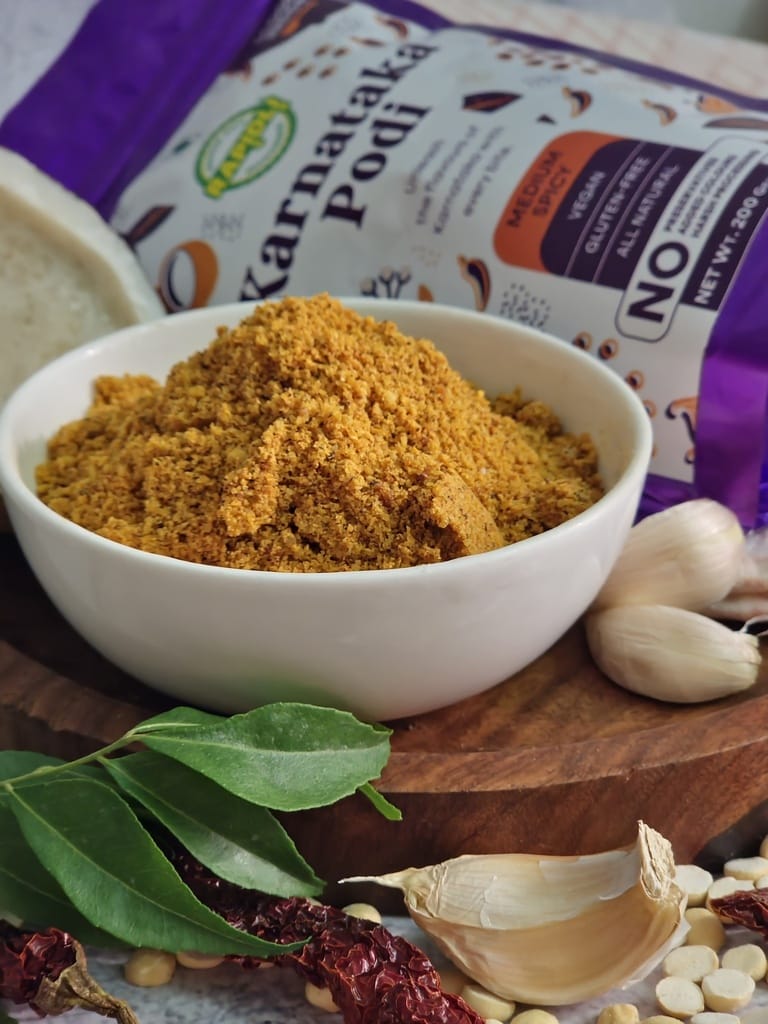
Podi has ground pulses, seeds and spices, so a spoonful can sit in patches if the noodles are dry. Stirring it with a little water helps spread it. The oil on the noodles also helps the seasoning cling.
You’re aiming for lightly coated noodles, not a thick sauce. Start with one tablespoon of podi. You can always toss in more after tasting.
Keep the heat gentle
The vegetables need heat. The ready-to-eat podi only needs to be mixed through. Add it after the hard cooking is done, especially if the pan has dry spots that could scorch the seasoning.
That same timing idea comes up in our guide to adding podi to hot food. Here, it makes a quick noodle bowl taste seasoned all the way through while keeping the finish fresh.

Related posts

Make podi aloo samosas with a simple potato filling and crisp pastry. Includes dough, shaping, sealing and frying tips, with salt checked after podi.
Make podi aloo paratha with a simple potato filling. Learn how to season with podi, check salt and roll stuffed parathas without tearing the dough.

Cook eggs in a thick podi tomato sauce for an easy one-pan breakfast. Includes measured ingredients, sauce tips and clear cues for fully cooked eggs.
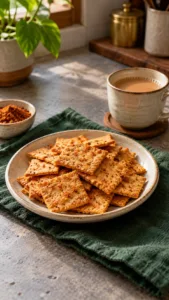
Bake thin atta crackers with podi for a savoury tea-time snack. This easy recipe covers dough texture, even rolling, baking and cooling for crunch.
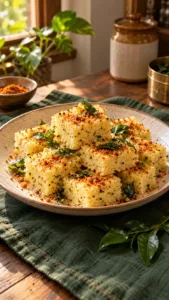
Try a podi dhokla recipe made with semolina and curd. Learn when to add fruit salt, how thick the batter should be and when the...more