


No products in the cart.
Return To Shop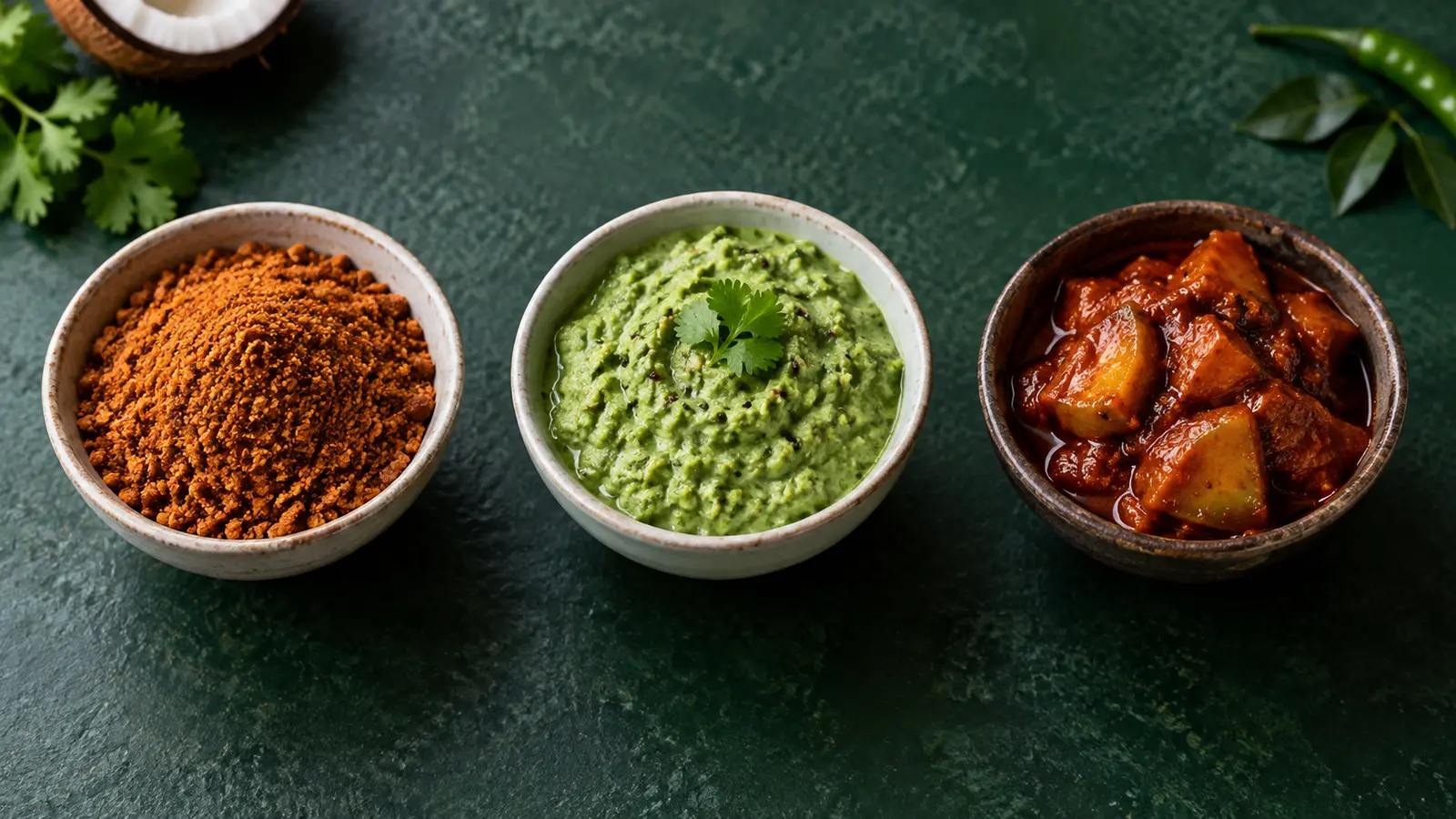
Indian meals rarely rely on one single source of flavour. A spoonful of fresh chutney, a pinch of dry chutney powder or a small serving of pickle can completely change a simple plate of rice, roti, idli or curd.
They may appear side by side, but they are not interchangeable. Each has a different texture, preparation method and role at the table.
What is dry chutney powder?
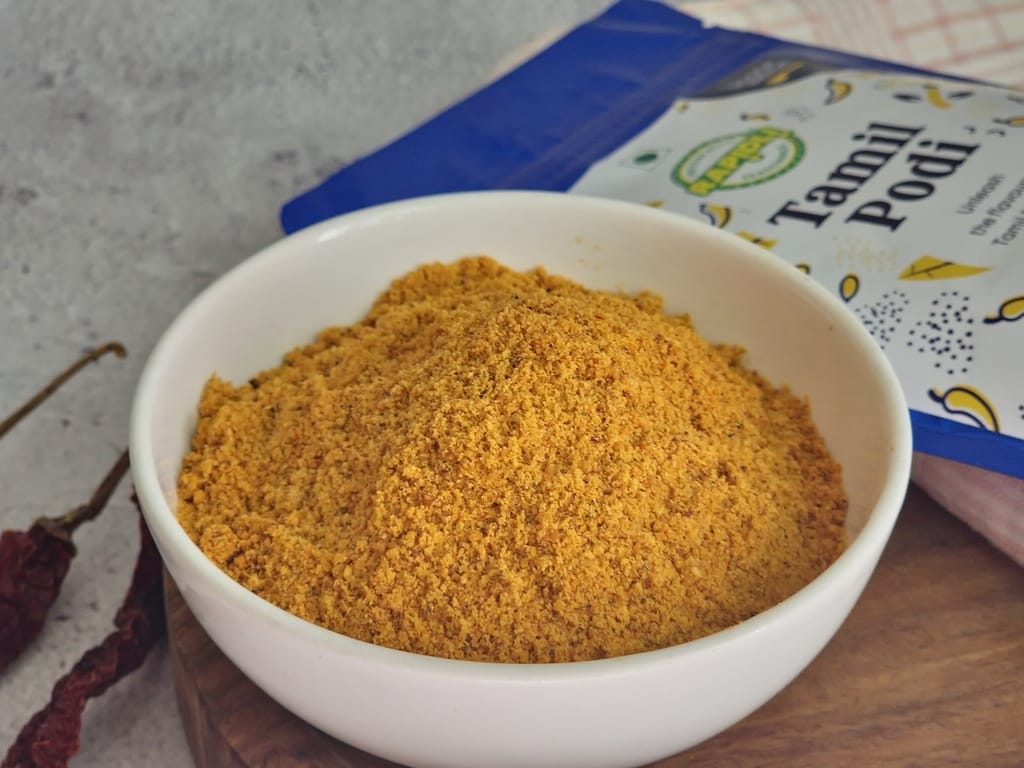
Dry chutney powder is a ground blend of roasted ingredients and spices. In South India, many versions are commonly called podi. Depending on the regional style and recipe, a blend may include lentils, chillies, sesame, coconut, curry leaves, garlic or other spices.
Its texture can range from fine to pleasantly coarse. Because it contains little or no added water, podi is easy to sprinkle, mix and carry. It can be served with idli and dosa, stirred into hot rice, dusted over vegetables or used to season snacks.
If you are new to it, read the story of podi and its place in everyday food.
What is fresh chutney?
Fresh chutney is typically made by grinding ingredients with water or another liquid. Coconut chutney, coriander chutney, mint chutney and tomato chutney are familiar examples. Their freshness and moisture give them a cooling, juicy or creamy quality that dry powders do not have.
Because fresh chutneys contain moisture and often use fresh produce, they generally need refrigeration and are best consumed promptly. Exact storage time varies by recipe, ingredients and handling.
What is Indian pickle?
Indian pickle, or achar, usually starts with fruit or vegetables combined with salt, spices and often oil or an acidic ingredient. The flavour is concentrated: salty, sour, spicy and sometimes slightly sweet. Pickle is normally eaten in a smaller quantity as a sharp accompaniment rather than used as an all-over seasoning.
How they compare
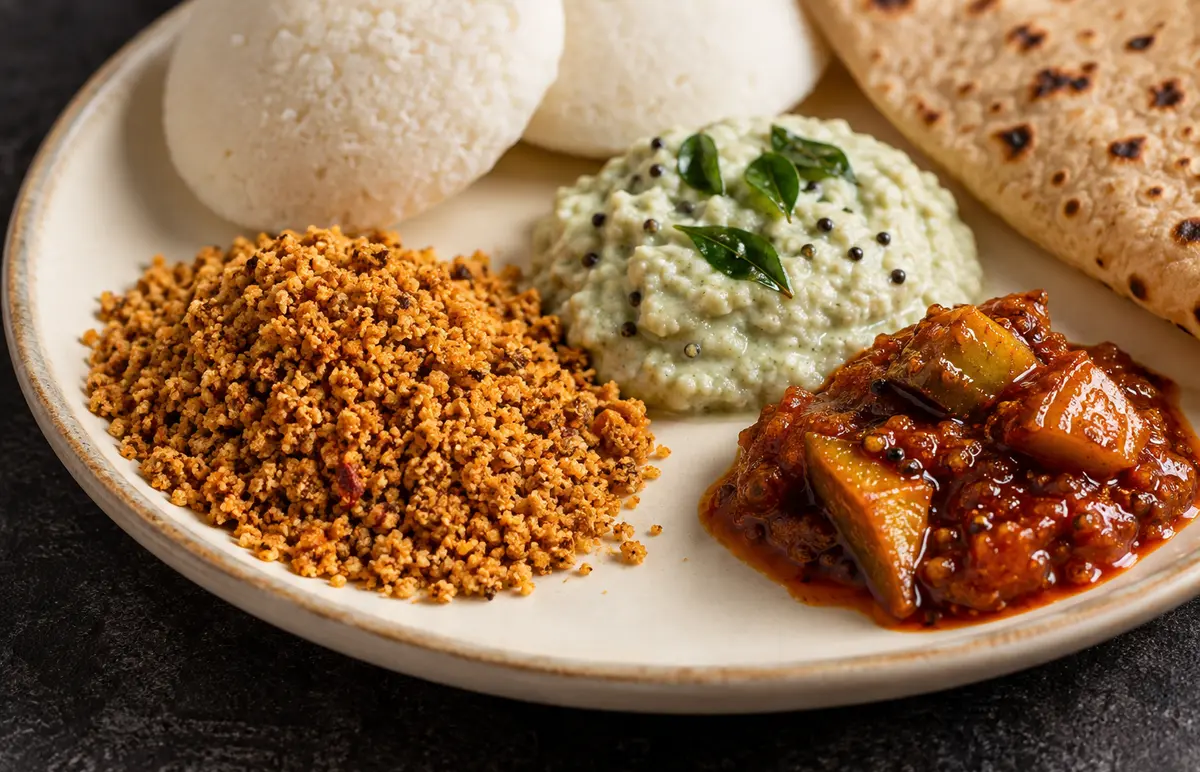
| Feature | Dry chutney powder or podi | Fresh chutney | Pickle |
|---|---|---|---|
| Texture | Fine to coarse and dry | Wet, smooth or textured | Chunky or oily |
| Typical role | Seasoning or accompaniment | Dip, spread or accompaniment | Sharp condiment |
| Everyday use | Sprinkle, mix or coat | Spoon, dip or spread | Serve in a small portion |
| Portability | Convenient and spill-resistant | Needs a sealed container | Needs a sealed container |
| Storage | Follow the pack instructions | Usually refrigerated | Follow the recipe or label |
Which one should you choose?
Choose according to the job you want it to do:
- For a fast flavour upgrade: Sprinkle podi over eggs, curd rice, vegetables or a grain bowl.
- For dipping: Fresh chutney is ideal with snacks, chilla, dosa and kebabs.
- For a sour-salty accent: Add a small serving of pickle alongside dal-rice, paratha or khichdi.
- For contrast: Use more than one. A warm, spicy podi and a cooling coconut chutney can work beautifully on the same plate.
Podi is more versatile than a side
The biggest difference is that podi can move from accompaniment to cooking ingredient. Toss it with roasted vegetables, stir it into curd, coat tofu or paneer, finish buttered corn, or sprinkle it over a sandwich filling. Its dry format lets you add intensity without making the dish watery.
Curious about more serving ideas? See how to use podi in everyday meals, then explore Rapidli.


Related posts
Rice in podi can shape its texture and toasted flavour. Learn why some recipes use it, with Rapidli Kerala Podi as a clear ingredient-list example.
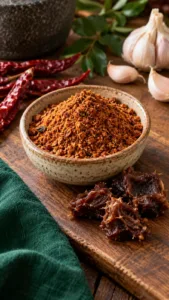
Tamarind adds a sour note to Andhra Podi. Learn how it works with chilli and garlic, and why a dry blend behaves differently from a...more
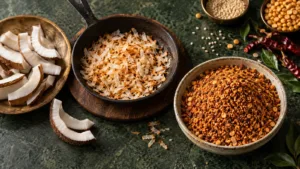
Dry coconut gives podi a rounder flavour and fuller mouthfeel. Here’s how roasting, natural fat and moisture control change the final spoonful.
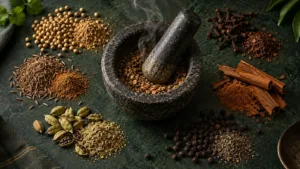
Grinding spices releases their aroma quickly, but it also exposes them to air. Here’s why ground spices smell stronger at first and fade sooner.
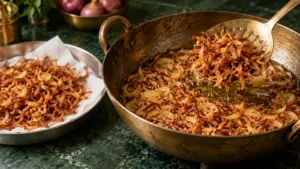
Fried onions do far more than add sweetness to biryani. They shape its aroma, colour, texture and the way the layers come together during dum.