


No products in the cart.
Return To Shop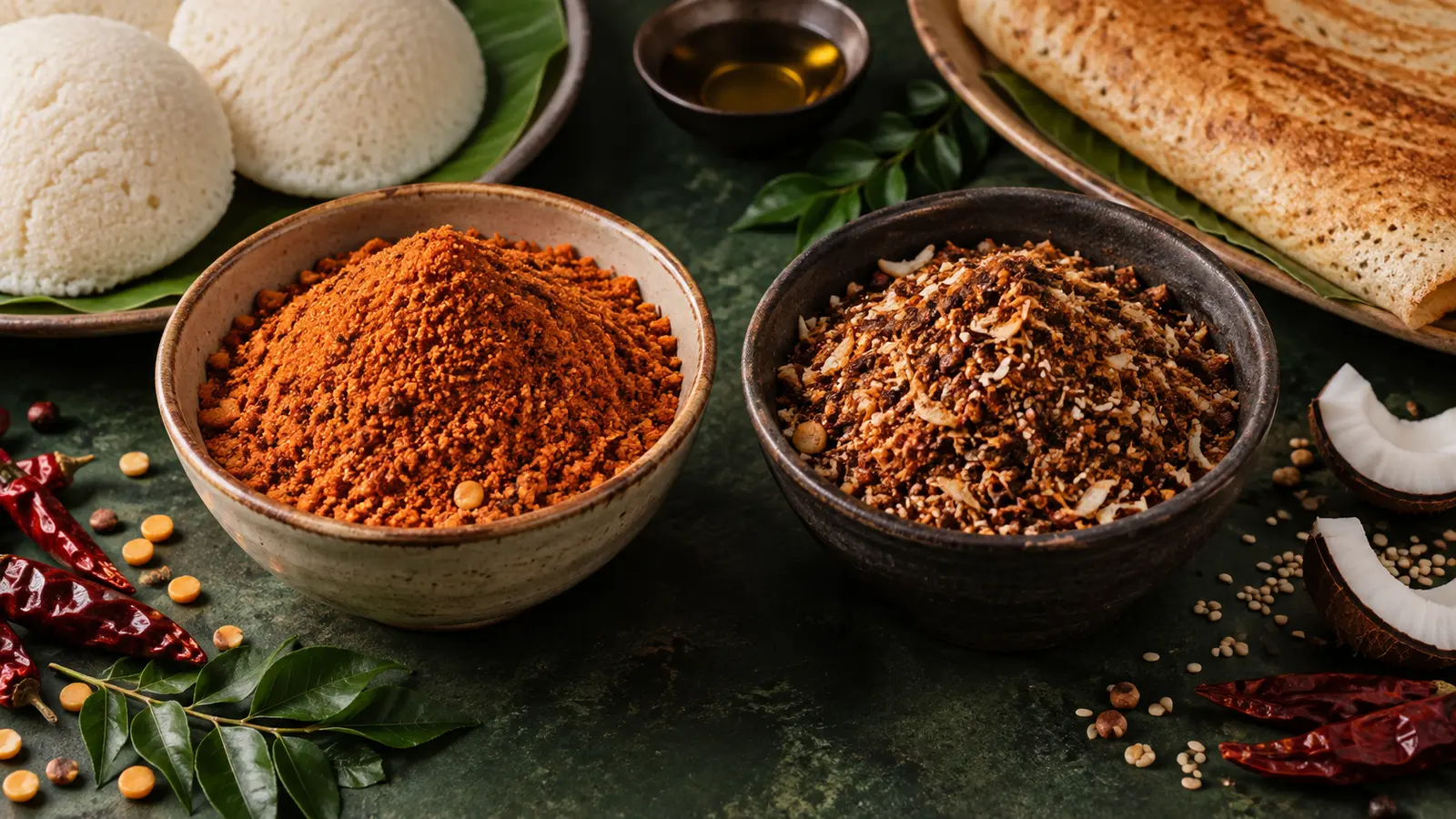
Tamil milagai podi and Karnataka chutney pudi often sit in the same part of the pantry. Both are dry, roasted blends. Both can rescue a plain breakfast in seconds.
They aren’t interchangeable in every kitchen, though. Their typical ingredients, texture and flavour direction can be quite different.
First, the names
Milagai means chilli in Tamil, so milagai podi points plainly to a chilli powder or blend. In breakfast talk, it usually means the roasted lentil and chilli powder served with idli and dosa.
Chutney pudi is a common Karnataka name for dry chutney powder. You’ll also hear different spellings and family names across regions.
Neither name locks the recipe into one official formula. Household blends vary. So do commercial ones.
What usually goes into Tamil milagai podi?
Tamil-style milagai podi often builds its body with roasted urad dal and chana dal, then adds dried red chilli, salt and asafoetida. Sesame appears in many recipes too.
The flavour tends to feel direct: roasted lentils, chilli warmth and a savoury finish. Texture can range from fairly fine to pleasantly coarse.
Mixed with sesame oil, it forms the familiar coating for idli. Ghee works too, especially when you want a richer and softer edge.
What usually goes into Karnataka chutney pudi?
Karnataka chutney pudi covers a wide family of recipes. Many versions bring in ingredients such as dry coconut, sesame, curry leaves, garlic, tamarind or jaggery alongside lentils and chillies.
That can make the flavour broader and more layered. You may find nuttiness, gentle sweetness, tang or a garlicky finish depending on the recipe.
Some blends stay lentil-forward. Others lean into coconut or peanuts. Regional cooking rarely follows a single neat rule.
How does the flavour differ?
Tamil milagai podi often gives you a cleaner roasted dal and chilli profile. Karnataka chutney pudi may feel more rounded because coconut, sesame, curry leaves or a touch of sweetness can join the mix.
Chilli selection matters as much as the state name. A colour-rich Byadgi chilli and a hotter Guntur chilli create different results. Read our Byadgi and Guntur comparison for the practical difference.
Which texture should you expect?
Both can be coarse or fine. Still, a Karnataka blend containing coconut, sesame and several whole ingredients may show more visible texture.
A Tamil milagai podi can also be coarse, especially when the maker wants the roasted dal to stay noticeable. Grind size is a recipe choice, not a border checkpoint.
What should you eat them with?
Tamil milagai podi
- Idli with sesame oil or ghee.
- Dosa, especially when spread inside before folding.
- Hot rice with ghee.
- Curd rice when you want a chilli-led finish.
Karnataka chutney pudi
- Idli, dosa and uttapam.
- Hot rice with ghee or oil.
- Curd, roti and simple vegetable meals.
- Snacks that suit a nuttier, more textured coating.
For more weekday ideas, see our guide to using podi with North Indian meals.
Which one should you buy?
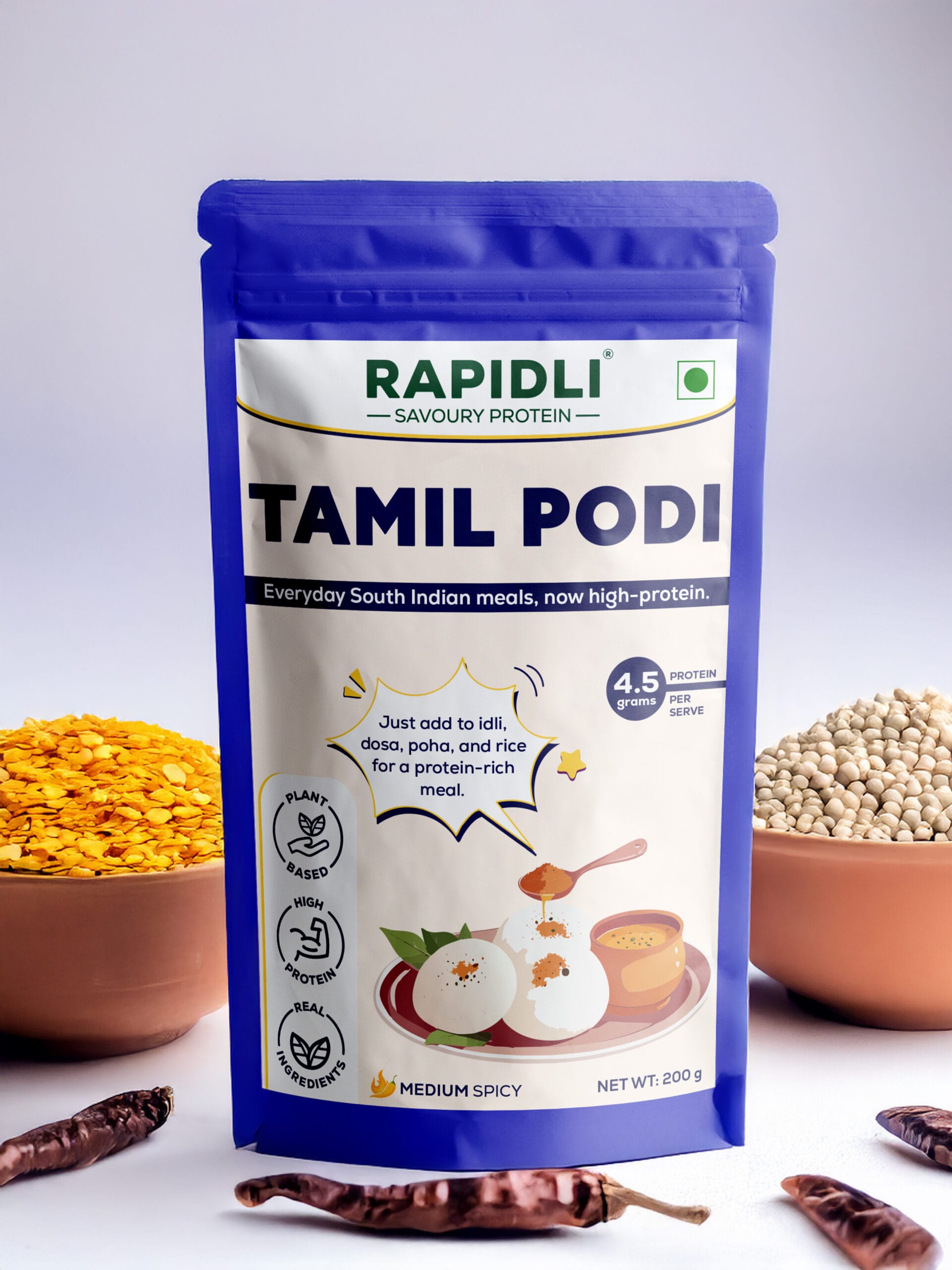
Choose Tamil milagai podi if you enjoy a clear roasted lentil and chilli profile, especially with idli and dosa.
Choose Karnataka chutney pudi if you want a more layered blend that may include coconut, sesame, curry leaves, garlic or gentle tang.
Then read the ingredient list. The regional name gives you a clue, but the actual recipe tells you what will land on your plate.
Related posts
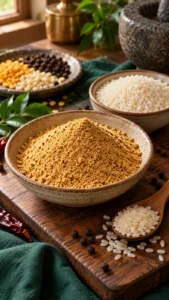
Rice in podi can shape its texture and toasted flavour. Learn why some recipes use it, with Rapidli Kerala Podi as a clear ingredient-list example.
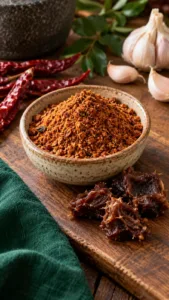
Tamarind adds a sour note to Andhra Podi. Learn how it works with chilli and garlic, and why a dry blend behaves differently from a...more
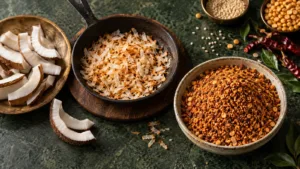
Dry coconut gives podi a rounder flavour and fuller mouthfeel. Here’s how roasting, natural fat and moisture control change the final spoonful.
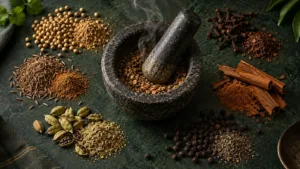
Grinding spices releases their aroma quickly, but it also exposes them to air. Here’s why ground spices smell stronger at first and fade sooner.
Fried onions do far more than add sweetness to biryani. They shape its aroma, colour, texture and the way the layers come together during dum.