


No products in the cart.
Return To Shop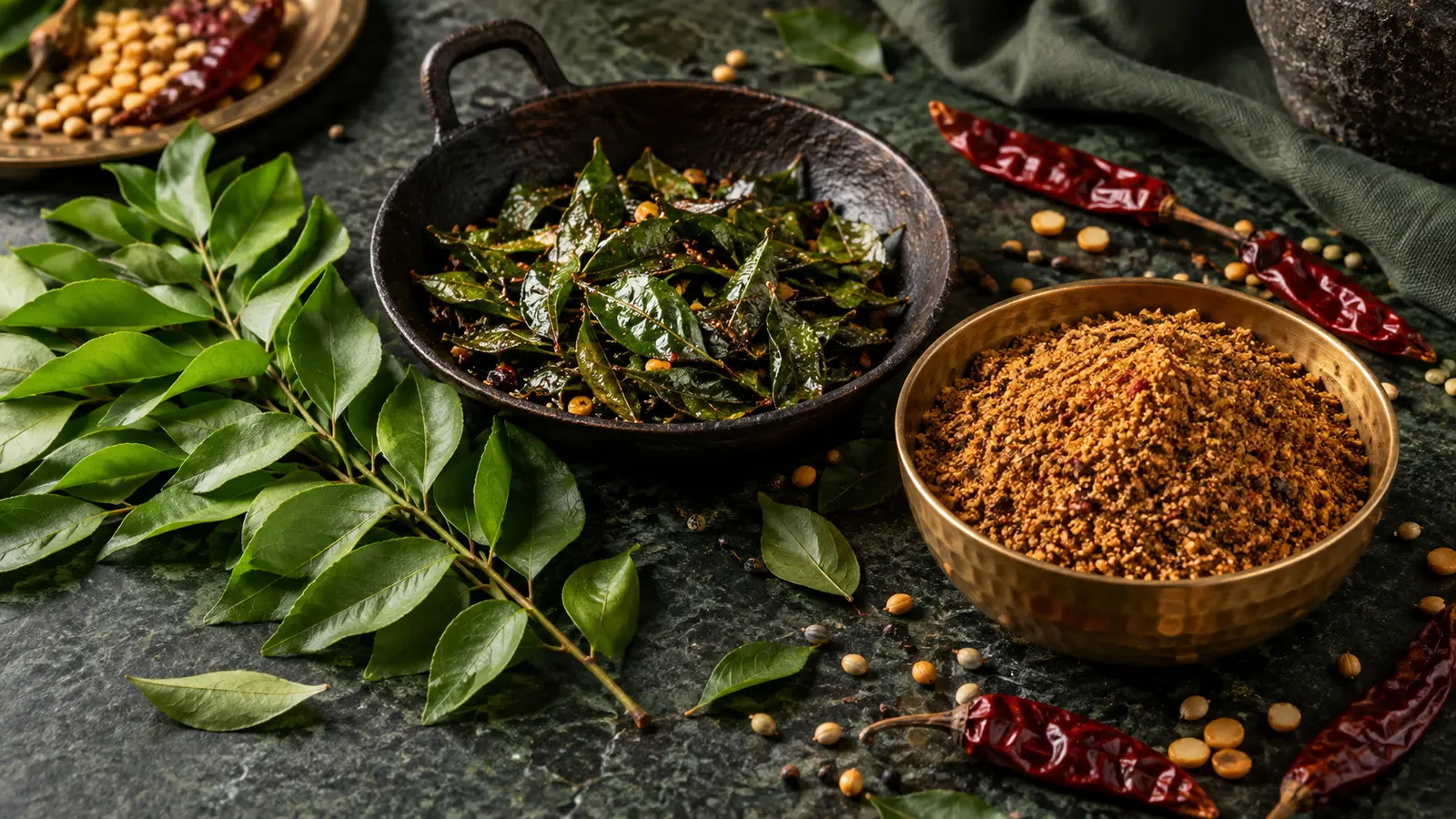
Fresh curry leaves hit hot oil with a crackle and fill the kitchen with that unmistakable aroma. Roast and grind them into podi, and they behave differently.
The flavour becomes deeper, drier and easier to spread through the whole blend. You don’t get one leafy bite. You get curry leaf in every spoonful.
What fresh curry leaves taste like
Fresh curry leaves smell bright, green and slightly citrusy. They also carry a mild bitterness that works beautifully in a tadka.
When the leaves stay whole, their aroma surrounds the dish but doesn’t always enter every bite. Some people eat them. Others move them to the edge of the plate. You know who you are.
What roasting changes
Gentle heat drives out moisture and changes the aroma. The leaves become crisp enough to grind, while their raw green edge settles down.
Roasting can bring out a warmer, nuttier character. It also helps the leaves mix evenly with lentils, chillies and other dry ingredients.
The key word is gentle. Dark, scorched leaves taste bitter and flat. That’s not extra roasting. That’s a burnt batch.
Why curry leaves need careful roasting
Curry leaves hold moisture, especially when freshly washed. If they go into a dry blend while damp, the podi can clump and won’t keep as well.
Home cooks should wash the leaves, dry them thoroughly and roast on low heat. Keep moving them. Stop when they feel crisp and smell fragrant, before they turn black.
Factories use controlled processes, but the goal stays the same: remove moisture while protecting flavour.
How roasted curry leaves work in podi
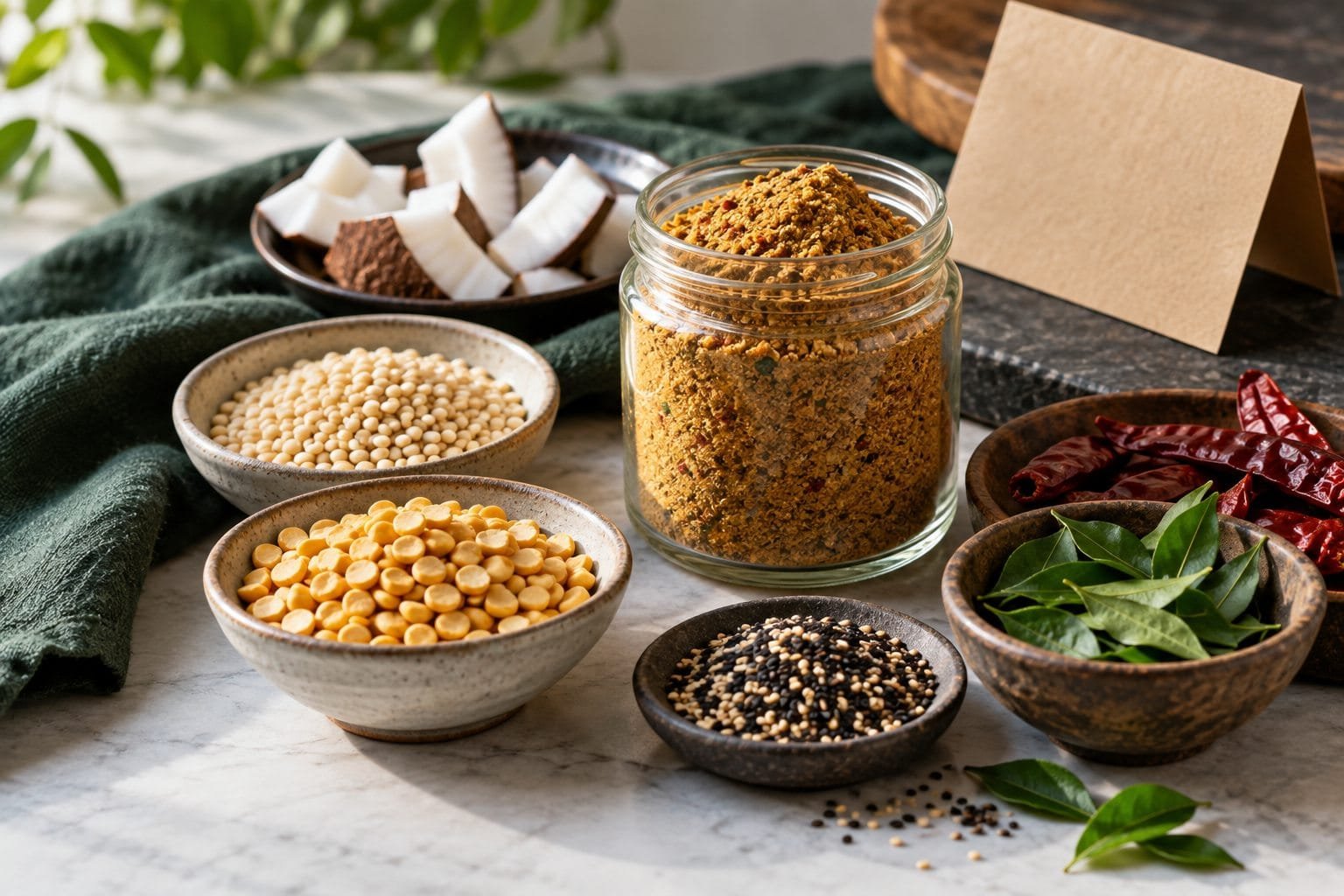
Podi needs ingredients that can sit together as a dry mix. Roasted curry leaves fit because they crumble and spread through the blend.
They can do several jobs at once:
- Add a savoury, herbal aroma.
- Balance the warmth of chilli and pepper.
- Work with roasted dal without covering its nutty taste.
- Give coconut and sesame blends a fuller regional character.
They don’t have to dominate. In a balanced podi, you may notice the blend tastes more complete before you can name the curry leaf.
Do curry leaves make every podi taste the same?
Not at all. The result depends on how many leaves the maker uses, how deeply they’re roasted and what sits beside them.
Curry leaf with coconut feels different from curry leaf with garlic. Add black pepper and the blend becomes warmer. Add a fruitier chilli and the aroma shifts again.
This is similar to the way chilli choice changes podi. Our Byadgi vs Guntur chilli guide explains that part.
Can you add roasted curry leaves to podi at home?
Yes, but start small. Roast fully dried leaves on low heat, cool them and grind them before mixing.
Don’t add warm leaves straight to a sealed jar. Let every ingredient cool first so trapped steam doesn’t create moisture inside.
The short answer
Fresh curry leaves give a bright aroma in a tadka. Roasted and ground curry leaves give podi a deeper, more even herbal flavour.
Handled well, they add character without shouting. Burn them, and they’ll tell on you immediately.


Related posts
Rice in podi can shape its texture and toasted flavour. Learn why some recipes use it, with Rapidli Kerala Podi as a clear ingredient-list example.
Tamarind adds a sour note to Andhra Podi. Learn how it works with chilli and garlic, and why a dry blend behaves differently from a...more
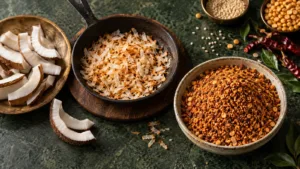
Dry coconut gives podi a rounder flavour and fuller mouthfeel. Here’s how roasting, natural fat and moisture control change the final spoonful.
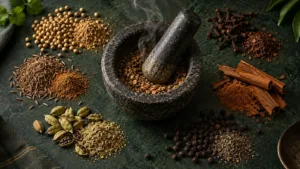
Grinding spices releases their aroma quickly, but it also exposes them to air. Here’s why ground spices smell stronger at first and fade sooner.

Fried onions do far more than add sweetness to biryani. They shape its aroma, colour, texture and the way the layers come together during dum.