


No products in the cart.
Return To Shop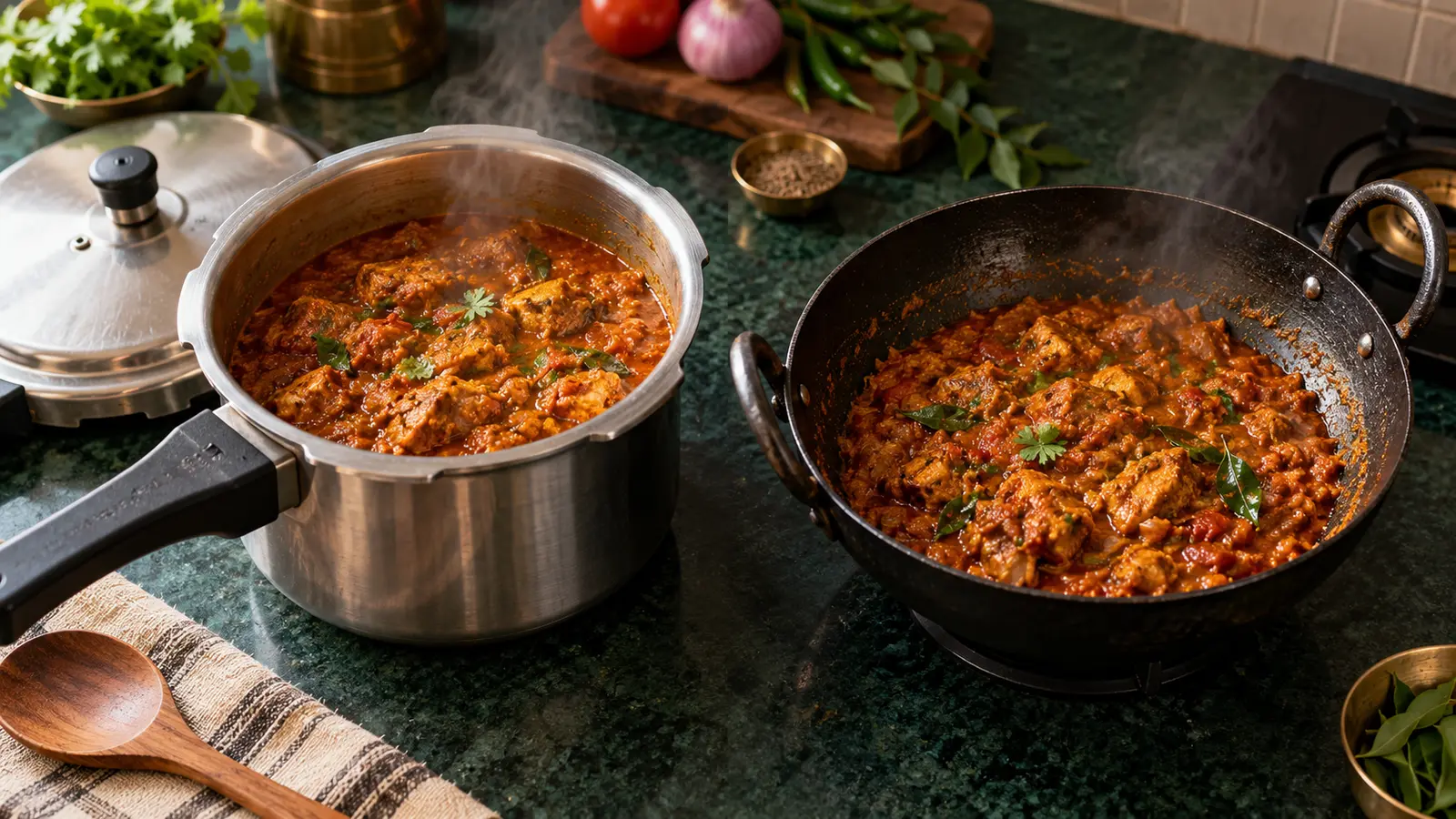
A pressure cooker can turn a long curry into a weeknight job. That doesn’t mean the same recipe will taste identical in an open kadai.
The cooker traps steam, cooks ingredients quickly and loses very little moisture. Those advantages also change how a masala base develops.
A pressure cooker holds on to moisture
In an open kadai, water escapes as onion, tomato and curd cook. The masala thickens, oil separates and flavours become concentrated.
A sealed cooker keeps most of that water inside. The finished gravy may taste lighter or look thinner even when the spices are fully cooked.
This is why adding the same amount of water to both methods rarely works.
Browning has to happen before the lid closes
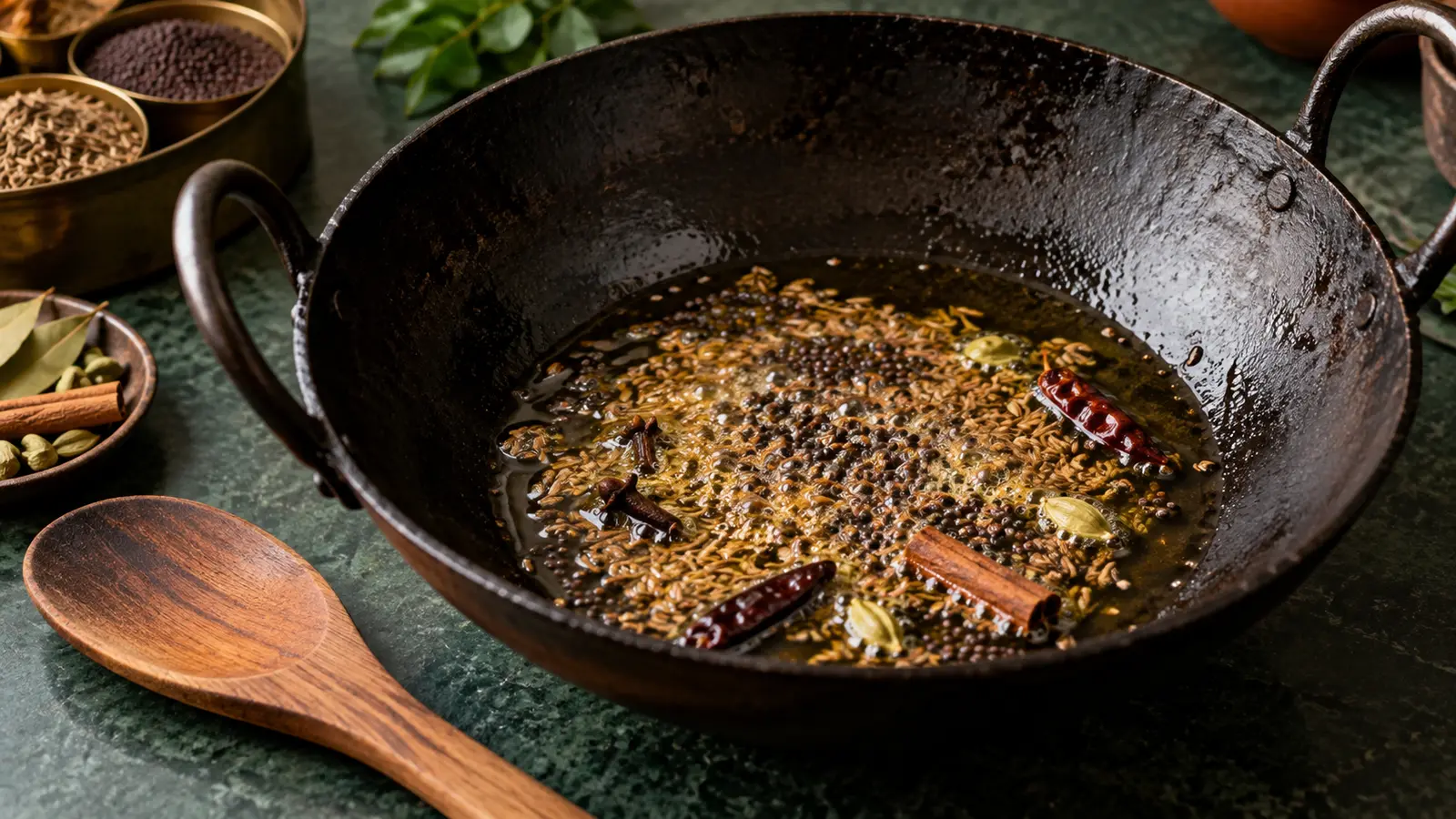
Pressure cooks with moist heat. It softens onion and meat efficiently, but it can’t create much new browning once the vessel is sealed.
Sauté the onion properly first. Cook ginger-garlic paste until the raw smell fades, then give tomato and ground masala enough time in the fat.
Closing the lid too early locks in a pale, slightly raw-tasting base.
Ground masala still needs moisture
Fine spice powder can stick to the hot bottom of a cooker. Lower the heat before adding it and use a small splash of water when the pan looks dry.
You’re looking for a cooked, rounded aroma, not the smell of powder hitting scorching metal.
Our guide to why masala burns before chicken cooks explains how heat and moisture affect this stage.
Pressure softens ingredients quickly
Meat, pulses and firm vegetables tenderise faster under pressure. Their juices mix with the masala and can give the gravy a well-integrated taste.
The risk is overcooking delicate ingredients. Boneless chicken, paneer and soft vegetables may not need the same pressure time as mutton, rajma or chana.
Match the cooking time to the ingredient rather than treating every curry alike.
Some aromas become quieter
Long exposure to heat can soften the fresh aroma of pepper, garam masala, herbs and certain whole spices.
Add delicate finishing spices after opening the cooker. Simmer uncovered for a few minutes, adjust salt and add coriander, pepper or garam masala near the end.
This final open simmer also helps reduce excess water.
Why kadai curries can feel more intense
An open pan gives you more evaporation and more chances to brown the base. The cook can watch, stir and stop at the exact texture wanted.
That control can produce a thicker masala that clings to chicken, paneer or vegetables.
It also takes longer and demands more attention. A kadai isn’t automatically better if the masala burns while you’re doing something else.
A practical pressure-cooker method
Build the onion-tomato masala uncovered. Add the main ingredient and only the water genuinely needed for pressure.
Cook for the appropriate time, release pressure safely and check the texture. Finish uncovered until the gravy reaches the right consistency.
Taste again at the end. Concentration changes salt, chilli and acidity.
The short answer
Yes, masala can taste different in a pressure cooker because less moisture escapes and less browning happens after sealing.
The best approach uses both strengths: sauté carefully first, pressure-cook for speed, then finish uncovered for aroma and texture.


Related posts
Rice in podi can shape its texture and toasted flavour. Learn why some recipes use it, with Rapidli Kerala Podi as a clear ingredient-list example.
Tamarind adds a sour note to Andhra Podi. Learn how it works with chilli and garlic, and why a dry blend behaves differently from a...more
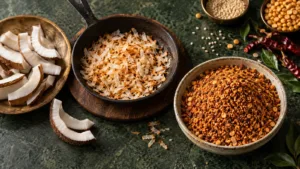
Dry coconut gives podi a rounder flavour and fuller mouthfeel. Here’s how roasting, natural fat and moisture control change the final spoonful.
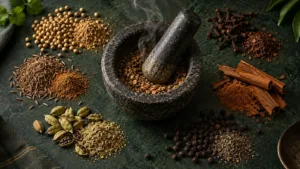
Grinding spices releases their aroma quickly, but it also exposes them to air. Here’s why ground spices smell stronger at first and fade sooner.
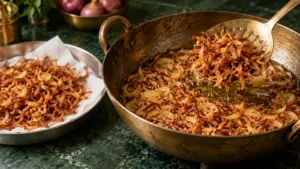
Fried onions do far more than add sweetness to biryani. They shape its aroma, colour, texture and the way the layers come together during dum.