


No products in the cart.
Return To Shop
Raw garlic doesn’t exactly whisper. Cut into a fresh clove and that sharp aroma reaches you almost at once.
Roasted garlic behaves very differently. It tastes warmer, rounder and slightly sweeter. The aggressive edge settles down, while a deeper savoury flavour takes its place.
It’s the same ingredient, but heat changes what your tongue and nose notice.
Raw garlic gets its punch when you cut it
An intact garlic clove smells fairly mild. Crushing or chopping it brings natural compounds inside the clove together. That reaction creates garlic’s familiar sharpness.
This is why freshly crushed garlic can feel almost hot on the tongue. It can dominate a chutney, raita or marinade even when you haven’t added much.
The longer crushed garlic sits before cooking, the more time that bold character has to develop.
Heat softens the sharp side
Roasting changes the balance. As garlic heats, its raw bite becomes less forceful. Moisture reduces, the surface begins to brown and the flavour turns fuller.
That browning also adds gentle nutty and sweet notes. Garlic hasn’t turned into sugar, of course. It simply tastes sweeter because the harsher notes no longer lead every bite.
Low, patient heat gives you a warm roasted flavour. Very high heat can take garlic from golden to bitter surprisingly fast.
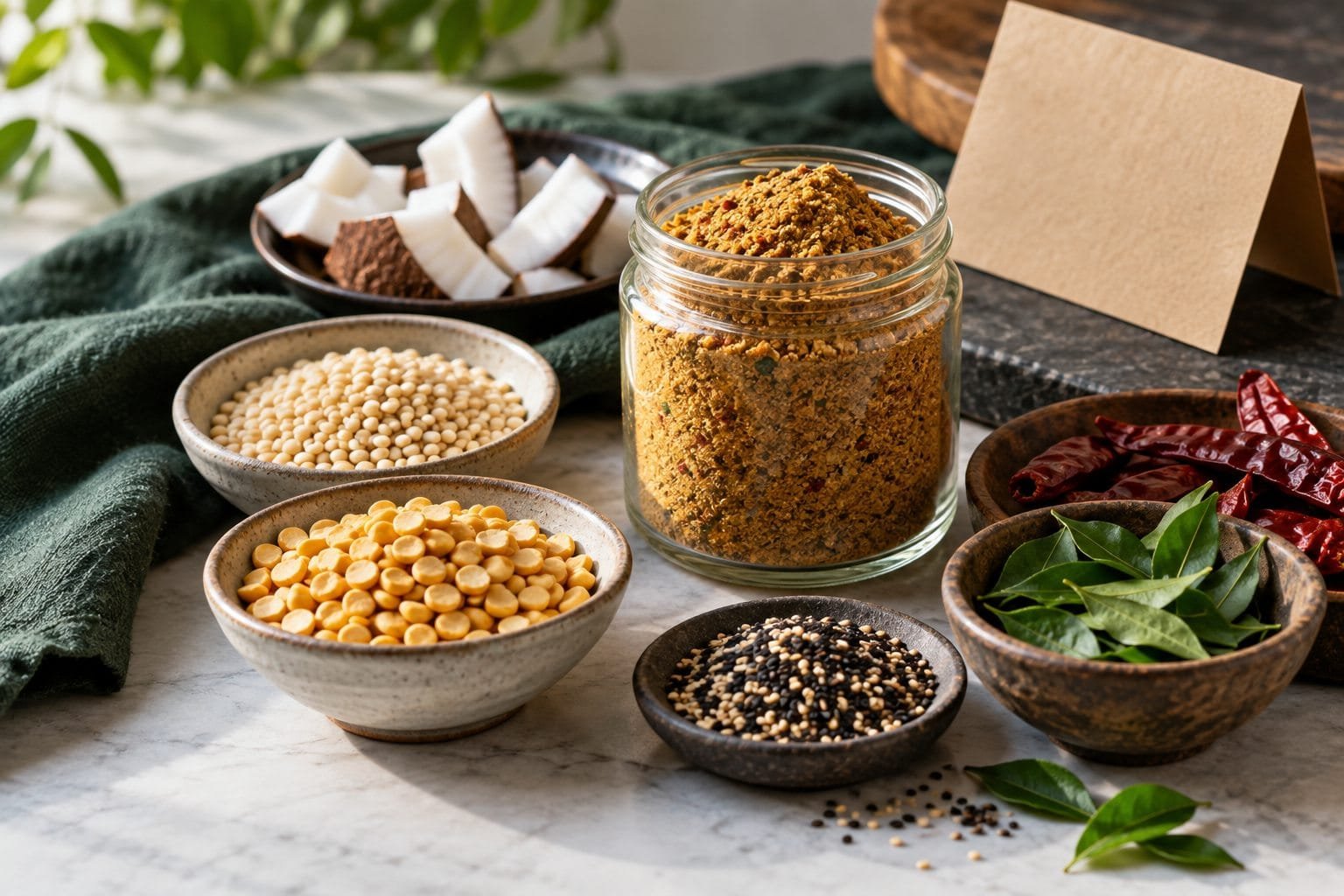
Dry roasting and cooking in oil aren’t quite the same
Garlic cooked slowly in oil becomes soft, rich and mellow. The fat carries its aroma and gives it an almost creamy character.
Garlic roasted for a dry spice blend has a different job. It needs to lose enough moisture to sit comfortably with roasted lentils, chillies and seeds. Its flavour becomes concentrated, but it should still support the rest of the blend.
That balance matters in Karnataka Podi. The garlic shouldn’t cover the coconut, chillies, curry leaves or roasted dals. It should help connect them.
Why timing matters
Garlic is easy to burn because its natural sugars and small pieces brown quickly. Once it becomes dark and bitter, grinding won’t hide the mistake. It spreads that bitterness through the entire batch.
At home, use a low flame and keep the garlic moving. Take it off the heat when it looks evenly golden and smells toasted rather than harsh. Remember that a hot pan keeps cooking it for a little while after the flame is off.
The form of garlic changes the result too
Fresh cloves bring moisture and bite. Garlic flakes give a cleaner roasted note. Garlic powder spreads fast through a dish, but it can catch on the pan if the heat is too high.
None is automatically better. The right form depends on whether you want garlic to stand at the front or sit quietly inside the flavour.
Roasting is really about control
A good podi is built from ingredients that have each been treated with care. Lentils need one kind of roasting. Curry leaves need another. Garlic has its own narrow window.
That’s also why roasted ingredients don’t simply taste like their raw versions ground together. Heat reshapes them before they ever reach the grinder.
If you’re curious about another ingredient that changes dramatically with roasting, read why curry leaves taste different when they’re roasted and ground.
The short answer
Roasting calms garlic’s raw sharpness and brings forward warmer, nuttier and slightly sweeter flavours. Done well, it adds depth without making every mouthful taste only of garlic.
And in a balanced podi, that quiet supporting role is exactly the point.


Related posts
Rice in podi can shape its texture and toasted flavour. Learn why some recipes use it, with Rapidli Kerala Podi as a clear ingredient-list example.
Tamarind adds a sour note to Andhra Podi. Learn how it works with chilli and garlic, and why a dry blend behaves differently from a...more
Dry coconut gives podi a rounder flavour and fuller mouthfeel. Here’s how roasting, natural fat and moisture control change the final spoonful.
Grinding spices releases their aroma quickly, but it also exposes them to air. Here’s why ground spices smell stronger at first and fade sooner.
Fried onions do far more than add sweetness to biryani. They shape its aroma, colour, texture and the way the layers come together during dum.