


No products in the cart.
Return To Shop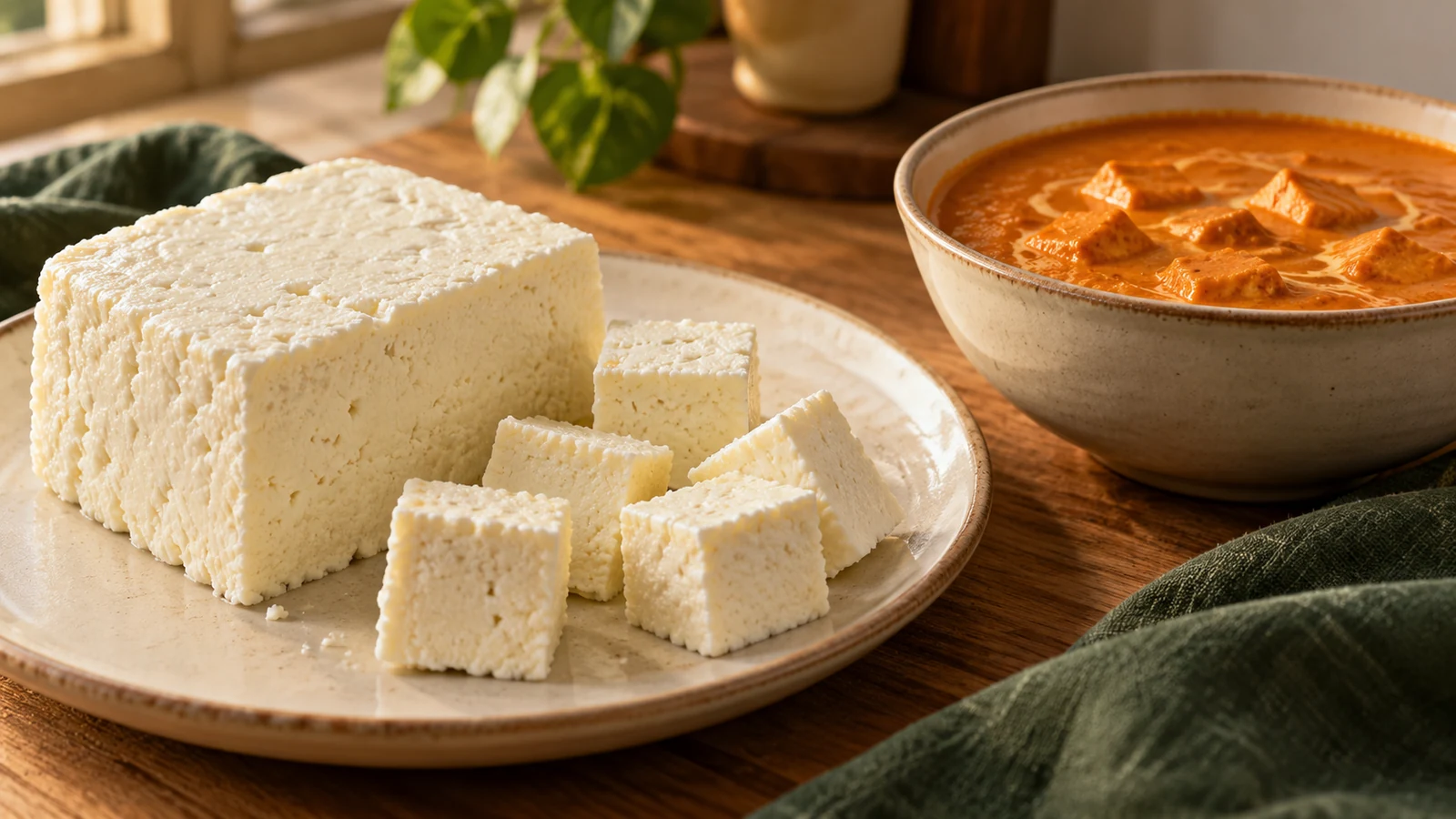
You can make a lovely gravy and still end up chasing chewy paneer around the plate. The sauce isn’t always the problem. Sometimes the block was already firm, and sometimes the pan took more moisture from it than you wanted.
To work out why paneer becomes rubbery, check its texture before cooking. That gives you a useful starting point instead of blaming the last spoonful of spice.
The block you buy matters
Paneer is a fresh cheese made by setting hot milk with acid and pressing the curds. Milk composition and the way those curds are handled affect the finished texture. Two blocks with the same name can behave quite differently.
Slice off a small piece and notice how it cuts. A moist block that yields easily starts in a different place from a dry, tightly pressed one. Follow the packet’s cooking directions, including any directions about cooking before eating.
Firmness alone isn’t a freshness test. Use the storage instructions and date on the pack, and don’t try to rescue spoiled cheese by soaking or cooking it.
Frying changes the surface
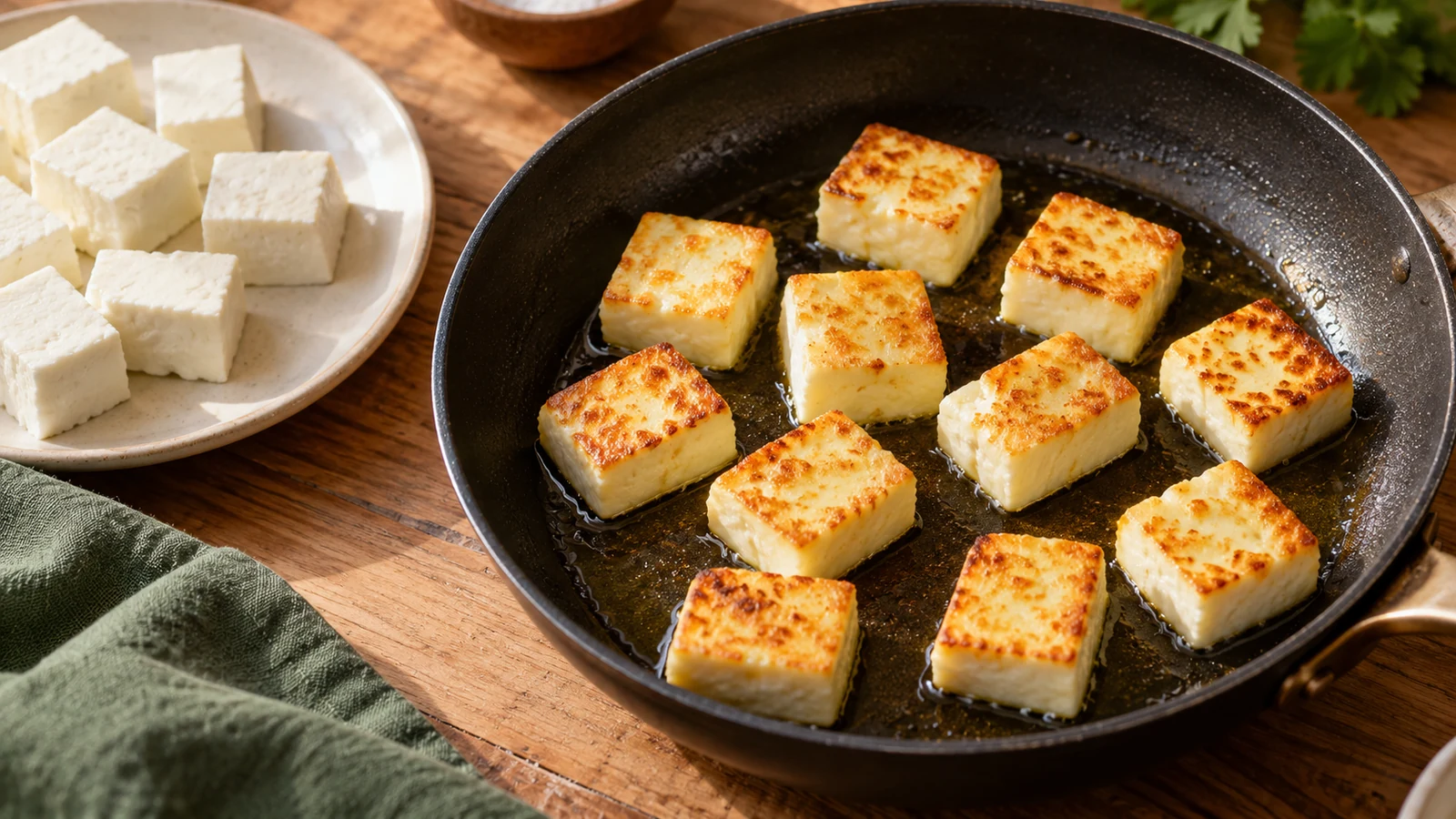
Light browning can give paneer a pleasant crust. Leaving small cubes in the pan for too long can make a large part of each piece dry and chewy.
Have the rest of the dish ready before you start browning. Use reasonably even cubes so a few tiny pieces don’t spend the same time in the pan as much larger ones.
Once the colour suits the recipe, move them out of the hot pan. They don’t need to keep frying while you chop an onion or search for the next ingredient.
Finish the gravy before adding the paneer
Onions and tomatoes may need a fair amount of cooking. Paneer doesn’t need to sit through that whole stage. Cook the base to the intended texture first, then add the paneer at the point your recipe directs.
For a quick curry using ready-made paneer, heat it gently through in the finished sauce rather than leaving the cubes at a hard boil while the gravy reduces. If the sauce is too thin, deal with that before the cheese goes in.
Reheating can add another cooking cycle. Warm only the portion you need and avoid repeatedly boiling the whole pan.
What soaking can realistically do
A brief warm-water soak can make chilled paneer feel more flexible. It doesn’t reliably turn a very dry block into fresh, tender cheese. Swetha Sivakumar’s tests for Serious Eats found limited water uptake from soaking alone; warming and adding moisture aren’t the same result.
If your recipe suggests soaking, compare a small piece before and after rather than assuming a dramatic change. Drain before adding to a pan, and dry the surface well if you’re going to brown it. Wet cheese can splutter in hot oil.
For an already overcooked batch, serving the paneer with plenty of sauce may make the meal more pleasant. More boiling is unlikely to give you the tender texture you wanted.
Match the method to the meal
Paneer for a lightly browned snack has a different goal from soft cubes in gravy. Decide which texture you want before you start, then stop cooking when you reach it.
Our podi methi thepla makes a useful flatbread alongside a paneer curry. For the gravy itself, understanding the cooked masala stage helps you finish the base before adding the cheese.


Related posts

Get to know black and yellow mustard seeds, from their flavour to the dishes they suit.
Learn when salting vegetables early helps, and when to wait until they're cooked.

What Do Cloves Add to an Indian Masala? with practical tips for everyday cooking.