


No products in the cart.
Return To Shop
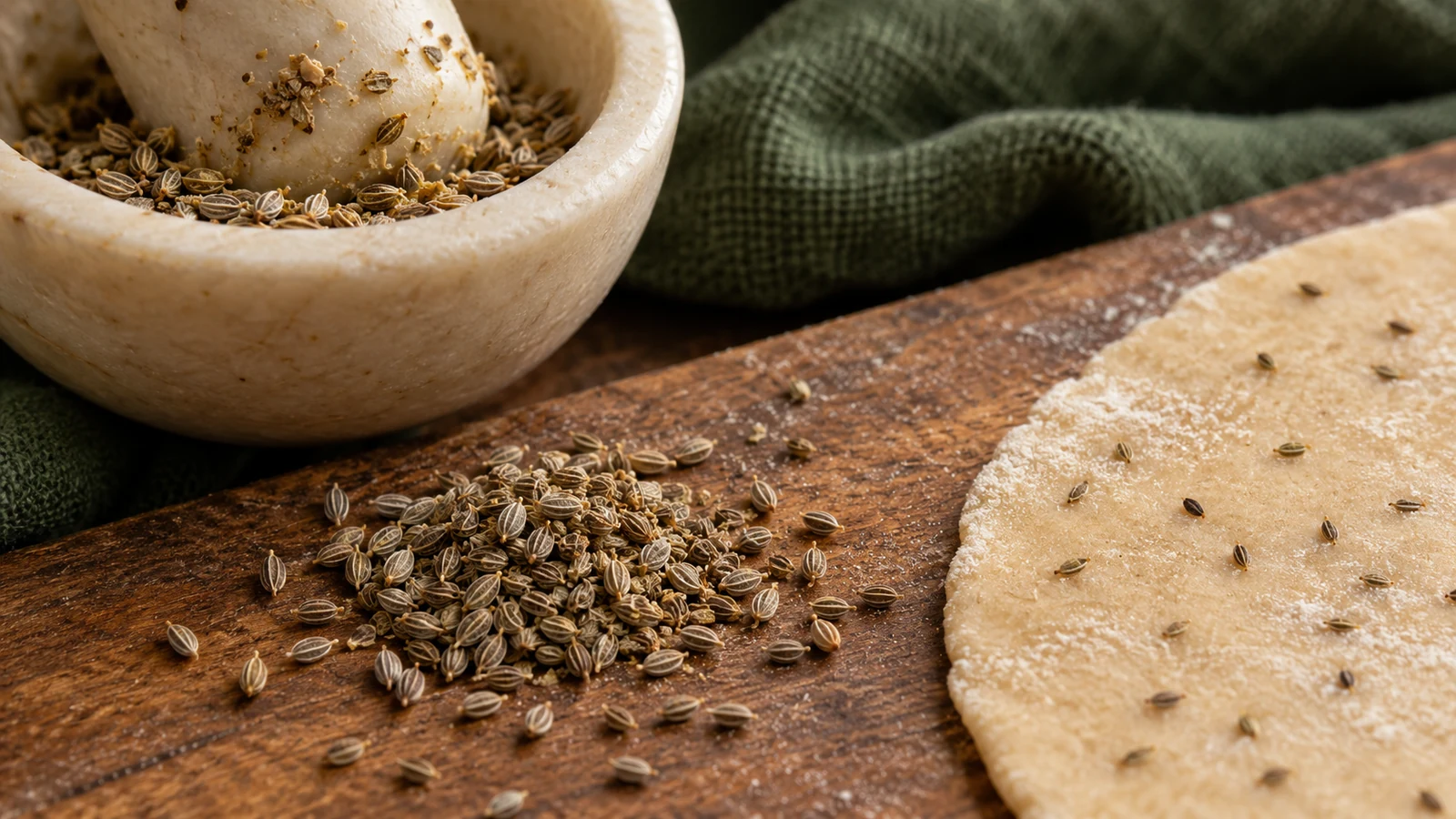
Ajwain announces itself quickly. Rub a few seeds between your fingers and that sharp, herby smell is hard to miss. In a plain dough, even a small amount can make itself known.
That’s why it turns up in foods such as samosa pastry and some parathas. It gives the flour a flavour of its own, including the bites that don’t carry much filling.
What ajwain tastes like
Ajwain, also called carom, has a strong aroma often compared with thyme. It can taste peppery, slightly bitter and quite sharp when you bite directly into a seed.
The spice comes from Trachyspermum ammi. What we call seeds in the kitchen are its small dried fruits. ICAR’s ajwain guide identifies thymol as an important part of its aromatic oil.
You don’t need a chemistry lesson to use it well. Smelling a lightly crushed pinch gives you a useful sense of how forceful your packet is.
Why put it in the dough?
A samosa has two places for flavour: the pastry and the filling. Ajwain in the pastry gives the shell a savoury character before you reach the potato. Its sharp note can work well alongside a rich, fried crust.
In a paratha, the seeds spread through the flour so you meet them across the flatbread. This is especially noticeable in a plain paratha, where there isn’t a strongly seasoned filling competing for attention.
That doesn’t mean every paratha or samosa needs ajwain. Family recipes vary. Treat it as a flavour choice rather than a requirement for the food to count as the real thing.
Whole, crushed or ground?
Whole seeds give small bursts when you bite them. Lightly crushing them before mixing can make the aroma easier to notice across the dough. You only need to bruise them; turning the entire measure into dust creates a different effect.
Fine powder spreads through the flour more evenly and leaves fewer obvious seed bites. It can also make an overly generous amount hard to escape, because every mouthful carries it.
Follow the form and quantity specified in your recipe. A packed spoon of powder isn’t the same as a loose spoon of whole seeds.
Keep the other seasoning in mind
Strong filling, podi and ajwain can all compete in a small snack. If you’re adapting a familiar dough, keep the ajwain modest for the first batch and check the result before increasing it.
Mix the seeds through the dry flour so they spread evenly. A pocket of seeds in one corner of the dough gives a much stronger bite than you intended.
Ajwain doesn’t replace salt, and it isn’t a fix for an undercooked dough. Judge the texture and seasoning separately. Its aroma alone won’t tell you whether a thick piece of pastry is cooked through.
Use the seeds while they still smell fresh
Keep ajwain in a tightly closed jar away from heat and moisture. Buy an amount you’ll use, and crush a few seeds when checking an older packet. If the smell is faint or stale, adding handfuls isn’t a reliable way to restore its character.
Our podi aloo samosa and podi aloo paratha recipes explore seasoning the filling. Ajwain offers another decision in the dough itself. Choose it because you like what it brings to the bite.


Related posts

Get to know black and yellow mustard seeds, from their flavour to the dishes they suit.
Learn when salting vegetables early helps, and when to wait until they're cooked.

What Do Cloves Add to an Indian Masala? with practical tips for everyday cooking.