


No products in the cart.
Return To Shop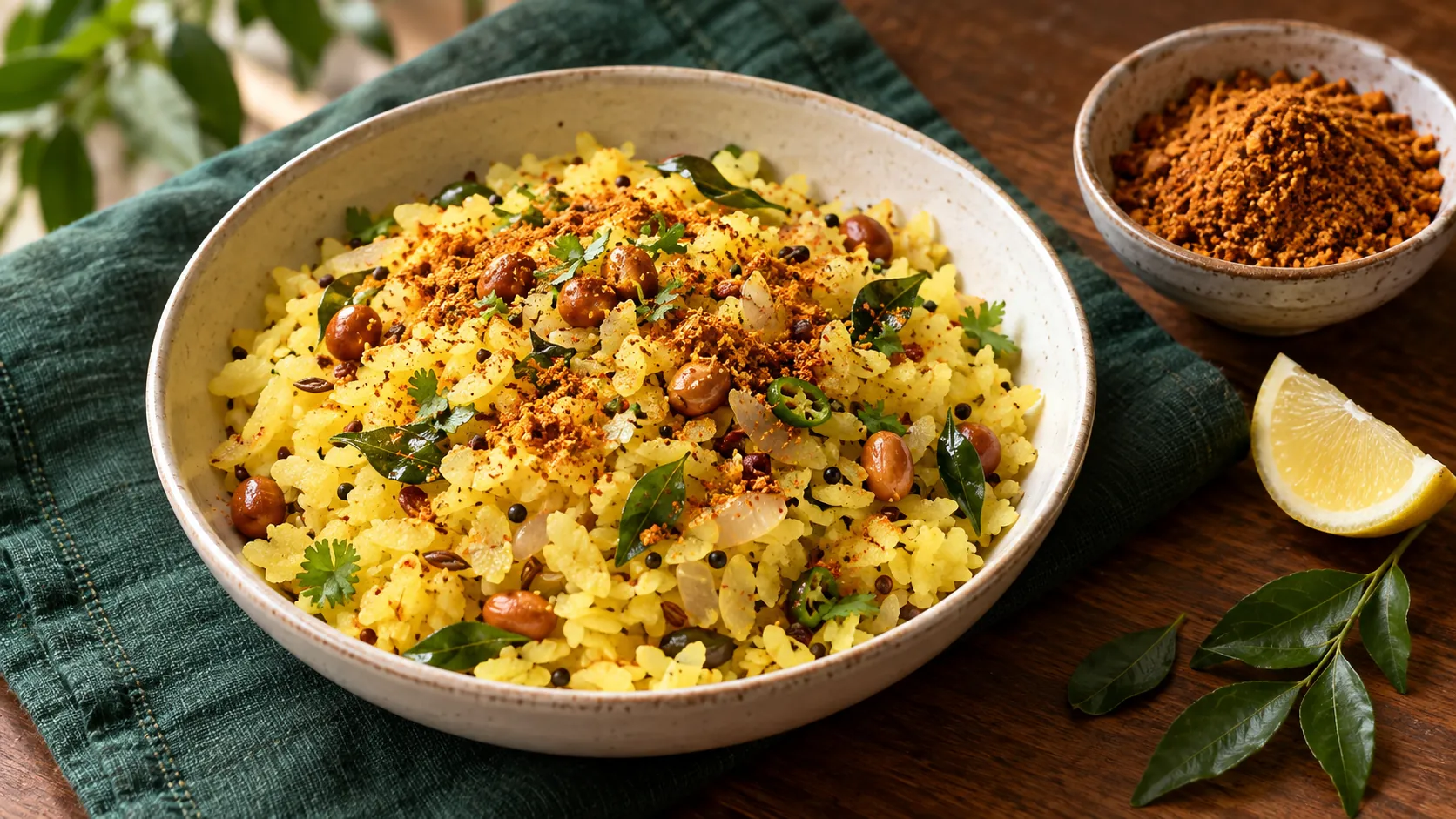
Poha is a good place for a spoonful of podi. The soft flakes pick up its roasted flavour, and you can still finish the plate with a fresh sprinkle. The timing matters: podi can taste harsh if it sits too long in a very hot pan.
This version uses Rapidli Karnataka Podi, though you can try another blend and adjust the amount to your taste.
What you need for two small servings
- 1 cup thick poha
- 1 small onion, finely chopped
- 1 tbsp peanuts, optional
- 1 tbsp oil
- 1 to 2 tsp podi, plus a little for the table
- A few curry leaves and a small squeeze of lemon, if you like
- Salt only if needed, since the podi already contains rock salt
Make the poha
- Rinse the poha briefly in a sieve, drain well and let it soften for a few minutes. Thick and thin poha take different amounts of water, so check the flakes rather than soaking them until mushy.
- Warm the oil in a pan. Toast the peanuts until crisp if you’re using them, then add the onion and curry leaves. Cook until the onion softens.
- Add the drained poha. Toss gently and warm it through. If it feels dry, sprinkle in a little water and cover briefly.
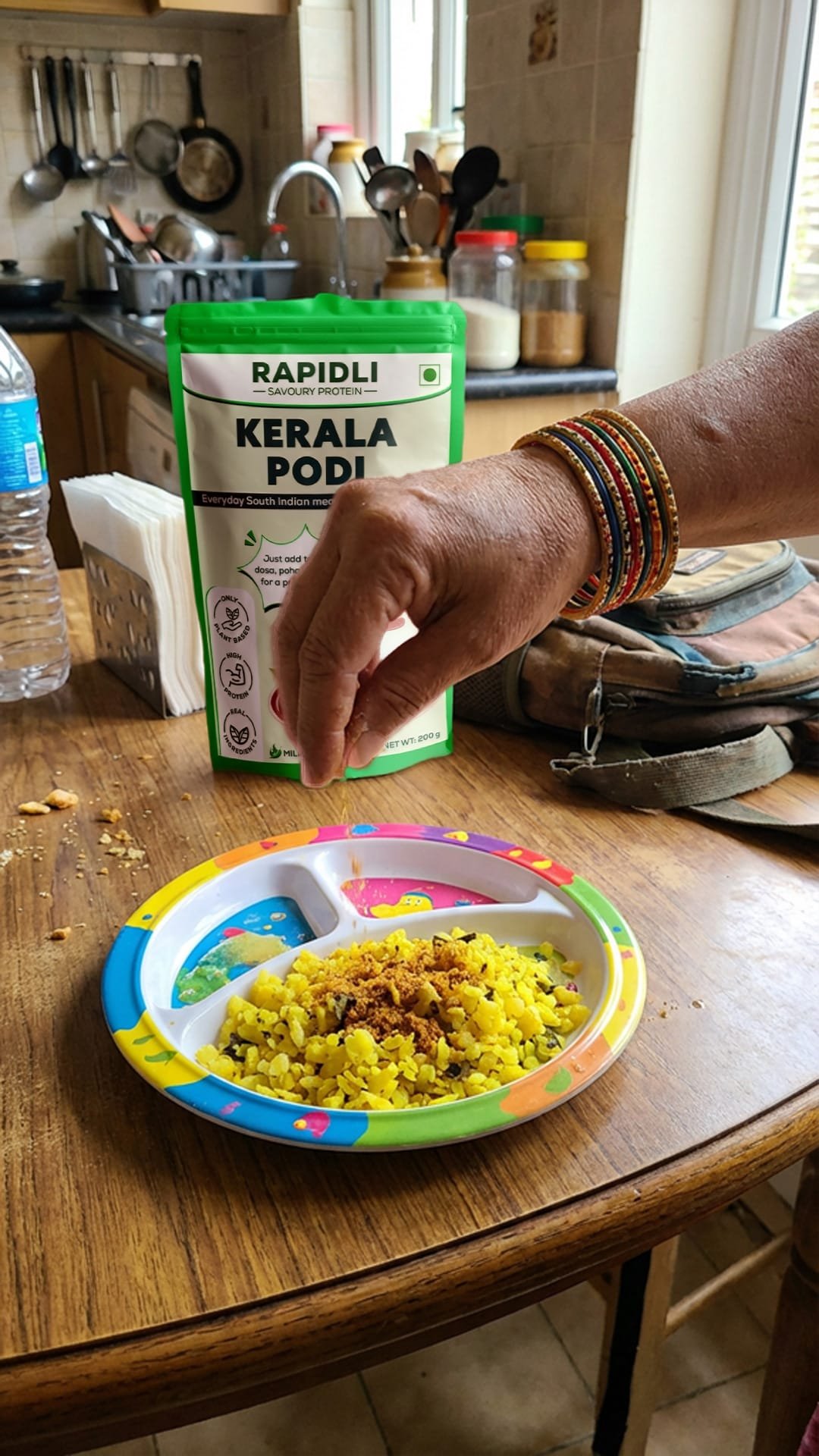
- Turn off the heat. Fold in 1 tsp podi, taste, then add more if you want it. Finish each plate with a small fresh sprinkle and lemon.
Why add podi at the end?
The poha needs heat to finish cooking. The podi has already been roasted, so it mainly needs to meet the warm flakes. Folding it in after turning off the heat spreads the seasoning without giving the fine bits a chance to scorch.
For a stronger flavour, mix part of the podi through the warm poha and keep the rest for the top. A little oil helps it cling. This is also handy if two people at the table like different amounts.
Poha can vary a lot between packs. If yours turns soft quickly, use less water next time. If it stays firm, give it another brief rest before it goes into the pan.
We’ve covered the wider timing question in when to add podi to hot food. For this breakfast, the easy answer is right after the heat goes off.


Related posts

Make podi aloo samosas with a simple potato filling and crisp pastry. Includes dough, shaping, sealing and frying tips, with salt checked after podi.
Make podi aloo paratha with a simple potato filling. Learn how to season with podi, check salt and roll stuffed parathas without tearing the dough.

Cook eggs in a thick podi tomato sauce for an easy one-pan breakfast. Includes measured ingredients, sauce tips and clear cues for fully cooked eggs.
Bake thin atta crackers with podi for a savoury tea-time snack. This easy recipe covers dough texture, even rolling, baking and cooling for crunch.
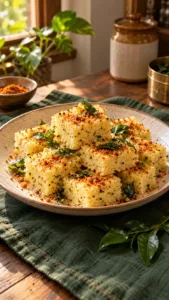
Try a podi dhokla recipe made with semolina and curd. Learn when to add fruit salt, how thick the batter should be and when the...more