


No products in the cart.
Return To Shop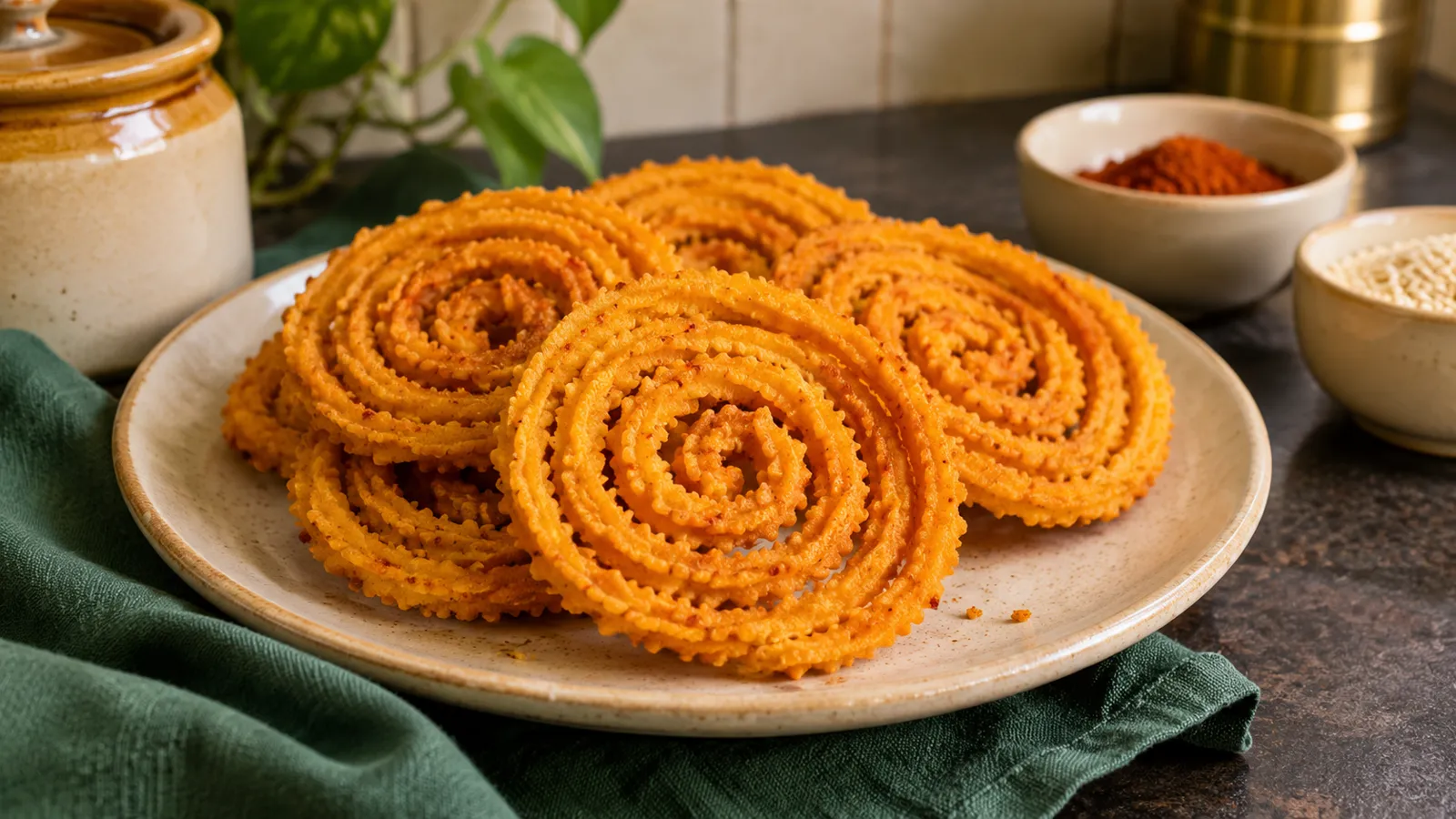
Chakli tells you quite a lot before it reaches the oil. A spiral that cracks needs attention at the dough stage. One that loses its ridges may be too soft. This rice-and-besan podi variation starts with a small test spiral so you can adjust before pressing a whole tray.
Makes about 18 small chaklis. Allow 45–60 minutes.
Ingredients
- 150 g rice flour
- 50 g besan
- 1 tbsp Rapidli Tamil Podi, finely ground if coarse
- 1 tsp cumin seeds
- 1 tsp sesame seeds, optional
- 20 g softened butter
- About 140–170 ml warm water
- Salt only if needed
- Neutral oil for frying
Method
- Mix rice flour, besan, podi and seeds. Rub in the butter thoroughly. Add warm water gradually and knead to a smooth dough that feels pliable rather than sticky.
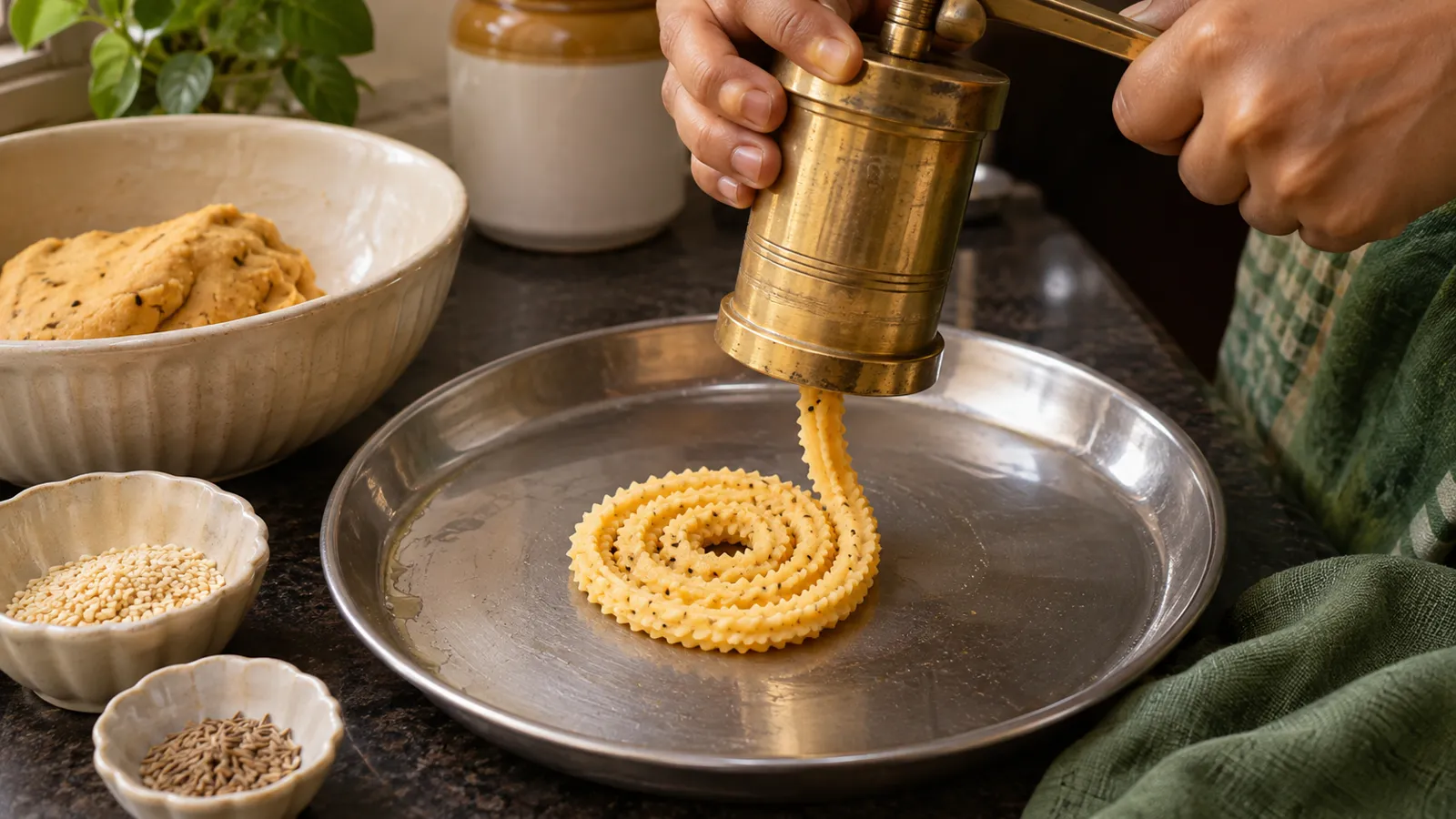
- Fit a chakli press with a star disc. Lightly grease its inside. Press one small spiral onto a lightly oiled steel plate, starting at the centre. Pinch the end gently against the outer ring.
- If the strand cracks, knead a teaspoon of warm water into the dough and test again. If the ridges slump, work in a little rice flour and rest briefly. Keep the unused dough covered.
- Heat oil in a deep, stable pan to around 165–175°C. Slide in a few spirals carefully, leaving space between them. Fry until golden and crisp, turning gently after they firm up.
- Lift onto a rack. Let one cool and break it open to check that the centre is cooked and crisp. Adjust the next batch’s heat or thickness if needed. Cool completely before sealing in an airtight container.
Don’t force the press
Very stiff dough takes too much pressure and often breaks as it comes out. A coarse podi particle can also obstruct a small nozzle. Grind the measured podi a little finer if needed, keeping the amount unchanged.
Colour isn’t the only cue
Podi adds colour before frying, so compare a cooled test piece with the raw dough. A dark outside with a soft centre needs a more measured frying temperature. Keep the oil from smoking and give it time to recover between batches.
This is a quick flour-based podi chakli, rather than a traditional bhajani blend. Make a small first batch and note how your flour absorbs water for next time.
For more ways to use a measured amount of seasoning, see how to use podi.


Related posts

Podi Rajma Sandwich: A Lunch That Holds Together with practical tips for everyday cooking.

Podi Lotus Stem Fry: Crisp Edges and Plenty of Flavour with practical tips for everyday cooking.
Beetroot Poriyal With Karnataka Podi and Coconut with practical tips for everyday cooking.