


No products in the cart.
Return To Shop
Some lemons give up their juice easily. Others seem determined to stay dry. Before squeezing harder, check the fruit itself. A dried-out lemon has less to offer, whatever trick you use.
Start with a sensible choice
When buying, compare lemons of similar size. One that feels heavier may have more juice, though the peel and variety also affect weight. Avoid fruit with mould or damaged, spoiled areas.
Wash the outside before cutting. The knife passes through the peel into the flesh, so cleaning isn’t just about whether you’ll use the zest.
Try a gentle roll
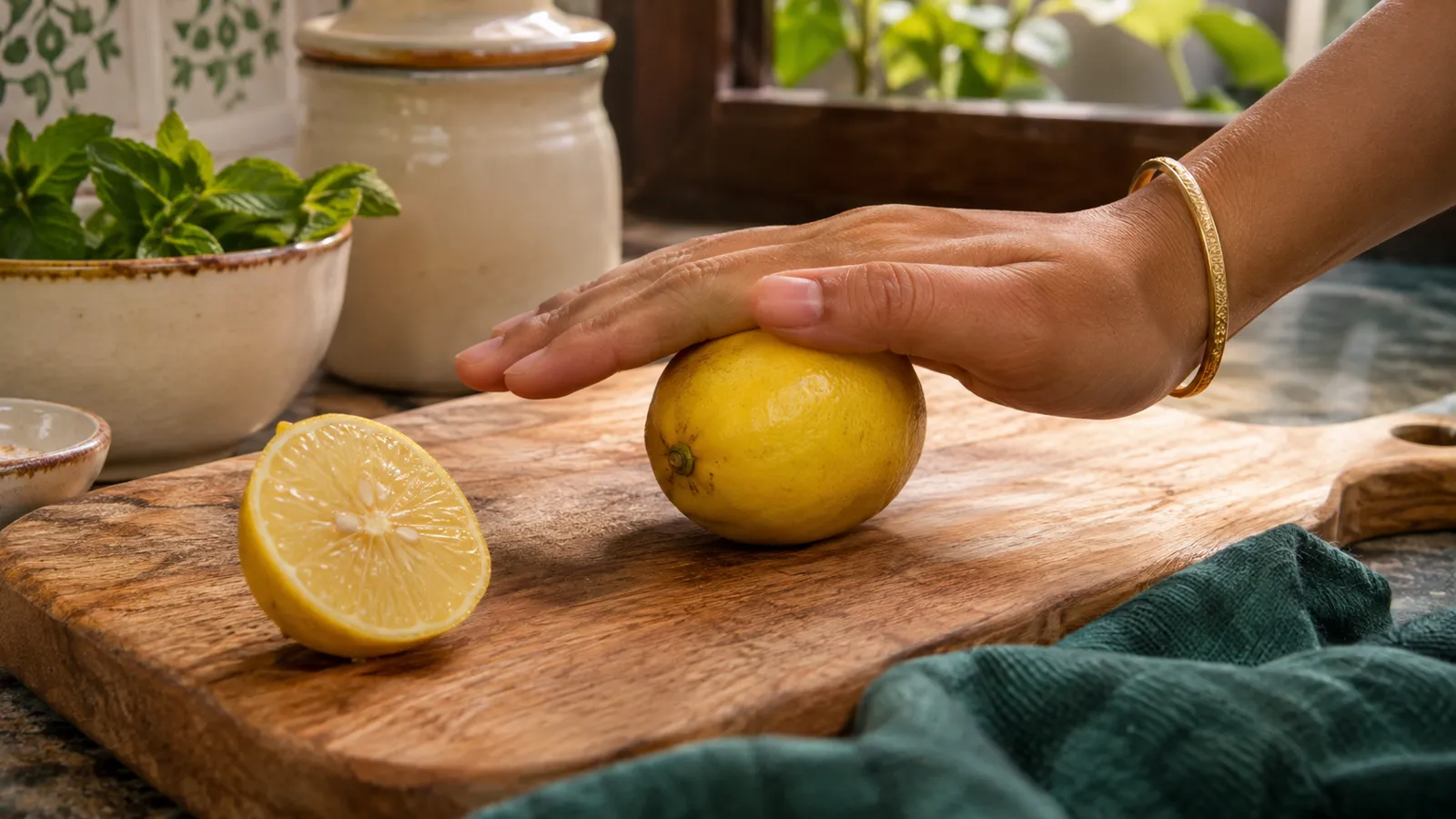
Roll the whole lemon under your palm on a firm surface with moderate pressure. This can loosen the internal structure and make squeezing easier. Stop before the skin splits.
Cut across the middle and squeeze over a small sieve. Rolling may help with a firm lemon, but it can’t replace juice that the fruit has lost during storage.
Use a fork or reamer
Hold the cut half securely and use a fork to loosen the flesh while squeezing gently. Keep the fork pointed away from your hand. A citrus reamer does the same job with a shape designed for the fruit.
Don’t grind aggressively into the white pith and peel. You want juice, with as little unwanted bitter material as possible. Catch the seeds before the juice reaches the chaat bowl.
Make the comparison useful
If you’re curious, use lemons from the same bag and measure the juice. Try rolling one and using a reamer on another. Fruit varies, so one pair won’t prove a universal winner, but it can show which method feels easier in your kitchen.
Add it to the food gradually
More juice isn’t always what the dish needs. Andhra Podi already brings tamarind, and a curd marinade already has acidity. Add a small amount, mix and taste when the food is safe to taste. Keep any juice that has touched raw chicken separate and discard unused raw marinade.
For more ways to use a measured amount of seasoning, see how to use podi.


Related posts

Get to know black and yellow mustard seeds, from their flavour to the dishes they suit.
Learn when salting vegetables early helps, and when to wait until they're cooked.

What Do Cloves Add to an Indian Masala? with practical tips for everyday cooking.