


No products in the cart.
Return To Shop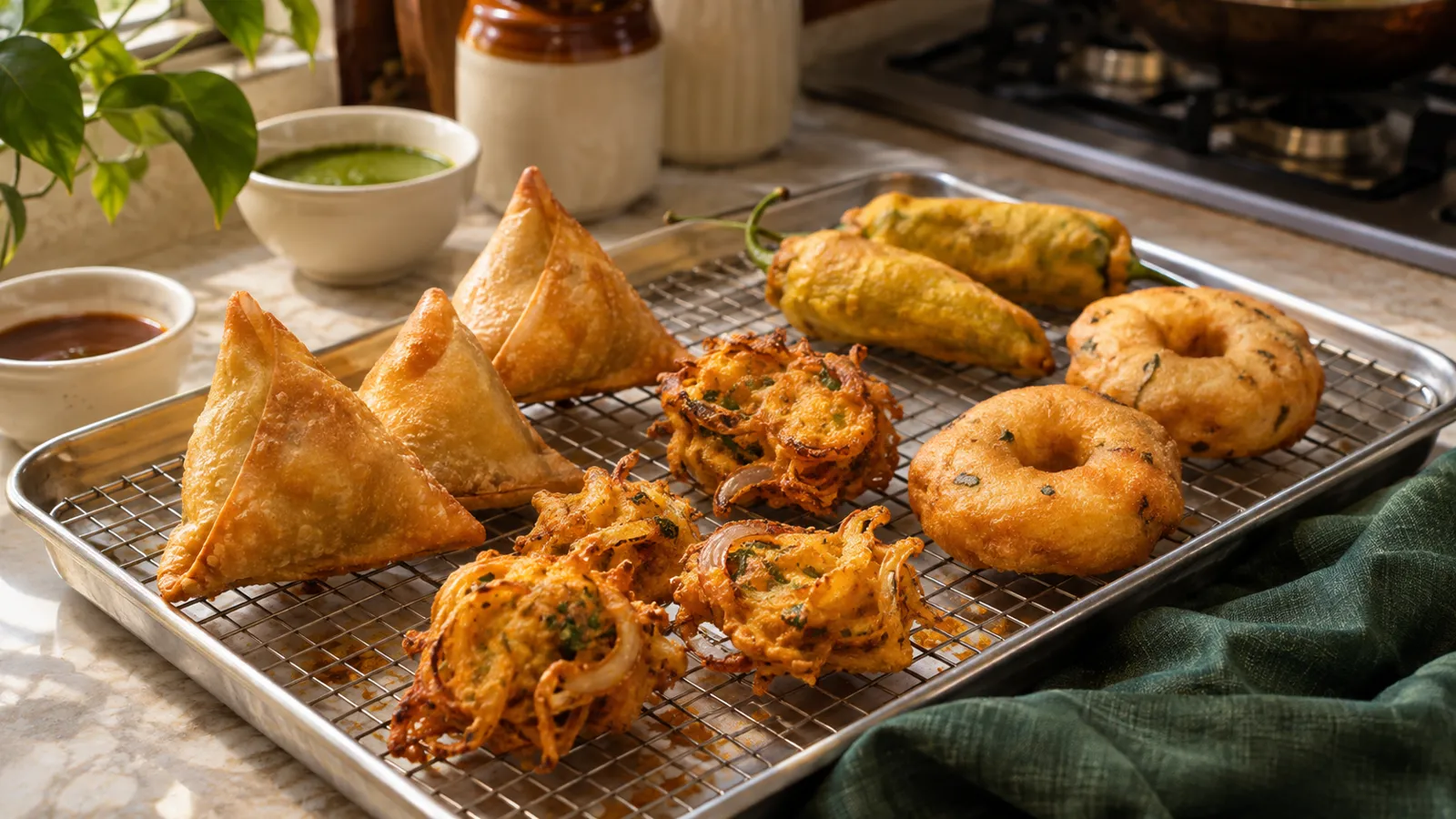
A snack can be golden and still leave your fingers coated in oil. Frying involves moisture leaving the food while its surface changes. Temperature, cooking time and what happens after lifting it out all affect the result.

Check temperature before adding food
Oil that’s too cool can leave food cooking slowly while the surface stays weak. Oil that’s too hot can brown the outside before the centre is ready. Use the range given by the recipe; mathri and thin spring rolls don’t need identical treatment.
A frying thermometer makes this easier to judge. Keep the oil below smoking and use a deep, stable pan with plenty of headroom. Don’t add wet utensils or dripping food to hot oil.
Give each batch space
A large batch lowers the oil temperature and makes the pieces harder to turn. Add fewer pieces and wait for the temperature to recover before the next round. Turning the flame up sharply halfway through can overshoot once the food warms.
Watch the food too. Slow, pale cooking can suggest low heat, but bubbling depends on moisture and the recipe. It isn’t a precise thermometer.
Look at the dough or coating
A damaged wrapper, overly wet filling or batter that doesn’t cling can expose more surface and complicate frying. Fix those issues before blaming the oil alone. Even thickness helps the centre and outside finish closer together.
If the first piece looks good outside but is doughy inside, adjust the next batch’s thickness or heat. Frying the whole batch the same way won’t improve the centre.
Drain without trapping steam
Lift the food with a suitable slotted utensil and let surface oil drain briefly. Set it in a single layer on a rack over a tray. Piling hot snacks in a deep bowl traps steam and softens the surface.
Oil uptake can continue as food cools, so prompt draining matters. Still, deep-fried food will contain oil. The aim is a well-cooked snack with a pleasant bite, not a promise of oil-free frying.
Cool a test piece before judging a crisp snack. Then adjust the next batch one factor at a time.
For more ways to use a measured amount of seasoning, see how to use podi.

Related posts

Get to know black and yellow mustard seeds, from their flavour to the dishes they suit.
Learn when salting vegetables early helps, and when to wait until they're cooked.

What Do Cloves Add to an Indian Masala? with practical tips for everyday cooking.