


No products in the cart.
Return To Shop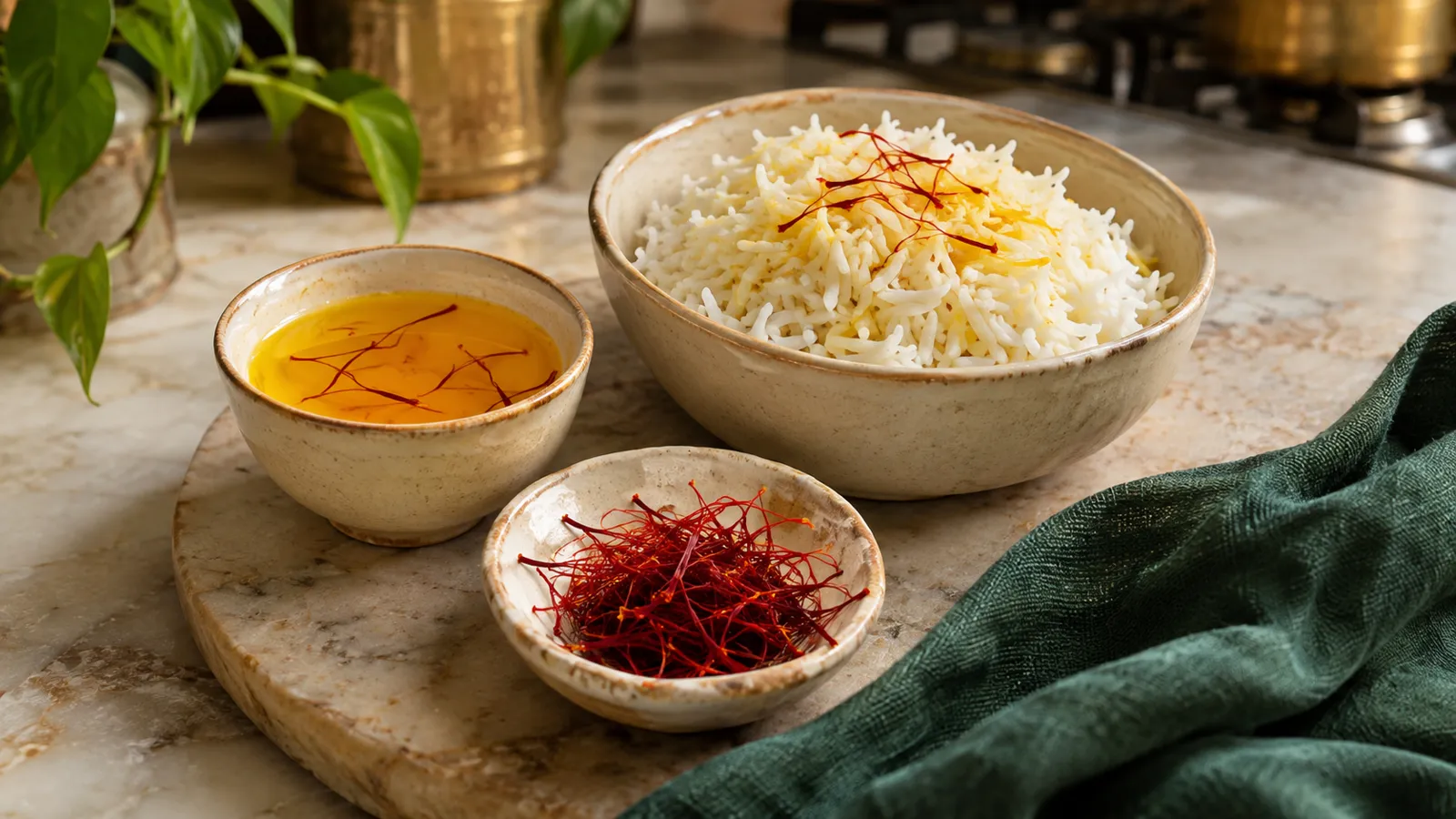
A few saffron threads can be expensive enough to make you pay attention. Soaking them before adding them to rice helps their colour and aroma move into a liquid you can distribute. It also makes a tiny quantity easier to use across a large dish.
What the liquid does
Saffron’s colour compounds move into water-based liquid. Warm water or milk is often used, depending on the recipe. The threads gradually colour the liquid rather than acting like an instant spoon of food dye.
Saffron is the dried stigma of Crocus sativus, as identified in the Spices Board’s spice list. It’s a distinct ingredient, not interchangeable with turmeric just because both can colour food.
Give it time without flooding the rice
Follow your recipe’s quantity and soaking time. Use a small amount of warm liquid, not a large mug that changes the rice’s water balance. Prolonged hard boiling isn’t needed to prepare the infusion.
Many cooks lightly crush the threads before soaking to expose more surface. Handle them carefully so most of the measured spice reaches the bowl rather than staying on your fingers or board.
Think about the pattern you want
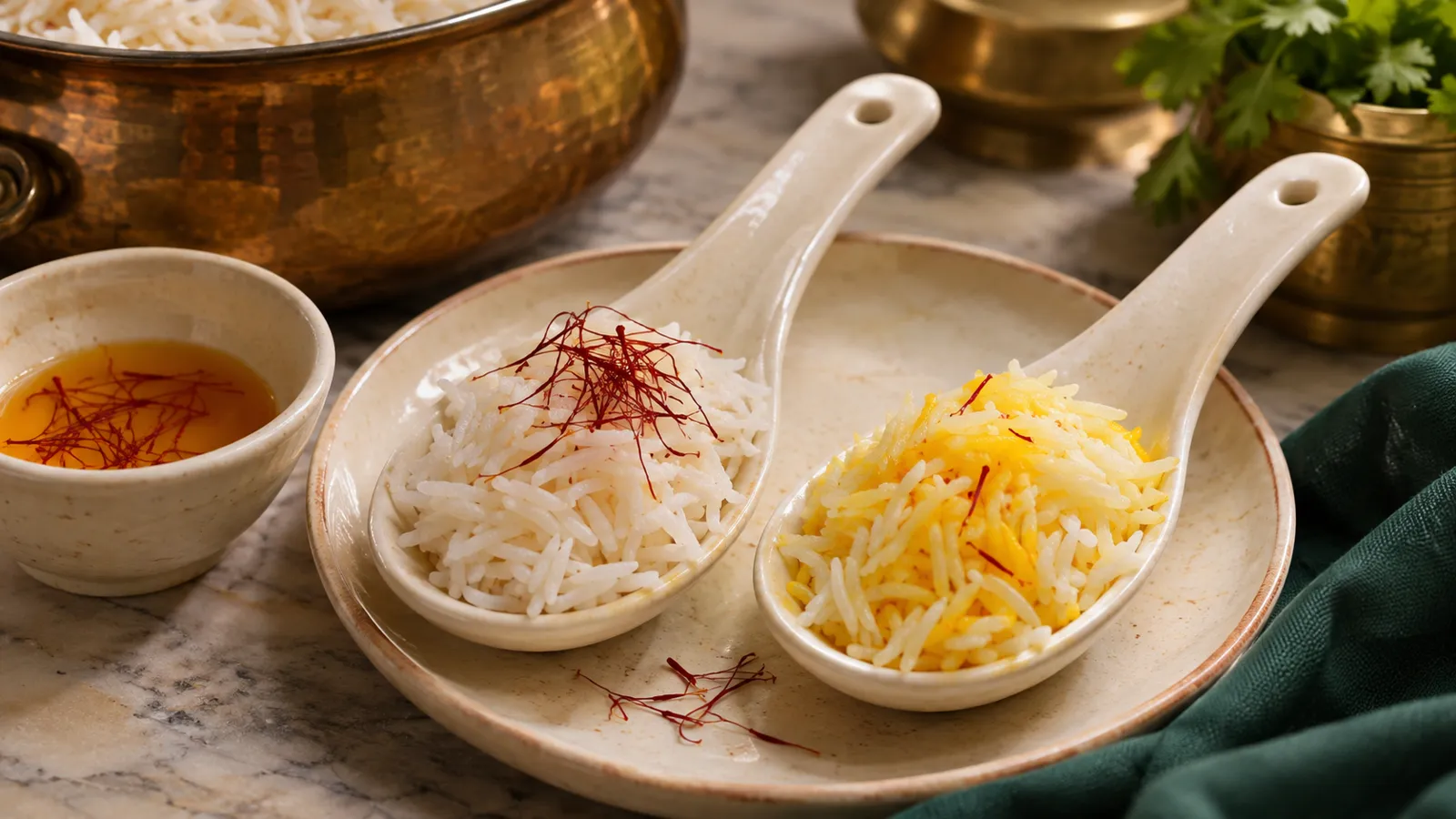
Drizzling saffron liquid over selected areas of layered rice gives patches of colour. Stirring it through distributes it more evenly. Both can work, but they won’t look the same on the serving spoon.
To see the difference, compare a few dry threads and a little infused liquid on separate spoonfuls of warm plain rice. Treat that as a kitchen observation, not a test that proves saffron’s purity.
Buy well and store carefully
Colour tests shared online can’t reliably establish authenticity. Buy from a trustworthy source and keep saffron sealed, dry and away from light. A small measured amount used carefully is more useful than adding extra because the first glance doesn’t look dramatic.
For more ways to use a measured amount of seasoning, see how to use podi.


Related posts

Get to know black and yellow mustard seeds, from their flavour to the dishes they suit.
Learn when salting vegetables early helps, and when to wait until they're cooked.

What Do Cloves Add to an Indian Masala? with practical tips for everyday cooking.