


No products in the cart.
Return To Shop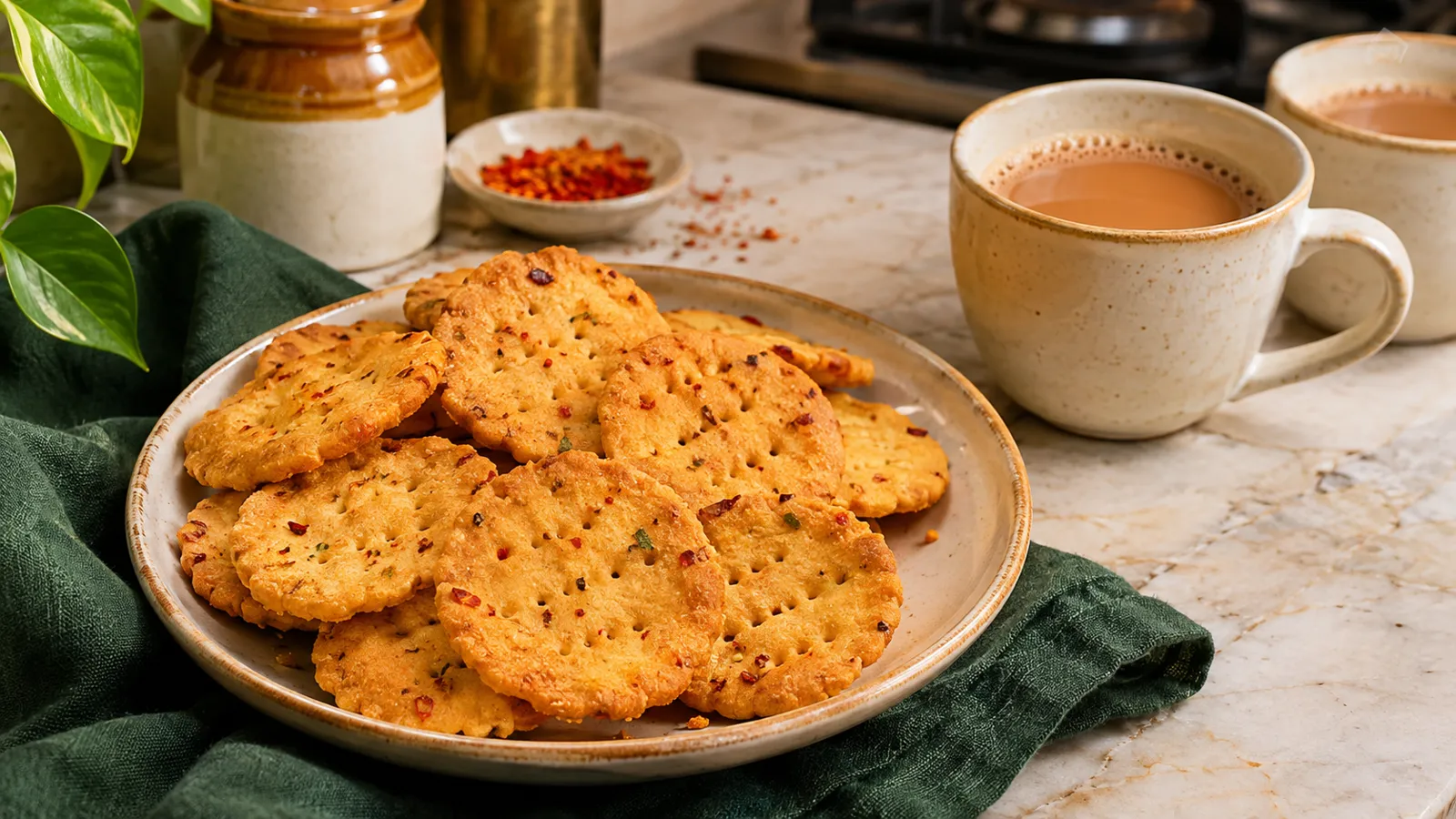
Mathri should have a crisp bite without feeling like a test for your teeth. The fat in the dough helps give it that crumbly texture. This Tamil Podi version is made for tea and snack boxes. Rub the fat in well, then use only enough water to bring the dough together.
Makes about 20 small mathris. Allow 50 minutes.
Ingredients
- 200 g plain flour
- 40 g ghee or neutral oil
- 1 tbsp Rapidli Tamil Podi
- ½ tsp ajwain, optional
- About 70–90 ml water
- Salt only if needed
- Neutral oil for frying
Method
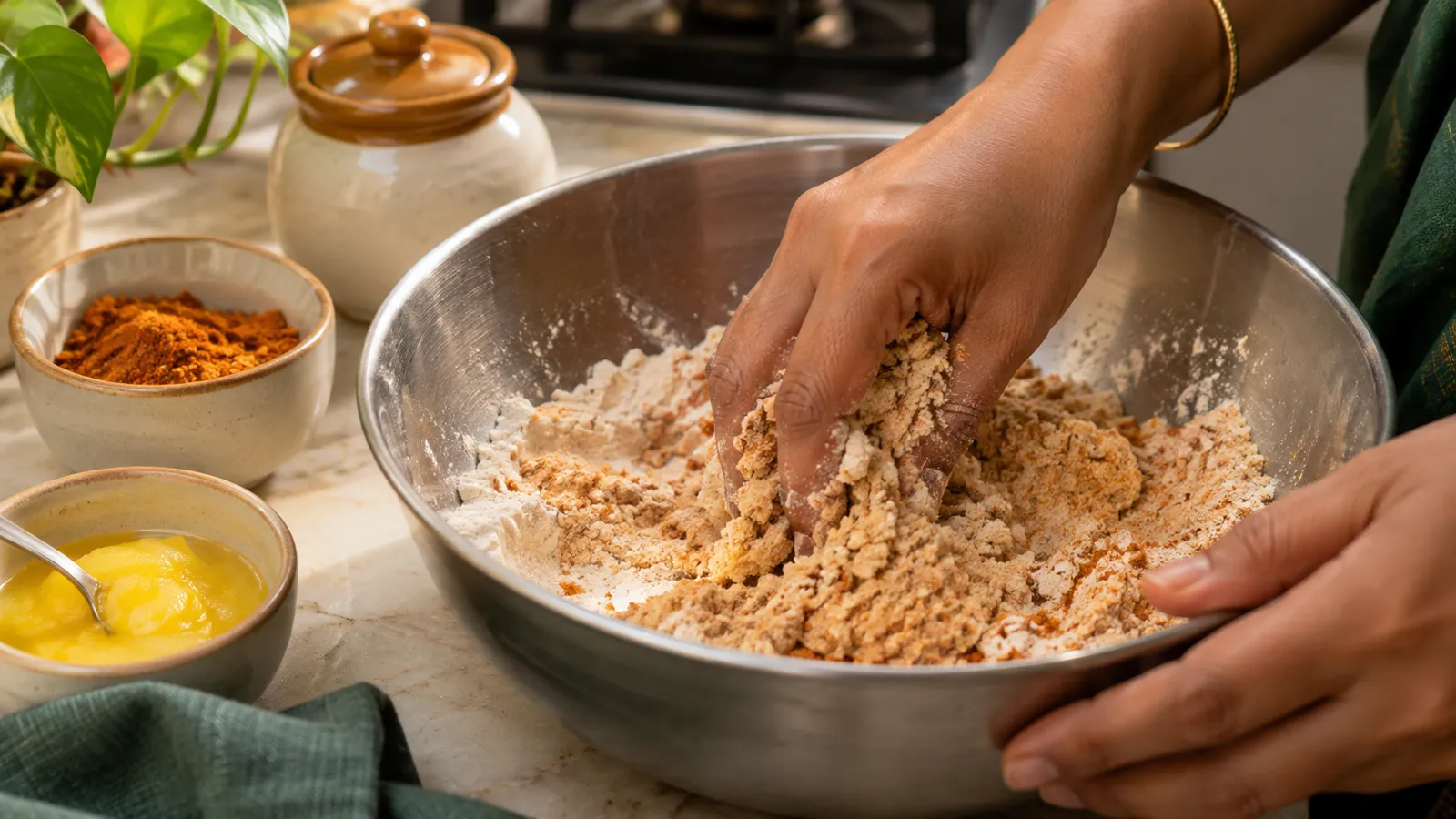
- Mix flour, podi and optional ajwain. Rub in the ghee with your fingertips until the mixture is evenly crumbly. A squeezed handful should loosely hold together.
- Add water a little at a time to form a firm dough. Don’t knead it for a long time as you would bread. Cover and rest for 20 minutes.
- Divide into about 20 pieces. Roll each into a disc roughly 5 cm wide and 3–4 mm thick. Keep the thickness even and prick both sides with a fork to limit puffing.
- Heat oil in a deep pan to around 155–165°C. Fry a few discs at a time, turning occasionally, until evenly golden and cooked through, roughly 7–10 minutes depending on thickness.
- Drain on a rack and cool a test piece before breaking it. If the middle is dense or doughy, make the next batch slightly thinner or allow more time at steady heat. Cool the full batch completely before storing airtight.
Where a hard bite comes from
Too little fat, uneven rubbing or too much working can all move the texture away from crumbly. Keep the flour and fat measurements steady for your first batch. Add water gradually rather than pouring it in and correcting with lots of extra flour.
Let the centre catch up
Very hot oil can colour the outside too quickly. Podi already darkens the dough a little, so colour alone is a poor guide. Let a test mathri cool: hot biscuits and snacks can feel softer than they will after cooling.
Serve with tea or a little pickle. Store only when fully cool, because trapped steam softens the batch. This podi version brings roasted seasoning into the dough, so there’s no need for a heavy dusting afterwards.
For more ways to use a measured amount of seasoning, see how to use podi.


Related posts

Podi Rajma Sandwich: A Lunch That Holds Together with practical tips for everyday cooking.

Podi Lotus Stem Fry: Crisp Edges and Plenty of Flavour with practical tips for everyday cooking.
Beetroot Poriyal With Karnataka Podi and Coconut with practical tips for everyday cooking.