


No products in the cart.
Return To Shop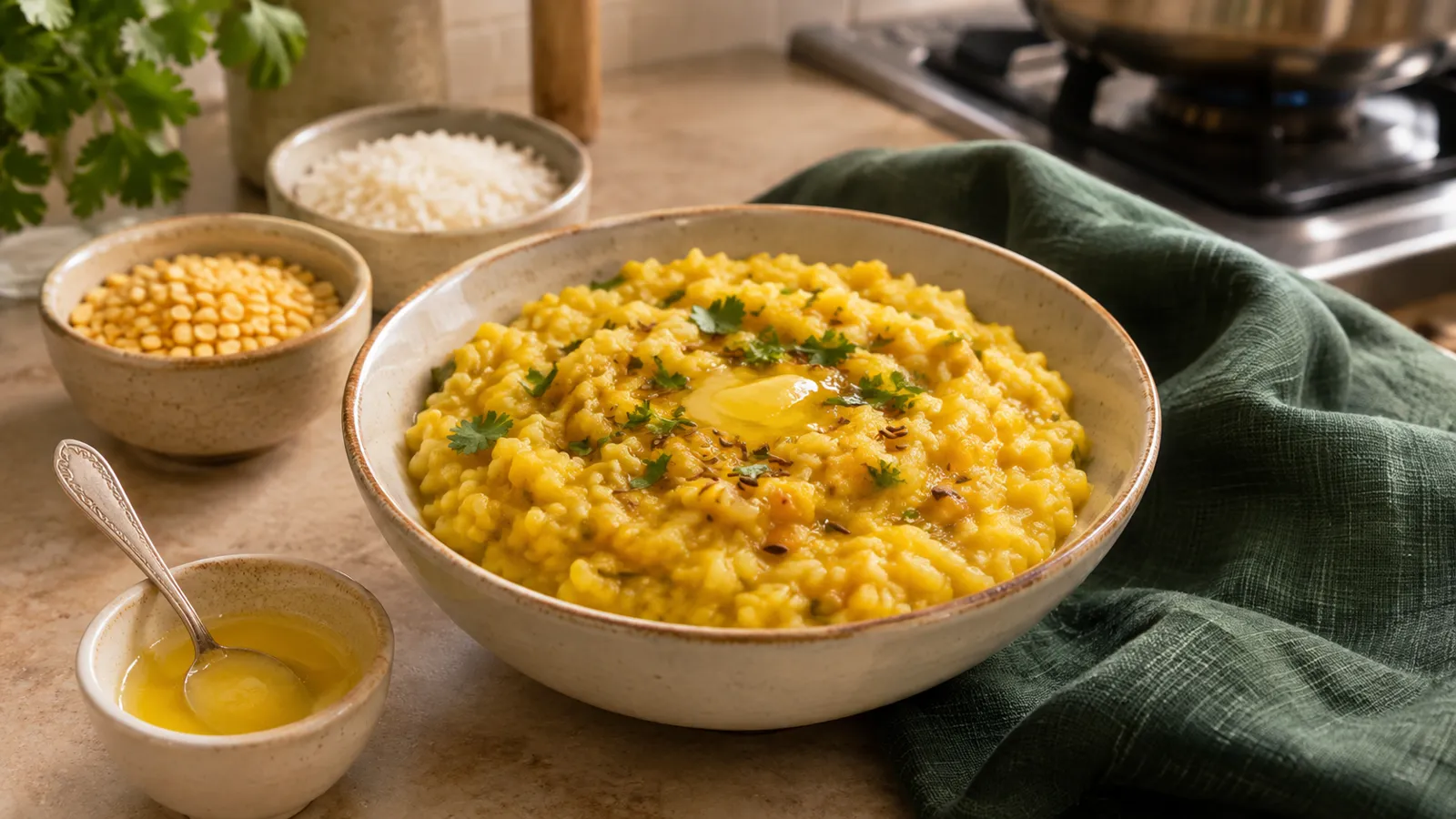
The khichdi was spoonable when you switched off the heat. Ten minutes later, the spoon stands up. Rice and dal continue taking up water, while released starch helps thicken the mixture. A little further evaporation adds to the change.
Plan for the pause before dinner
If the pot will sit before serving, finish it slightly looser than you want on the plate. That doesn’t mean flooding it with water. Add small amounts and give the mixture a moment to settle.
The rice and dal you choose affect the result. Broken grains and very soft-cooked pulses behave differently from intact grains. One fixed water ratio can’t cover every combination and every cooker.
Loosen a thick pot gradually
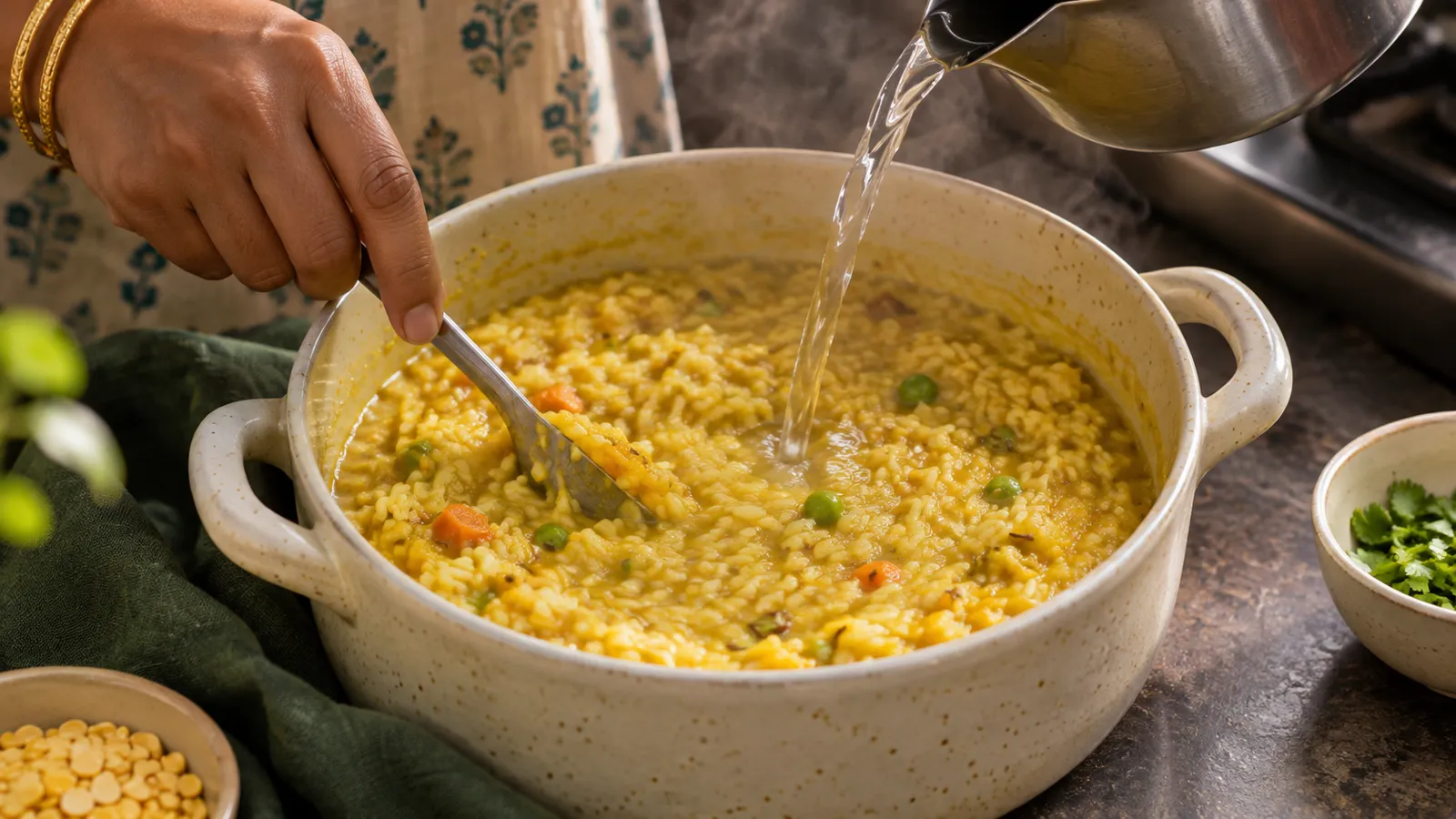
Add a little hot drinking water and stir gently over low heat. Work across the base so the khichdi doesn’t catch. Let the water mix through before deciding whether to add more.
For a very stiff pot, start with a few spoonfuls around the edges and ease it loose. Trying to force a dry mass around the pan can break the grains further without fixing the moisture evenly.
Taste again after adding water
Dilution changes the seasoning. Check salt and the overall flavour once the texture is right. If using podi, add it in small increments. A heap of seasoning won’t compensate neatly for too much water.
Ghee adds richness, but it doesn’t hydrate the starch in the same way. Use it because you want the flavour, not as the only answer to a pot that needs water.
Leftovers need proper storage
Don’t leave cooked khichdi on the counter for hours while waiting for it to cool. Refrigerate promptly in shallow portions. Reheat thoroughly with enough water to loosen it, stirring so it heats evenly.
Some people prefer thick khichdi that holds together; others want it flowing from the spoon. Choose your texture and adjust near serving time. The change as it sits is normal, and a measured splash usually makes dinner easier.
For more ways to use a measured amount of seasoning, see how to use podi.


Related posts

Get to know black and yellow mustard seeds, from their flavour to the dishes they suit.
Learn when salting vegetables early helps, and when to wait until they're cooked.

What Do Cloves Add to an Indian Masala? with practical tips for everyday cooking.