


No products in the cart.
Return To Shop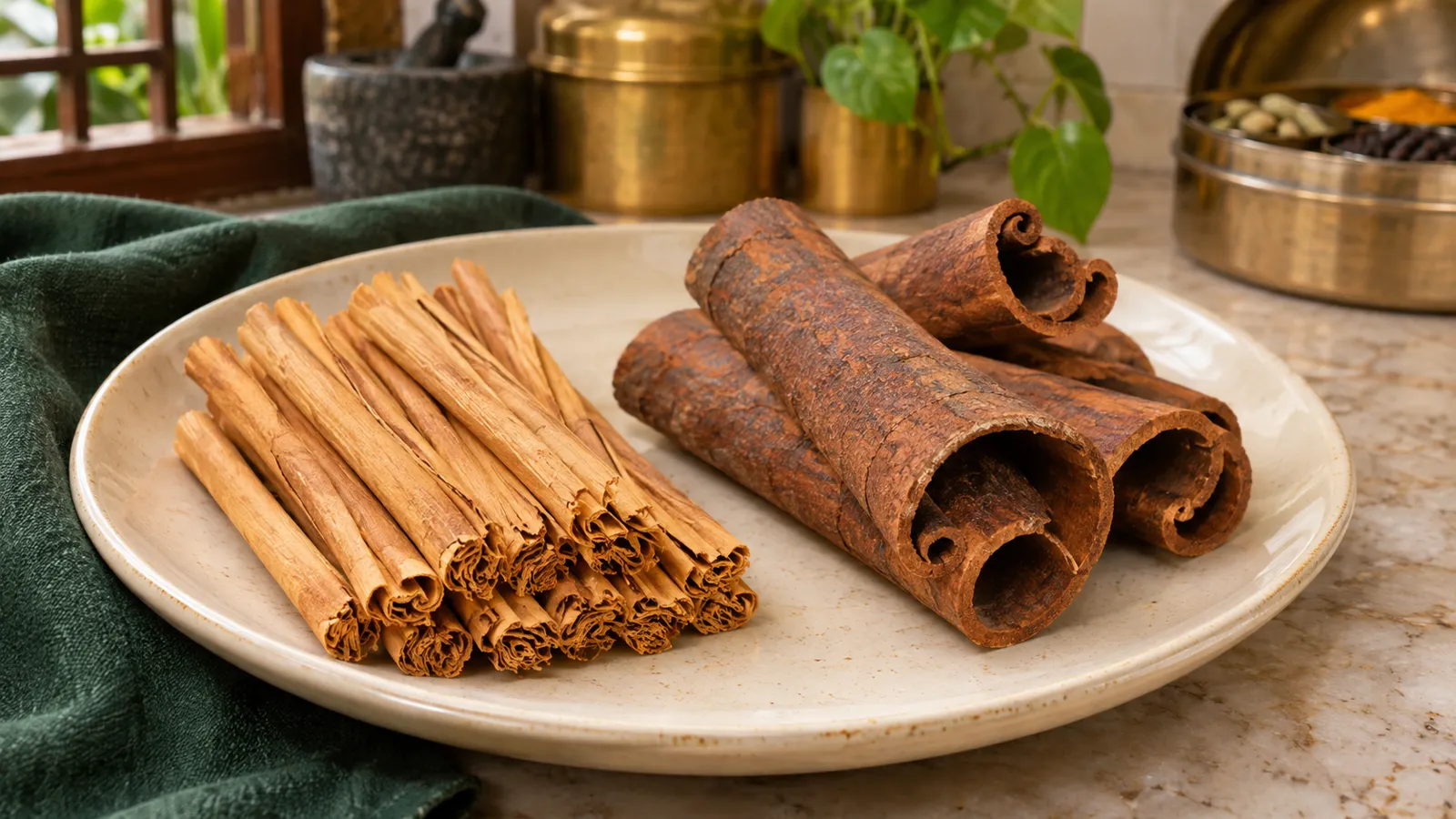
A recipe says one stick of dalchini. Your packet contains a thick curled piece of bark, while the photo shows a delicate rolled quill. Both may be sold under familiar cinnamon names, but their structure and flavour can differ.

Look at the layers
Ceylon cinnamon commonly forms a quill with many thin, papery layers. Cassia-type bark is usually thicker and harder, often curled in one or a few layers. Shape is a useful clue, but broken bark and ground powders are harder to judge.
Check the label and ask the seller rather than treating a photo as proof. The Spices Board lists cinnamon and cassia separately, with different botanical names.
Let the flavour guide the amount
Ceylon cinnamon often tastes gentler and more delicate. Cassia commonly has a stronger, warmer punch. Freshness and the particular product also matter, so the name alone doesn’t tell you exactly how your packet will taste.
For a small pot of rice, a thick piece can dominate more easily than you expect. Follow the recipe’s weight or dimensions if provided. If it only says a stick, compare your piece with the recipe’s image and start cautiously.
Whole bark and powder behave differently
Whole bark releases flavour during cooking and can be lifted out. Powder spreads through the dish and stays there. A spoonful of powder is not a straightforward replacement for a small piece of bark.
In a masala, check whether cinnamon or cassia is already included before adding a second dose. More warm spice can make a savoury gravy taste oddly sweet and perfumed.
Keep the choice practical
Choose the flavour your dish needs, buy from a reliable source and store the spice dry and sealed. Remove visible hard bark before serving. This is a cooking comparison, not a reason to start taking either spice in large daily amounts.
For more ways to use a measured amount of seasoning, see how to use podi.
Related reading: the Indian and global chilli guide.


Related posts

Get to know black and yellow mustard seeds, from their flavour to the dishes they suit.
Learn when salting vegetables early helps, and when to wait until they're cooked.

What Do Cloves Add to an Indian Masala? with practical tips for everyday cooking.